
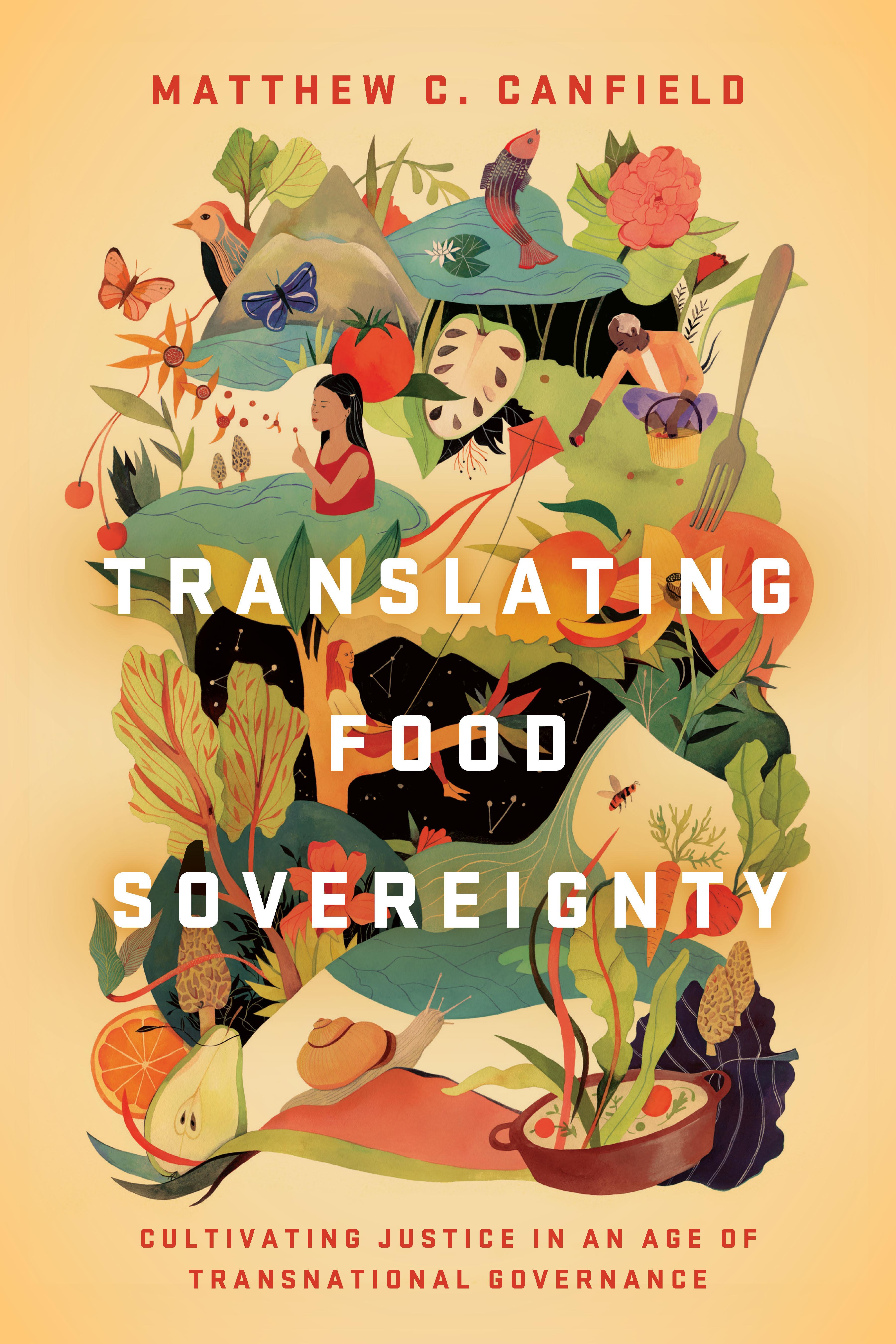
In its current state, the global food system is socially and ecologically unsustainable: nearly two billion people are food insecure, and food systems are the number one contributor to climate change. While agro-industrial production is promoted as the solution to these problems, growing global "food sovereignty" movements are challenging this model by demanding local and democratic control over food systems. Translating Food Sovereignty accompanies activists based in the Pacific Northwest of the United States as they mobilize the claim of food sovereignty across local, regional, and global arenas of governance. In contrast to social movements that frame their claims through the language of human rights, food sovereignty activists are one of the first to have articulated themselves in relation to the neoliberal transnational order of networked governance. While this global regulatory framework emerged to deepen market logics, Matthew C. Canfield reveals how activists are leveraging this order to make more expansive social justice claims. This nuanced, deeply engaged ethnography illustrates how food sovereignty activists are cultivating new forms of transnational governance from the ground up.
Zahle einfach mit Karte, Klarna, Apple Pay oder Google Pay. Nicht zufrieden? Du hast immer ein 14-tägiges Widerrufsrecht. Lies mehr in unseren AGB. Hast du Fragen, schreib uns eine E-Mail an hello@memmo.org.
Memmo macht das Lernen einfacher – wo auch immer du bist. Bei uns findest du deine Kursbücher und smarte Lerntools an einem Ort: Zusammenfassungen, Quizzes, Podcasts und Lernkarten. Und Ted, dein Lernbuddy, beantwortet alles, was du wissen möchtest. Über 50.000 Studierende lernen bereits hier – gemacht, damit du schneller lernst und weniger Stress hast.