
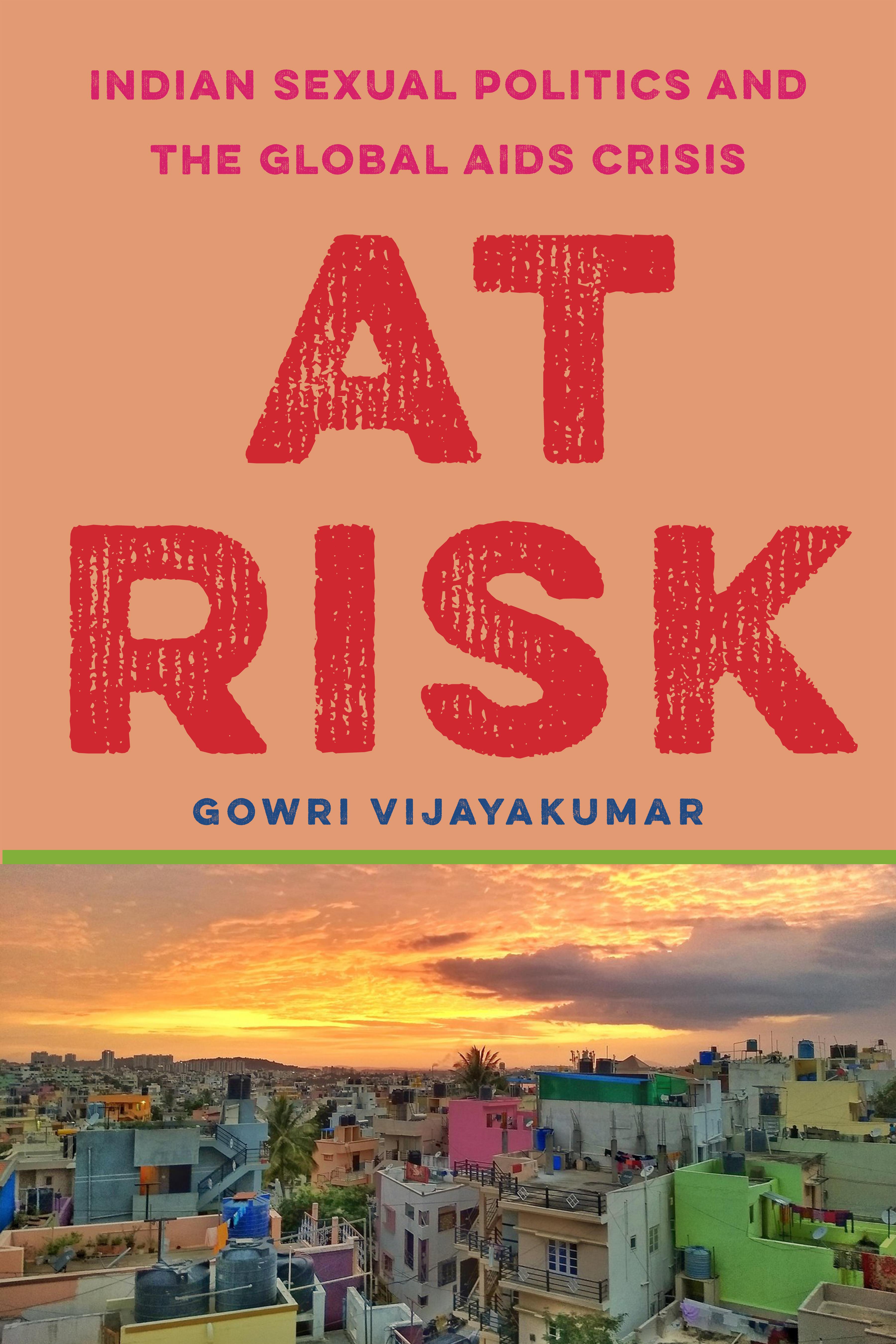
In the mid-1990s, experts predicted that India would face the world's biggest AIDS epidemic by 2000. Though a crisis at this scale never fully materialized, global public health institutions, donors, and the Indian state initiated a massive effort to prevent it. HIV prevention programs channeled billions of dollars toward those groups designated as at-risk—sex workers and men who have sex with men. At Risk captures this unique moment in which these criminalized and marginalized groups reinvented their "at-risk" categorization and became central players in the crisis response. The AIDS crisis created a contradictory, conditional, and temporary opening for sex-worker and LGBTIQ activists to renegotiate citizenship and to make demands on the state.
Working across India and Kenya, Gowri Vijayakumar provides a fine-grained account of the political struggles at the heart of the Indian AIDS response. These range from everyday articulations of sexual identity in activist organizations in Bangalore to new approaches to HIV prevention in Nairobi, where prevention strategies first introduced in India are adapted and circulate, as in the global AIDS field more broadly. Vijayakumar illuminates how the politics of gender, sexuality, and nationalism shape global crisis response. In so doing, she considers the precarious potential for social change in and after a crisis.
Zahle einfach mit Karte, Klarna, Apple Pay oder Google Pay. Nicht zufrieden? Du hast immer ein 14-tägiges Widerrufsrecht. Lies mehr in unseren AGB. Hast du Fragen, schreib uns eine E-Mail an hello@memmo.org.
Memmo macht das Lernen einfacher – wo auch immer du bist. Bei uns findest du deine Kursbücher und smarte Lerntools an einem Ort: Zusammenfassungen, Quizzes, Podcasts und Lernkarten. Und Ted, dein Lernbuddy, beantwortet alles, was du wissen möchtest. Über 50.000 Studierende lernen bereits hier – gemacht, damit du schneller lernst und weniger Stress hast.