
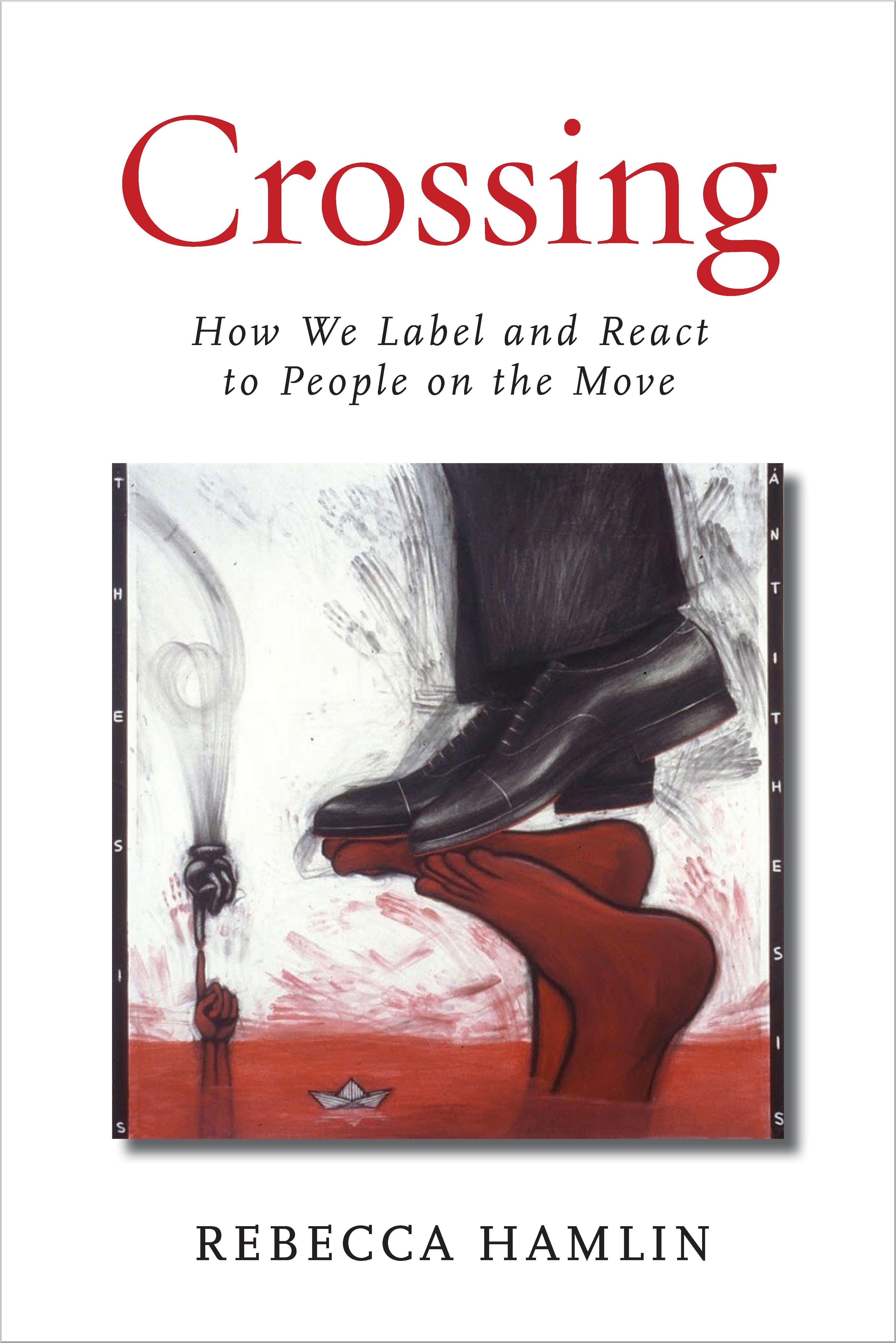
Today, the concept of "the refugee" as distinct from other migrants looms large. Immigration laws have developed to reinforce a dichotomy between those viewed as voluntary, often economically motivated, migrants who can be legitimately excluded by potential host states, and those viewed as forced, often politically motivated, refugees who should be let in. In Crossing, Rebecca Hamlin argues against advocacy positions that cling to this distinction. Everything we know about people who decide to move suggests that border crossing is far more complicated than any binary, or even a continuum, can encompass. Drawing on cases of various "border crises" across Europe, North America, South America, and the Middle East, Hamlin outlines major inconsistencies and faulty assumptions on which the binary relies. The migrant/refugee binary is not just an innocuous shorthand—indeed, its power stems from the way in which it is painted as apolitical. In truth, the binary is a dangerous legal fiction, politically constructed with the ultimate goal of making harsh border control measures more ethically palatable to the public. This book is a challenge to all those invested in the rights and study of migrants to move toward more equitable advocacy for all border crossers.
Zahle einfach mit Karte, Klarna, Apple Pay oder Google Pay. Nicht zufrieden? Du hast immer ein 14-tägiges Widerrufsrecht. Lies mehr in unseren AGB. Hast du Fragen, schreib uns eine E-Mail an hello@memmo.org.
Memmo macht das Lernen einfacher – wo auch immer du bist. Bei uns findest du deine Kursbücher und smarte Lerntools an einem Ort: Zusammenfassungen, Quizzes, Podcasts und Lernkarten. Und Ted, dein Lernbuddy, beantwortet alles, was du wissen möchtest. Über 50.000 Studierende lernen bereits hier – gemacht, damit du schneller lernst und weniger Stress hast.