
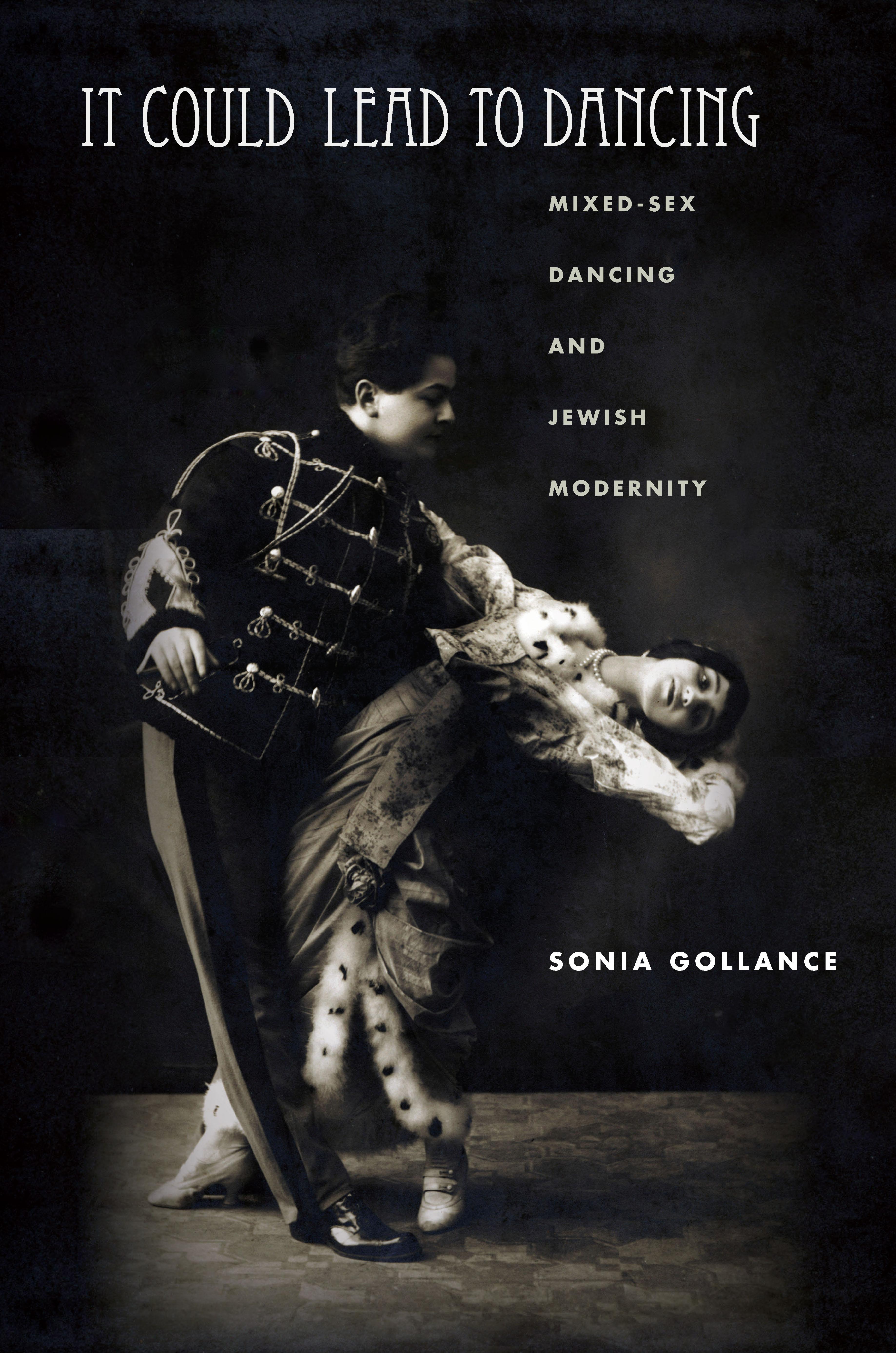
Dances and balls appear throughout world literature as venues for young people to meet, flirt, and form relationships, as any reader of Pride and Prejudice, War and Peace, or Romeo and Juliet can attest. The popularity of social dance transcends class, gender, ethnic, and national boundaries. In the context of nineteenth- and twentieth-century Jewish culture, dance offers crucial insights into debates about emancipation and acculturation. While traditional Jewish law prohibits men and women from dancing together, Jewish mixed-sex dancing was understood as the very sign of modernity––and the ultimate boundary transgression.
Writers of modern Jewish literature deployed dance scenes as a charged and complex arena for understanding the limits of acculturation, the dangers of ethnic mixing, and the implications of shifting gender norms and marriage patterns, while simultaneously entertaining their readers. In this pioneering study, Sonia Gollance examines the specific literary qualities of dance scenes, while also paying close attention to the broader social implications of Jewish engagement with dance. Combining cultural history with literary analysis and drawing connections to contemporary representations of Jewish social dance, Gollance illustrates how mixed-sex dancing functions as a flexible metaphor for the concerns of Jewish communities in the face of cultural transitions.
Zahle einfach mit Karte, Klarna, Apple Pay oder Google Pay. Nicht zufrieden? Du hast immer ein 14-tägiges Widerrufsrecht. Lies mehr in unseren AGB. Hast du Fragen, schreib uns eine E-Mail an hello@memmo.org.
Memmo macht das Lernen einfacher – wo auch immer du bist. Bei uns findest du deine Kursbücher und smarte Lerntools an einem Ort: Zusammenfassungen, Quizzes, Podcasts und Lernkarten. Und Ted, dein Lernbuddy, beantwortet alles, was du wissen möchtest. Über 50.000 Studierende lernen bereits hier – gemacht, damit du schneller lernst und weniger Stress hast.