
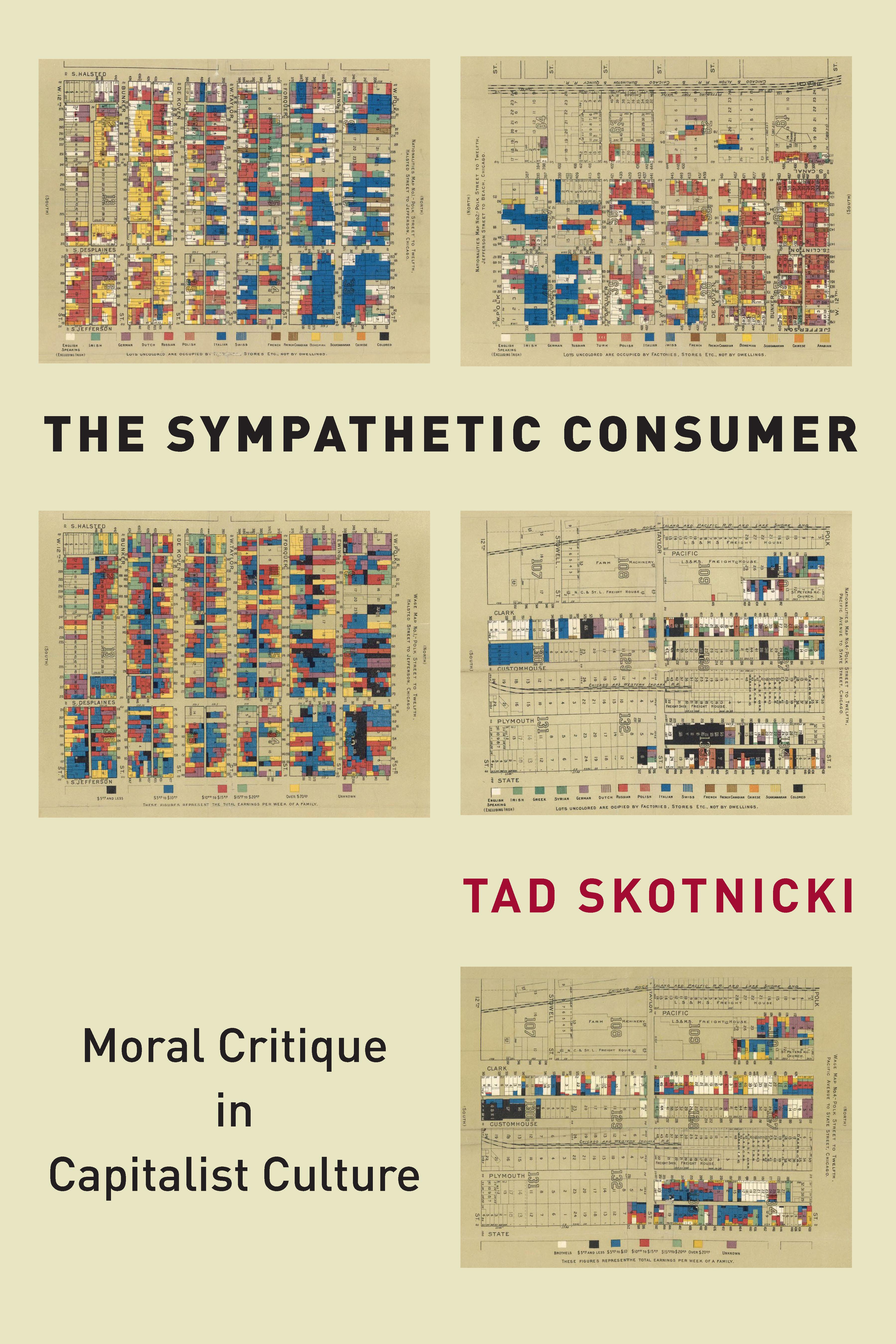
When people encounter consumer goods—sugar, clothes, phones—they find little to no information about their origins. The goods will thus remain anonymous, and the labor that went into making them, the supply chain through which they traveled, will remain obscured. In this book, Tad Skotnicki argues that this encounter is an endemic feature of capitalist societies, and one with which consumers have struggled for centuries in the form of activist movements constructed around what he calls The Sympathetic Consumer.
This book documents the uncanny similarities shared by such movements over the course of three centuries: the transatlantic abolitionist movement, US and English consumer movements around the turn of the twentieth century, and contemporary Fair Trade activism. Offering a comparative historical study of consumer activism the book shows, in vivid detail, how activists wrestled with the broader implications of commodity exchange. These activists arrived at a common understanding of the relationship between consumers, producers, and commodities, and concluded that consumers were responsible for sympathizing with invisible laborers. Ultimately, Skotnicki provides a framework to identify a capitalist culture by examining how people interpret everyday phenomena essential to it.
Zahle einfach mit Karte, Klarna, Apple Pay oder Google Pay. Nicht zufrieden? Du hast immer ein 14-tägiges Widerrufsrecht. Lies mehr in unseren AGB. Hast du Fragen, schreib uns eine E-Mail an hello@memmo.org.
Memmo macht das Lernen einfacher – wo auch immer du bist. Bei uns findest du deine Kursbücher und smarte Lerntools an einem Ort: Zusammenfassungen, Quizzes, Podcasts und Lernkarten. Und Ted, dein Lernbuddy, beantwortet alles, was du wissen möchtest. Über 50.000 Studierende lernen bereits hier – gemacht, damit du schneller lernst und weniger Stress hast.