
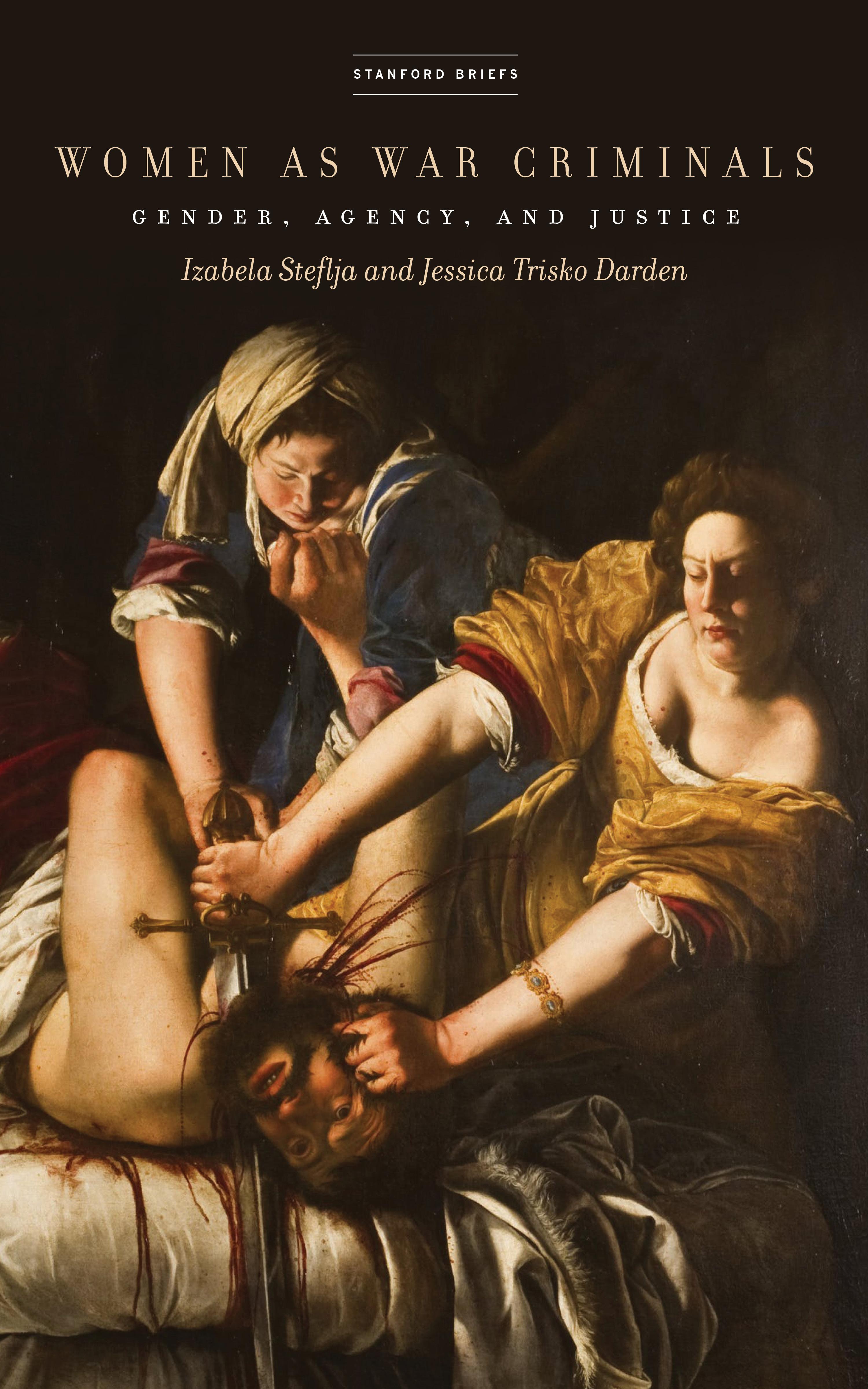
Women war criminals are far more common than we think. From the Holocaust to ethnic cleansing in the Balkans to the Rwandan genocide, women have perpetrated heinous crimes. Few have been punished. These women go unnoticed because their very existence challenges our assumptions about war and about women. Biases about women as peaceful and innocent prevent us from "seeing" women as war criminals—and prevent postconflict justice systems from assigning women blame.
Women as War Criminals argues that women are just as capable as men of committing war crimes and crimes against humanity. In addition to unsettling assumptions about women as agents of peace and reconciliation, the book highlights the gendered dynamics of law, and demonstrates that women are adept at using gender instrumentally to fight for better conditions and reduced sentences when war ends.
The book presents the legal cases of four women: the President (Biljana Plavšić), the Minister (Pauline Nyiramasuhuko), the Soldier (Lynndie England), and the Student (Hoda Muthana). Each woman's complex identity influenced her treatment by legal systems and her ability to mount a gendered defense before the court. Justice, as Steflja and Trisko Darden show, is not blind to gender.
Zahle einfach mit Karte, Klarna, Apple Pay oder Google Pay. Nicht zufrieden? Du hast immer ein 14-tägiges Widerrufsrecht. Lies mehr in unseren AGB. Hast du Fragen, schreib uns eine E-Mail an hello@memmo.org.
Memmo macht das Lernen einfacher – wo auch immer du bist. Bei uns findest du deine Kursbücher und smarte Lerntools an einem Ort: Zusammenfassungen, Quizzes, Podcasts und Lernkarten. Und Ted, dein Lernbuddy, beantwortet alles, was du wissen möchtest. Über 50.000 Studierende lernen bereits hier – gemacht, damit du schneller lernst und weniger Stress hast.