
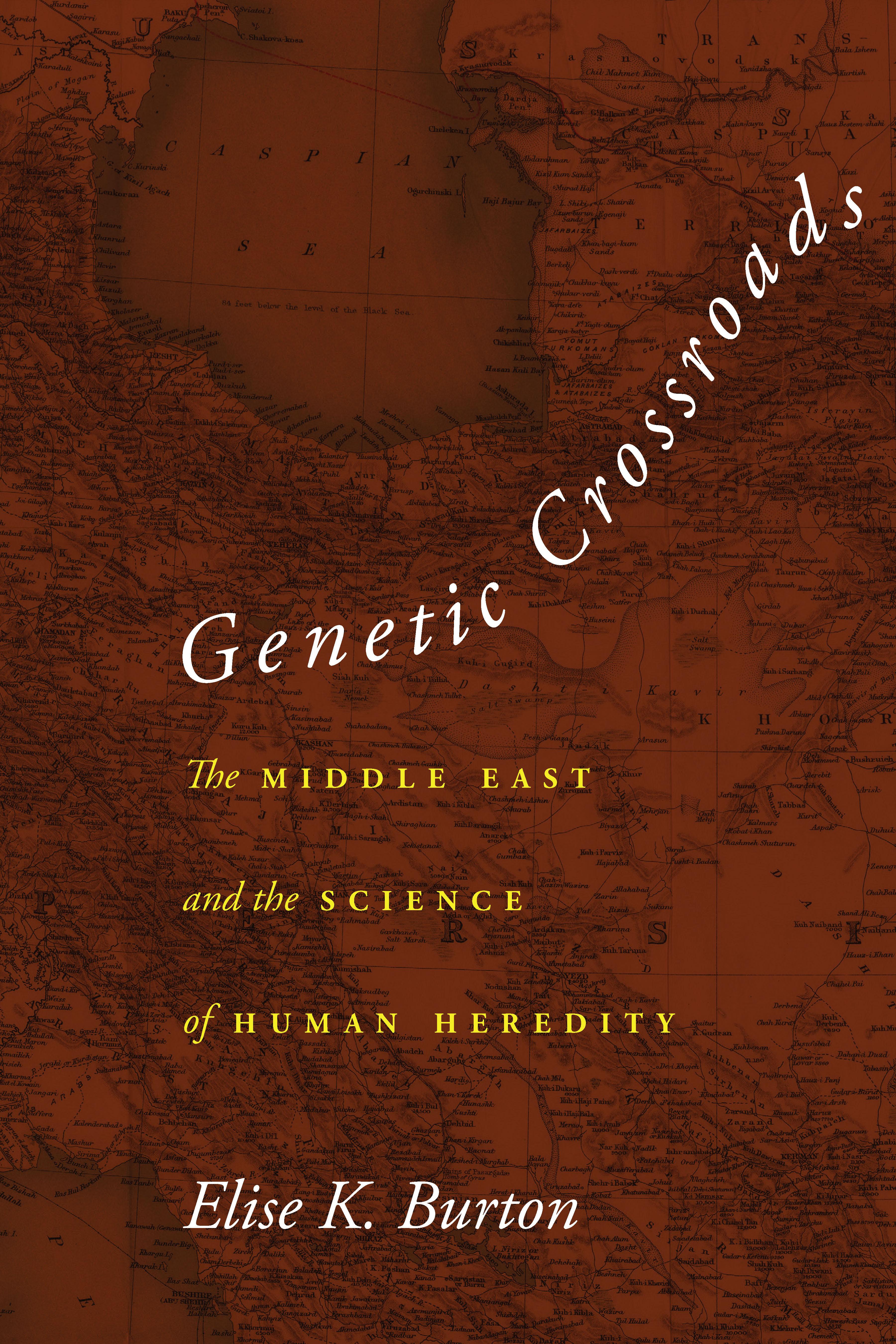
The Middle East plays a major role in the history of genetic science. Early in the twentieth century, technological breakthroughs in human genetics coincided with the birth of modern Middle Eastern nation-states, who proclaimed that the region's ancient history—as a cradle of civilizations and crossroads of humankind—was preserved in the bones and blood of their citizens. Using letters and publications from the 1920s to the present, Elise K. Burton follows the field expeditions and hospital surveys that scrutinized the bodies of tribal nomads and religious minorities. These studies, geneticists claim, not only detect the living descendants of biblical civilizations but also reveal the deeper past of human evolution.
Genetic Crossroads is an unprecedented history of human genetics in the Middle East, from its roots in colonial anthropology and medicine to recent genome sequencing projects. It illuminates how scientists from Turkey to Yemen, Egypt to Iran, transformed genetic data into territorial claims and national origin myths. Burton shows why such nationalist appropriations of genetics are not local or temporary aberrations, but rather the enduring foundations of international scientific interest in Middle Eastern populations to this day.
Zahle einfach mit Karte, Klarna, Apple Pay oder Google Pay. Nicht zufrieden? Du hast immer ein 14-tägiges Widerrufsrecht. Lies mehr in unseren AGB. Hast du Fragen, schreib uns eine E-Mail an hello@memmo.org.
Memmo macht das Lernen einfacher – wo auch immer du bist. Bei uns findest du deine Kursbücher und smarte Lerntools an einem Ort: Zusammenfassungen, Quizzes, Podcasts und Lernkarten. Und Ted, dein Lernbuddy, beantwortet alles, was du wissen möchtest. Über 50.000 Studierende lernen bereits hier – gemacht, damit du schneller lernst und weniger Stress hast.