
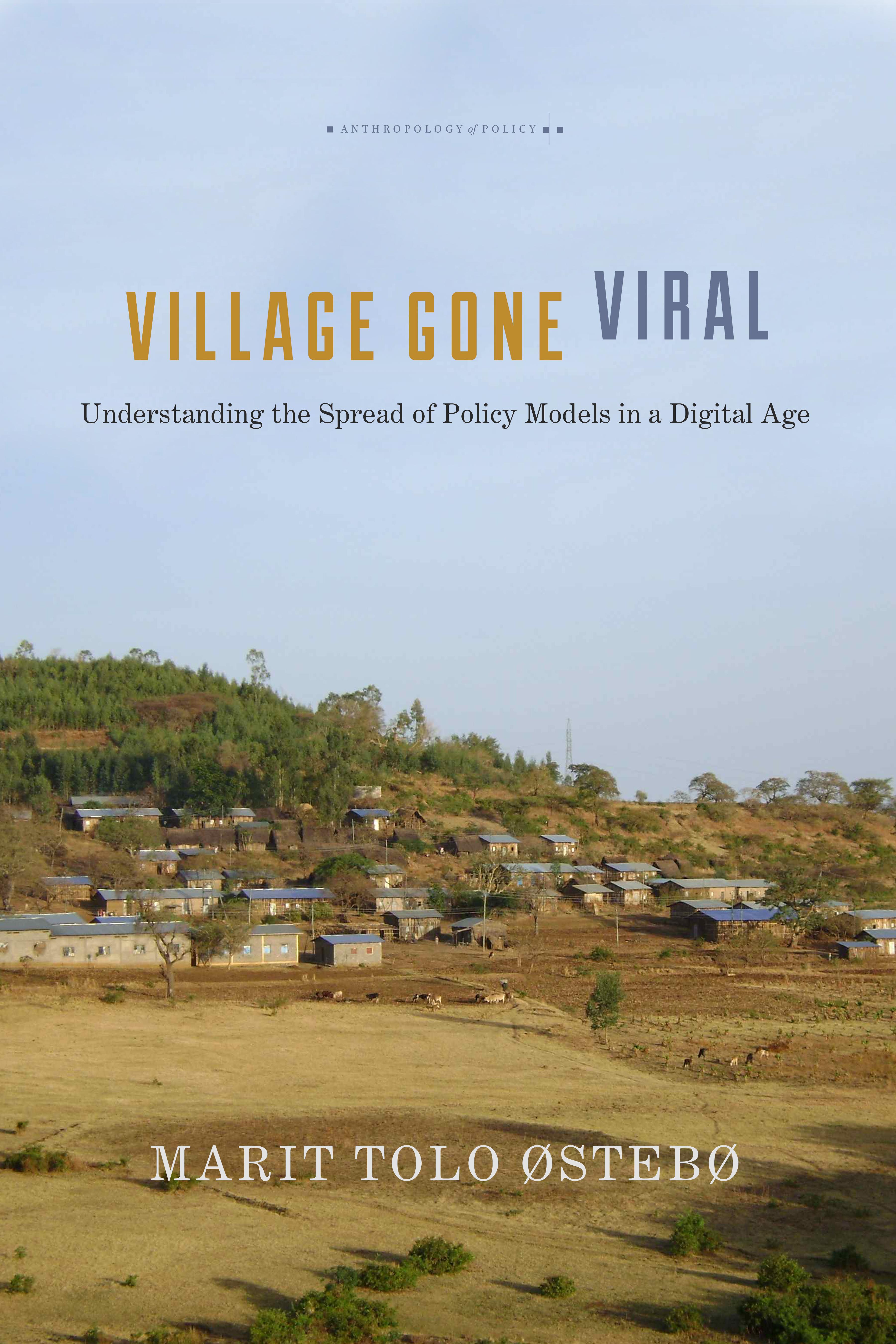
In 2001, Ethiopian Television aired a documentary about a small, rural village called Awra Amba, where women ploughed, men worked in the kitchen, and so-called harmful traditional practices did not exist. The documentary radically challenged prevailing images of Ethiopia as a gender-conservative and aid-dependent place, and Awra Amba became a symbol of gender equality and sustainable development in Ethiopia and beyond.
Village Gone Viral uses the example of Awra Amba to consider the widespread circulation and use of modeling practices in an increasingly transnational and digital policy world. With a particular focus on traveling models—policy models that become "viral" through various vectors, ranging from NGOs and multilateral organizations to the Internet—Marit Tolo Østebø critically examines the hidden dimensions of models and model making. While a policy model may be presented as a "best practice," one that can be scaled up and successfully applied to other places, the local impacts of the model paradigm are far more ambivalent—potentially increasing social inequalities, reinforcing social stratification, and concealing injustice. With this book, Østebø ultimately calls for a reflexive critical anthropology of the production, circulation, and use of models as instruments for social change.
Zahle einfach mit Karte, Klarna, Apple Pay oder Google Pay. Nicht zufrieden? Du hast immer ein 14-tägiges Widerrufsrecht. Lies mehr in unseren AGB. Hast du Fragen, schreib uns eine E-Mail an hello@memmo.org.
Memmo macht das Lernen einfacher – wo auch immer du bist. Bei uns findest du deine Kursbücher und smarte Lerntools an einem Ort: Zusammenfassungen, Quizzes, Podcasts und Lernkarten. Und Ted, dein Lernbuddy, beantwortet alles, was du wissen möchtest. Über 50.000 Studierende lernen bereits hier – gemacht, damit du schneller lernst und weniger Stress hast.