
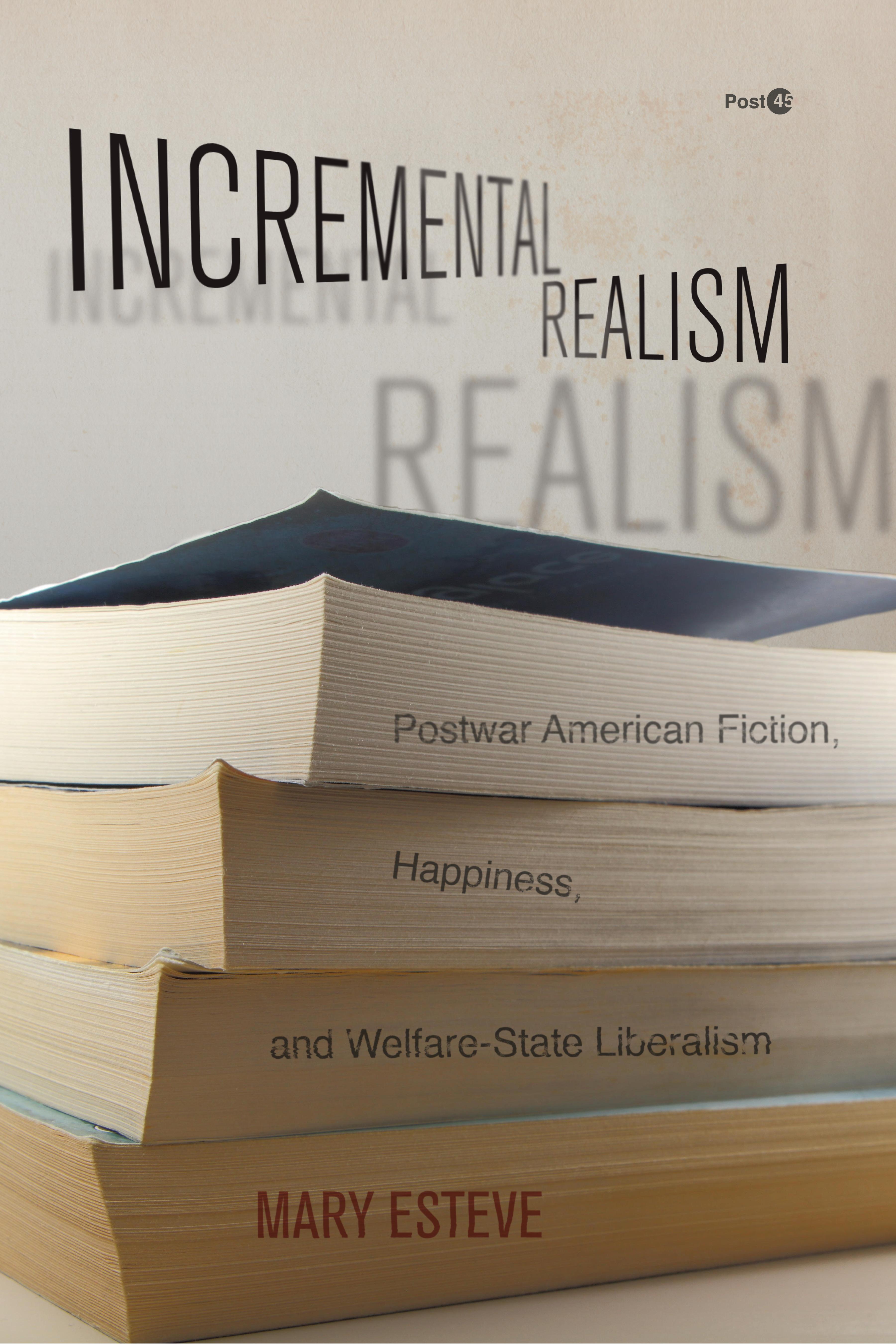
The postwar US political imagination coalesced around a quintessential midcentury American trope: happiness. In Incremental Realism, Mary Esteve offers a bold, revisionist literary and cultural history of efforts undertaken by literary realists, public intellectuals, and policy activists to advance the value of public institutions and the claims of socioeconomic justice.
Esteve specifically focuses on era-defining authors of realist fiction, including Philip Roth, Gwendolyn Brooks, Patricia Highsmith, Paula Fox, Peter Taylor, and Mary McCarthy, who mobilized the trope of happiness to reinforce the crucial value of public institutions, such as the public library, and the importance of pursuing socioeconomic justice, as envisioned by the United Nations Universal Declaration of Human Rights and welfare-state liberals. In addition to embracing specific symbols of happiness, these writers also developed narrative modes—what Esteve calls "incremental realism"—that made justifiable the claims of disadvantaged Americans on the nation-state and promoted a small-canvas aesthetics of moderation. With this powerful demonstration of the way postwar literary fiction linked the era's familiar trope of happiness to political arguments about socioeconomic fairness and individual flourishing, Esteve enlarges our sense of the postwar liberal imagination and its attentiveness to better, possible worlds.
Zahle einfach mit Karte, Klarna, Apple Pay oder Google Pay. Nicht zufrieden? Du hast immer ein 14-tägiges Widerrufsrecht. Lies mehr in unseren AGB. Hast du Fragen, schreib uns eine E-Mail an hello@memmo.org.
Memmo macht das Lernen einfacher – wo auch immer du bist. Bei uns findest du deine Kursbücher und smarte Lerntools an einem Ort: Zusammenfassungen, Quizzes, Podcasts und Lernkarten. Und Ted, dein Lernbuddy, beantwortet alles, was du wissen möchtest. Über 50.000 Studierende lernen bereits hier – gemacht, damit du schneller lernst und weniger Stress hast.