
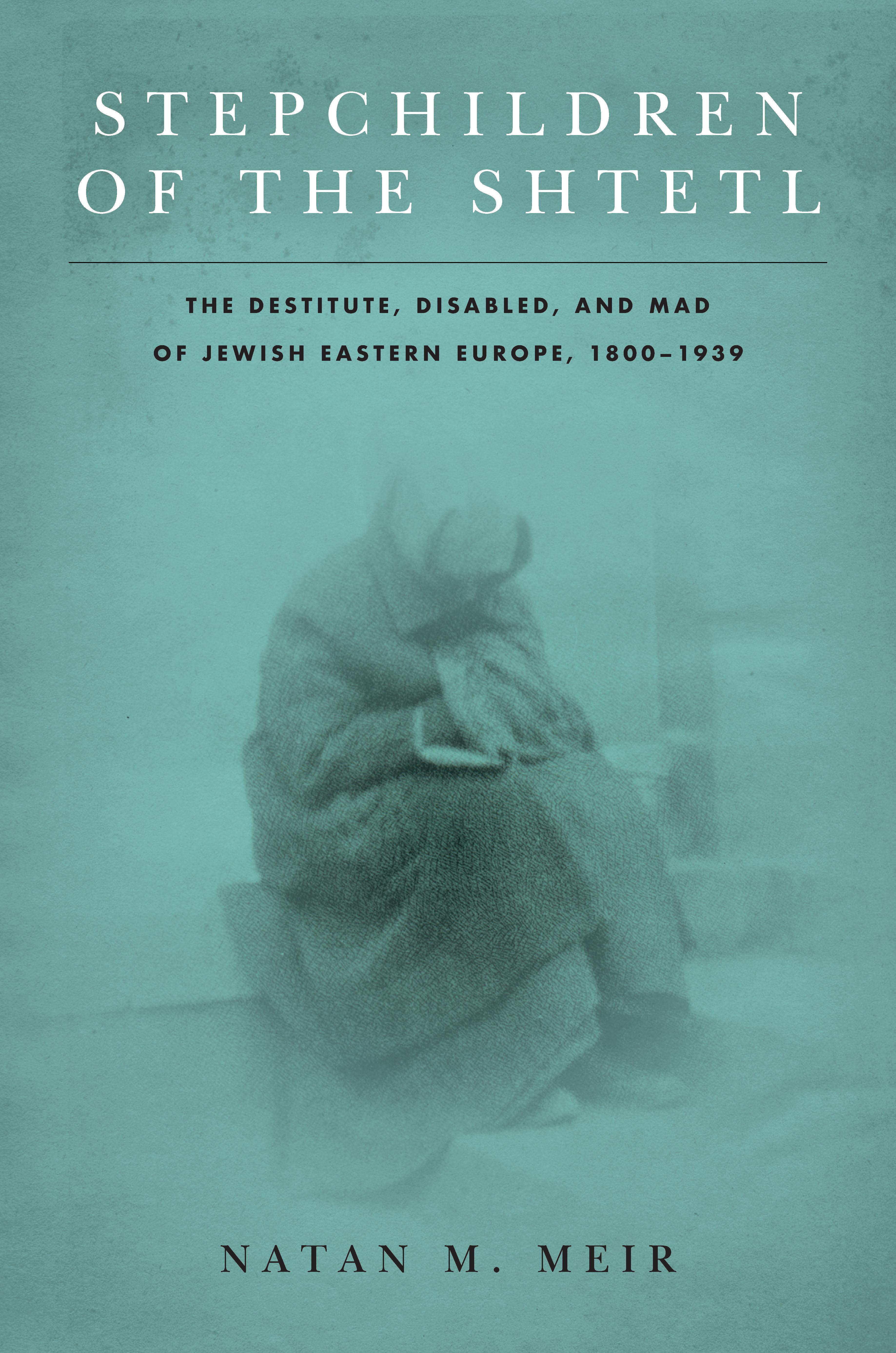
Memoirs of Jewish life in the east European shtetl often recall the hekdesh (town poorhouse) and its residents: beggars, madmen and madwomen, disabled people, and poor orphans. Stepchildren of the Shtetl tells the story of these marginalized figures from the dawn of modernity to the eve of the Holocaust.
Combining archival research with analysis of literary, cultural, and religious texts, Natan M. Meir recovers the lived experience of Jewish society's outcasts and reveals the central role that they came to play in the drama of modernization. Those on the margins were often made to bear the burden of the nation as a whole, whether as scapegoats in moments of crisis or as symbols of degeneration, ripe for transformation by reformers, philanthropists, and nationalists. Shining a light into the darkest corners of Jewish society in eastern Europe—from the often squalid poorhouse of the shtetl to the slums and insane asylums of Warsaw and Odessa, from the conscription of poor orphans during the reign of Nicholas I to the cholera wedding, a magical ritual in which an epidemic was halted by marrying outcasts to each other in the town cemetery—Stepchildren of the Shtetl reconsiders the place of the lowliest members of an already stigmatized minority.
Zahle einfach mit Karte, Klarna, Apple Pay oder Google Pay. Nicht zufrieden? Du hast immer ein 14-tägiges Widerrufsrecht. Lies mehr in unseren AGB. Hast du Fragen, schreib uns eine E-Mail an hello@memmo.org.
Memmo macht das Lernen einfacher – wo auch immer du bist. Bei uns findest du deine Kursbücher und smarte Lerntools an einem Ort: Zusammenfassungen, Quizzes, Podcasts und Lernkarten. Und Ted, dein Lernbuddy, beantwortet alles, was du wissen möchtest. Über 50.000 Studierende lernen bereits hier – gemacht, damit du schneller lernst und weniger Stress hast.