
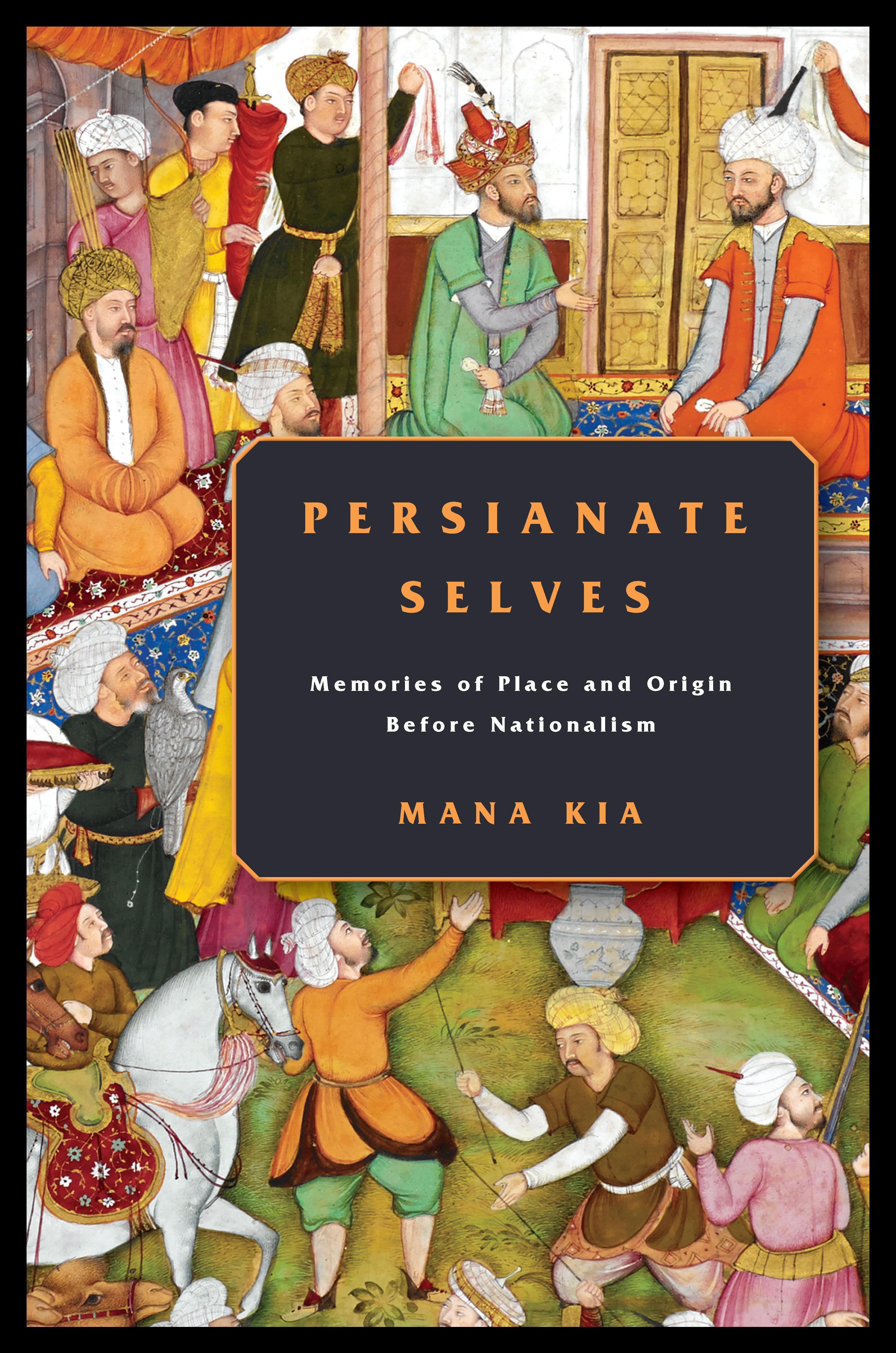
For centuries, Persian was the language of power and learning across Central, South, and West Asia, and Persians received a particular basic education through which they understood and engaged with the world. Not everyone who lived in the land of Iran was Persian, and Persians lived in many other lands as well. Thus to be Persian was to be embedded in a set of connections with people we today consider members of different groups. Persianate selfhood encompassed a broader range of possibilities than contemporary nationalist claims to place and origin allow. We cannot grasp these older connections without historicizing our conceptions of difference and affiliation.
Mana Kia sketches the contours of a larger Persianate world, historicizing place, origin, and selfhood through its tradition of proper form: adab. In this shared culture, proximities and similarities constituted a logic that distinguished between people while simultaneously accommodating plurality. Adab was the basis of cohesion for self and community over the turbulent eighteenth century, as populations dispersed and centers of power shifted, disrupting the circulations that linked Persianate regions. Challenging the bases of protonationalist community, Persianate Selves seeks to make sense of an earlier transregional Persianate culture outside the anachronistic shadow of nationalisms.
Zahle einfach mit Karte, Klarna, Apple Pay oder Google Pay. Nicht zufrieden? Du hast immer ein 14-tägiges Widerrufsrecht. Lies mehr in unseren AGB. Hast du Fragen, schreib uns eine E-Mail an hello@memmo.org.
Memmo macht das Lernen einfacher – wo auch immer du bist. Bei uns findest du deine Kursbücher und smarte Lerntools an einem Ort: Zusammenfassungen, Quizzes, Podcasts und Lernkarten. Und Ted, dein Lernbuddy, beantwortet alles, was du wissen möchtest. Über 50.000 Studierende lernen bereits hier – gemacht, damit du schneller lernst und weniger Stress hast.