
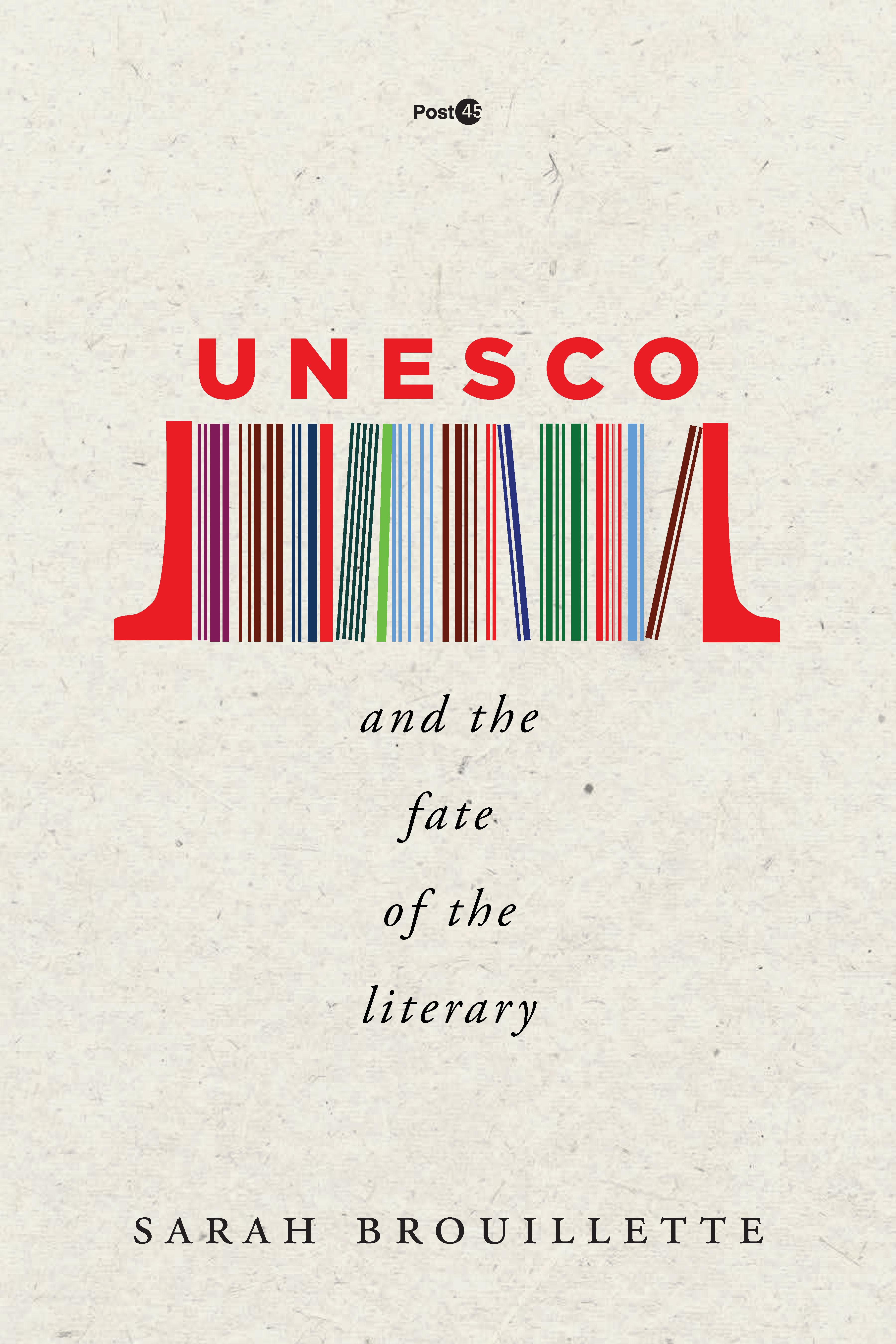
A case study of one of the most important global institutions of cultural policy formation, UNESCO and the Fate of the Literary demonstrates the relationship between such policymaking and transformations in the economy. Focusing on UNESCO's use of books, Sarah Brouillette identifies three phases in the agency's history and explores the literary and cultural programming of each. In the immediate postwar period, healthy economies made possible the funding of an infrastructure in support of a liberal cosmopolitanism and the spread of capitalist democracy. In the decolonizing 1960s and '70s, illiteracy and lack of access to literature were lamented as a "book hunger" in the developing world, and reading was touted as a universal humanizing value to argue for a more balanced communications industry and copyright regime. Most recently, literature has become instrumental in city and nation branding that drive tourism and the heritage industry. Today, the agency largely treats high literature as a commercially self-sustaining product for wealthy aging publics, and fundamental policy reform to address the uneven relations that characterize global intellectual property creation is off the table. UNESCO's literary programming is in this way highly suggestive. A trajectory that might appear to be one of triumphant success—literary tourism and festival programming can be quite lucrative for some people—is also, under a different light, a story of decline.
Zahle einfach mit Karte, Klarna, Apple Pay oder Google Pay. Nicht zufrieden? Du hast immer ein 14-tägiges Widerrufsrecht. Lies mehr in unseren AGB. Hast du Fragen, schreib uns eine E-Mail an hello@memmo.org.
Memmo macht das Lernen einfacher – wo auch immer du bist. Bei uns findest du deine Kursbücher und smarte Lerntools an einem Ort: Zusammenfassungen, Quizzes, Podcasts und Lernkarten. Und Ted, dein Lernbuddy, beantwortet alles, was du wissen möchtest. Über 50.000 Studierende lernen bereits hier – gemacht, damit du schneller lernst und weniger Stress hast.