
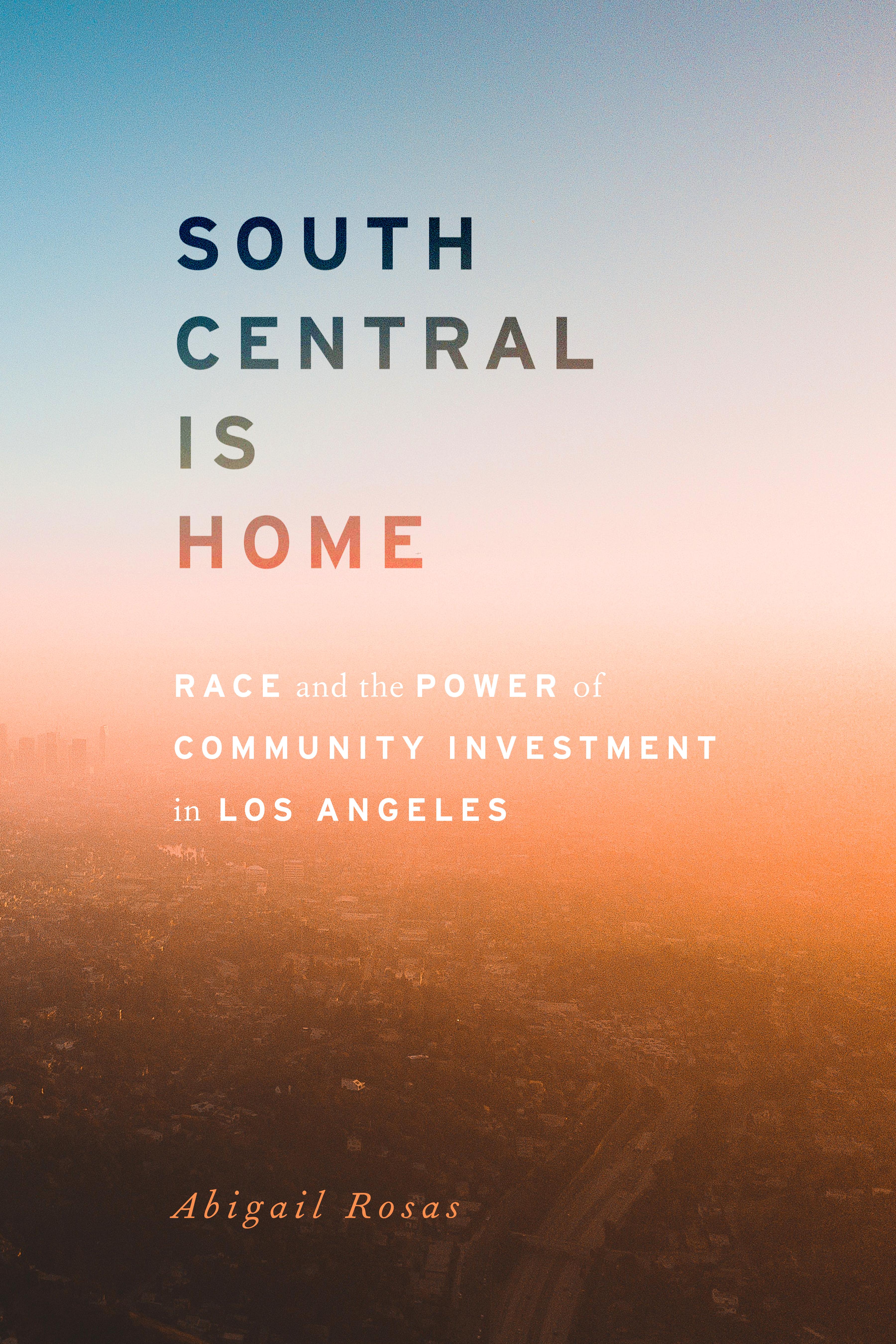
South Central Los Angeles is often characterized as an African American community beset by poverty and economic neglect. But this depiction obscures the significant Latina/o population that has called South Central home since the 1970s. More significantly, it conceals the efforts African American and Latina/o residents have made together in shaping their community. As residents have faced increasing challenges from diminished government social services, economic disinvestment, immigration enforcement, and police surveillance, they have come together in their struggle for belonging and justice.
South Central Is Home investigates the development of relational community formation and highlights how communities of color like South Central experience racism and discrimination—and how in the best of situations, they are energized to improve their conditions together. Tracking the demographic shifts in South Central from 1945 to the present, Abigail Rosas shows how financial institutions, War on Poverty programs like Headstart for school children, and community health centers emerged as crucial sites where neighbors engaged one another over what was best for their community. Through this work, Rosas illuminates the promise of community building, offering findings indispensable to our understandings of race, community, and place in U.S. society.
Zahle einfach mit Karte, Klarna, Apple Pay oder Google Pay. Nicht zufrieden? Du hast immer ein 14-tägiges Widerrufsrecht. Lies mehr in unseren AGB. Hast du Fragen, schreib uns eine E-Mail an hello@memmo.org.
Memmo macht das Lernen einfacher – wo auch immer du bist. Bei uns findest du deine Kursbücher und smarte Lerntools an einem Ort: Zusammenfassungen, Quizzes, Podcasts und Lernkarten. Und Ted, dein Lernbuddy, beantwortet alles, was du wissen möchtest. Über 50.000 Studierende lernen bereits hier – gemacht, damit du schneller lernst und weniger Stress hast.