
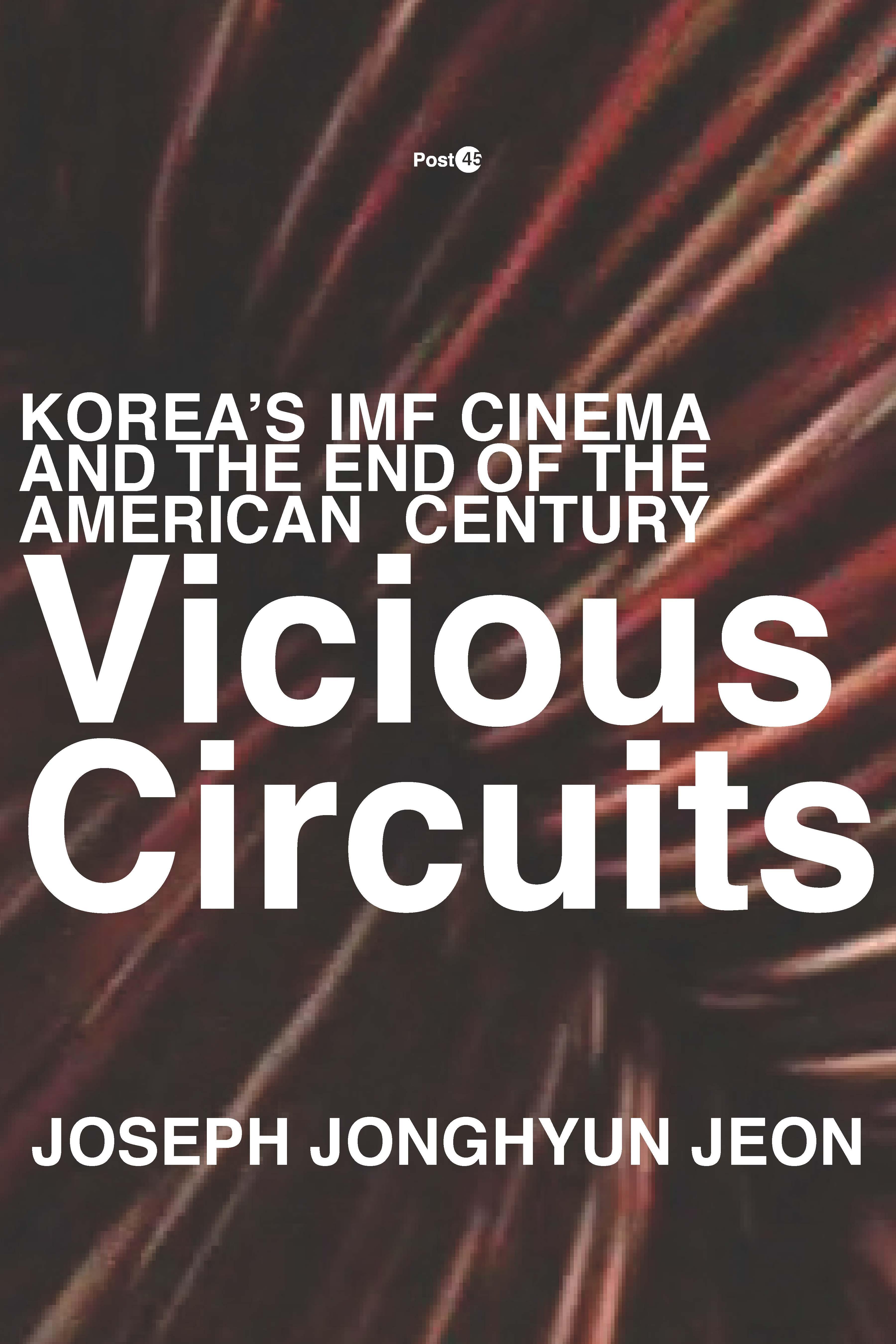
In December of 1997, the International Monetary Fund announced the largest bailout package in its history, aimed at stabilizing the South Korean economy in response to a credit and currency crisis of the same year. Vicious Circuits examines what it terms "Korea's IMF Cinema," the decade of cinema following that crisis, in order to think through the transformations of global political economy at the end of the American century. It argues that one of the most dominant traits of the cinema that emerged after the worst economic crisis in the history of South Korea was its preoccupation with economic phenomena. As the quintessentially corporate art form—made as much in the boardroom as in the studio—film in this context became an ideal site for thinking through the global political economy in the transitional moment of American decline and Chinese ascension. With an explicit focus of state economic policy, IMF cinema did not just depict the economy; it also was this economy's material embodiment. That is, it both represented economic developments and was itself an important sector in which the same pressures and changes affecting the economy at large were at work. Joseph Jonghyun Jeon's window on Korea provides a peripheral but crucial perspective on the operations of late US hegemony and the contradictions that ultimately corrode it.
Zahle einfach mit Karte, Klarna, Apple Pay oder Google Pay. Nicht zufrieden? Du hast immer ein 14-tägiges Widerrufsrecht. Lies mehr in unseren AGB. Hast du Fragen, schreib uns eine E-Mail an hello@memmo.org.
Memmo macht das Lernen einfacher – wo auch immer du bist. Bei uns findest du deine Kursbücher und smarte Lerntools an einem Ort: Zusammenfassungen, Quizzes, Podcasts und Lernkarten. Und Ted, dein Lernbuddy, beantwortet alles, was du wissen möchtest. Über 50.000 Studierende lernen bereits hier – gemacht, damit du schneller lernst und weniger Stress hast.