
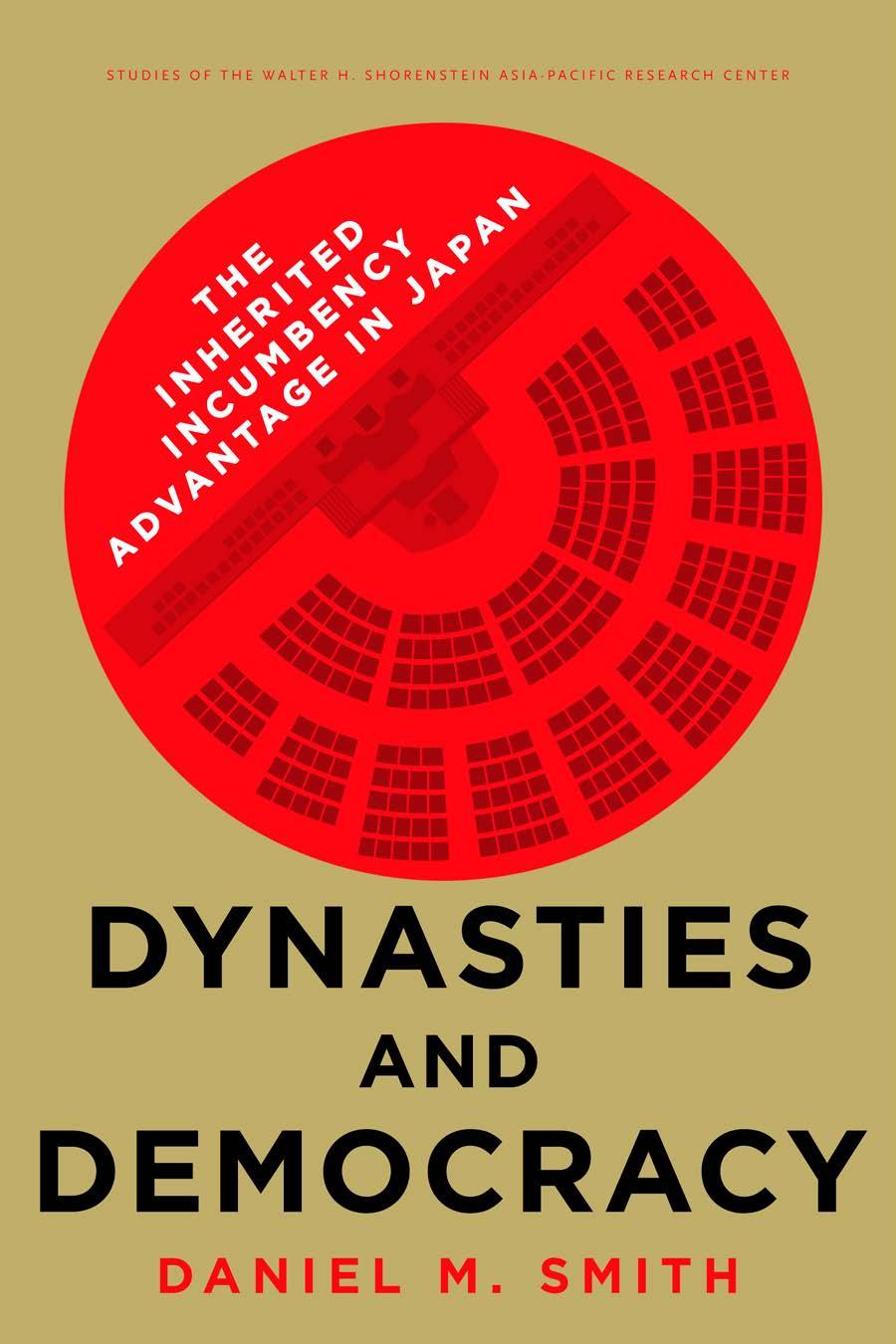
Although democracy is, in principle, the antithesis of dynastic rule, families with multiple members in elective office continue to be common around the world. In most democracies, the proportion of such "democratic dynasties" declines over time, and rarely exceeds ten percent of all legislators. Japan is a startling exception, with over a quarter of all legislators in recent years being dynastic. In Dynasties and Democracy, Daniel M. Smith sets out to explain when and why dynasties persist in democracies, and why their numbers are only now beginning to wane in Japan—questions that have long perplexed regional experts.
Smith introduces a compelling comparative theory to explain variation in the presence of dynasties across democracies and political parties. Drawing on extensive legislator-level data from twelve democracies and detailed candidate-level data from Japan, he examines the inherited advantage that members of dynasties reap throughout their political careers—from candidate selection, to election, to promotion into cabinet. Smith shows how the nature and extent of this advantage, as well as its consequences for representation, vary significantly with the institutional context of electoral rules and features of party organization. His findings extend far beyond Japan, shedding light on the causes and consequences of dynastic politics for democracies around the world.
Zahle einfach mit Karte, Klarna, Apple Pay oder Google Pay. Nicht zufrieden? Du hast immer ein 14-tägiges Widerrufsrecht. Lies mehr in unseren AGB. Hast du Fragen, schreib uns eine E-Mail an hello@memmo.org.
Memmo macht das Lernen einfacher – wo auch immer du bist. Bei uns findest du deine Kursbücher und smarte Lerntools an einem Ort: Zusammenfassungen, Quizzes, Podcasts und Lernkarten. Und Ted, dein Lernbuddy, beantwortet alles, was du wissen möchtest. Über 50.000 Studierende lernen bereits hier – gemacht, damit du schneller lernst und weniger Stress hast.