
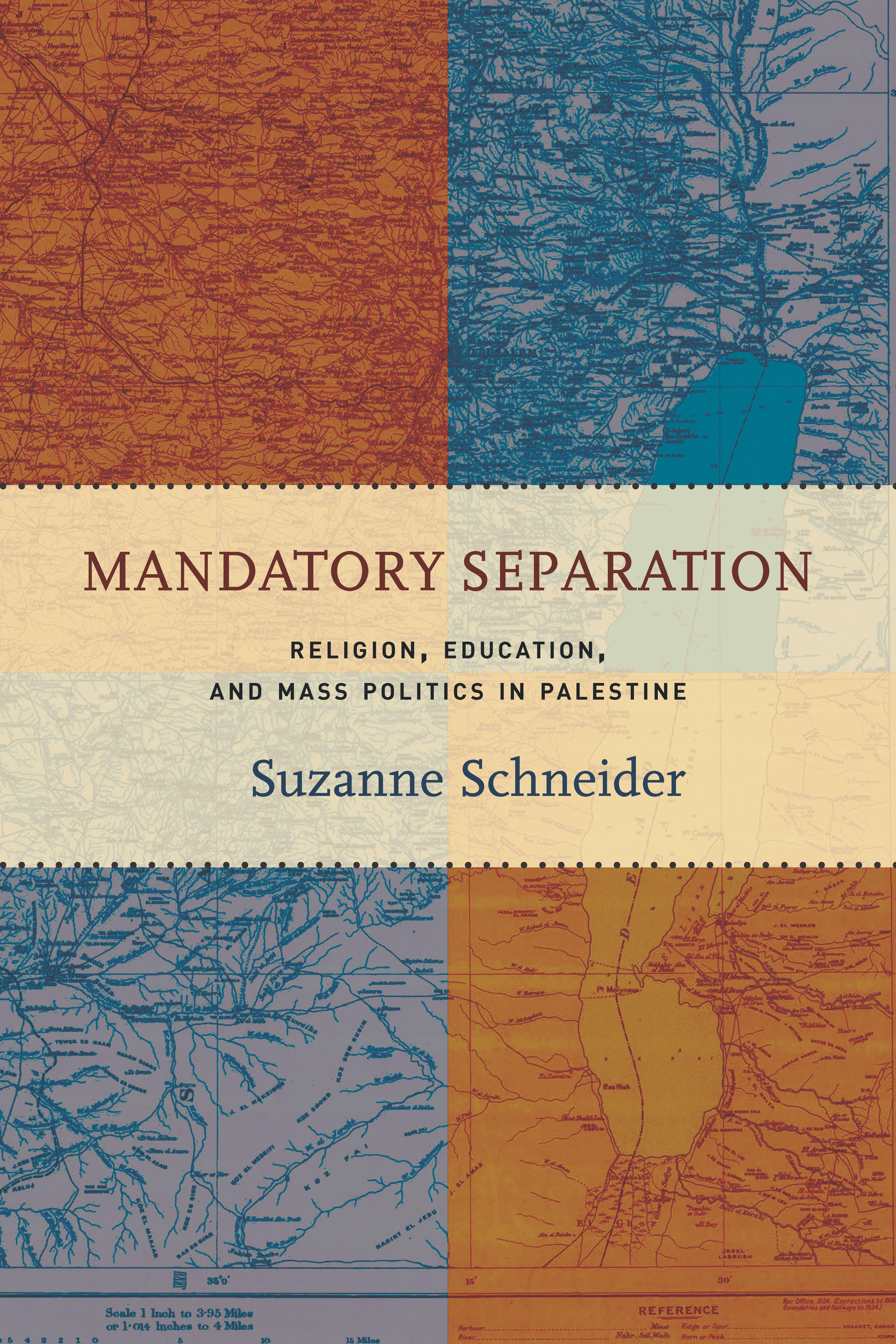
Is religion a source of political stability and social continuity, or an agent of radical change? This question, so central to contemporary conversations about religion and extremism, has generated varied responses over the last century. Taking Jewish and Islamic education as its objects of inquiry, Mandatory Separation sheds light on the contours of this debate in Palestine during the formative period of British rule, detailing how colonial, Zionist, and Palestinian-Muslim leaders developed competing views of the form and function of religious education in an age of mass politics.
Drawing from archival records, school syllabi, textbooks, newspapers, and personal narratives, Suzanne Schneider argues that the British Mandatory government supported religious education as a supposed antidote to nationalist passions at the precise moment when the administrative, pedagogic, and curricular transformation of religious schooling rendered it a vital tool for Zionist and Palestinian leaders. This study of their policies and practices illuminates the tensions, similarities, and differences among these diverse educational and political philosophies, revealing the lasting significance of these debates for thinking about religion and political identity in the modern Middle East.
Zahle einfach mit Karte, Klarna, Apple Pay oder Google Pay. Nicht zufrieden? Du hast immer ein 14-tägiges Widerrufsrecht. Lies mehr in unseren AGB. Hast du Fragen, schreib uns eine E-Mail an hello@memmo.org.
Memmo macht das Lernen einfacher – wo auch immer du bist. Bei uns findest du deine Kursbücher und smarte Lerntools an einem Ort: Zusammenfassungen, Quizzes, Podcasts und Lernkarten. Und Ted, dein Lernbuddy, beantwortet alles, was du wissen möchtest. Über 50.000 Studierende lernen bereits hier – gemacht, damit du schneller lernst und weniger Stress hast.