
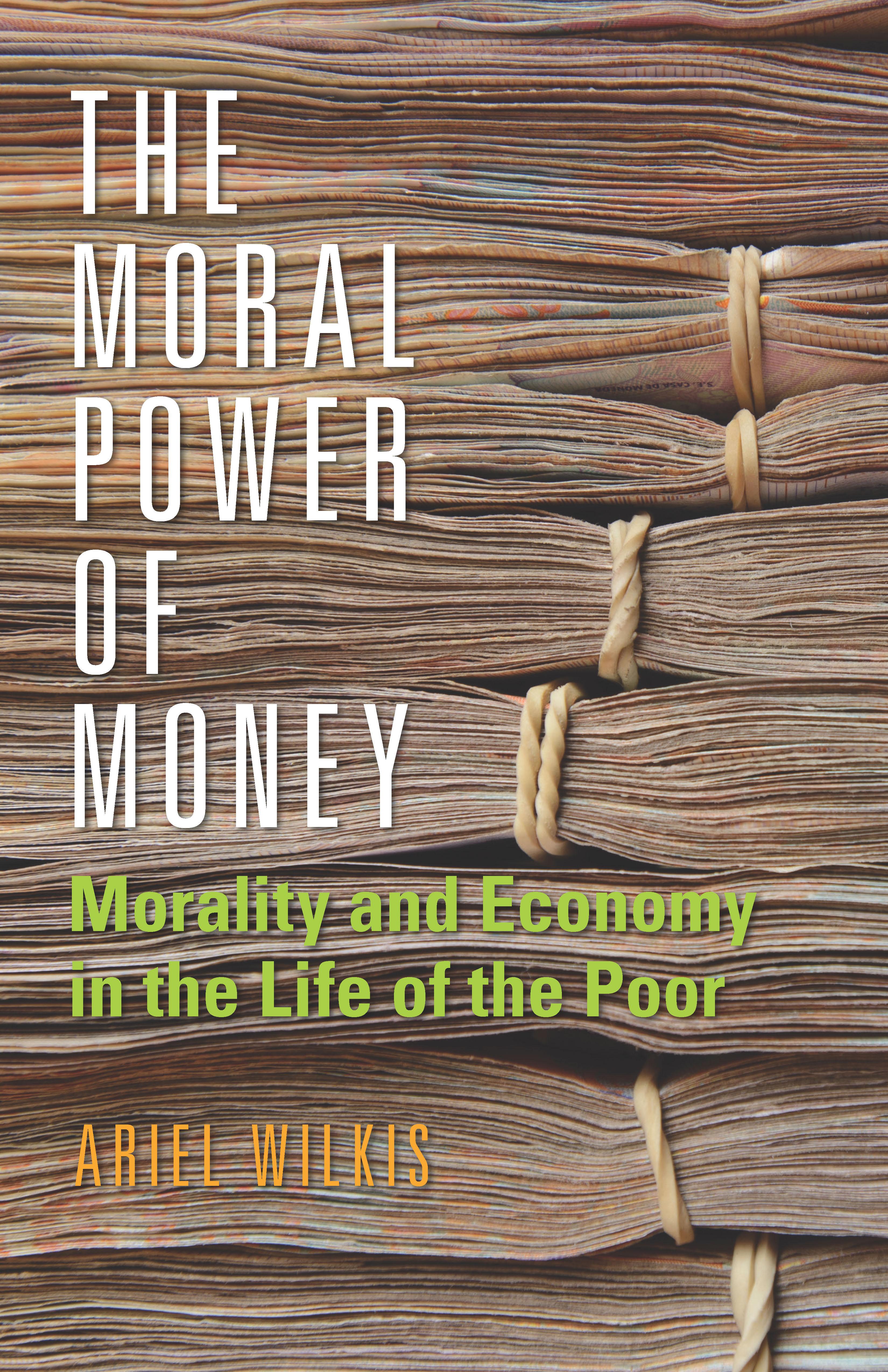
Looking beneath the surface of seemingly ordinary social interactions, The Moral Power of Money investigates the forces of power and morality at play, particularly among the poor. Drawing on fieldwork in a slum of Buenos Aires, Ariel Wilkis argues that money is a critical symbol used to negotiate not only material possessions, but also the political, economic, class, gender, and generational bonds between people.
Through vivid accounts of the stark realities of life in Villa Olimpia, Wilkis highlights the interplay of money, morality, and power. Drawing out the theoretical implications of these stories, he proposes a new concept of moral capital based on different kinds, or "pieces," of money. Each chapter covers a different "piece"—money earned from the informal and illegal economies, money lent through family and market relations, money donated with conditional cash transfers, political money that binds politicians and their supporters, sacrificed money offered to the church, and safeguarded money used to support people facing hardships. This book builds an original theory of the moral sociology of money, providing the tools for understanding the role money plays in social life today.
Zahle einfach mit Karte, Klarna, Apple Pay oder Google Pay. Nicht zufrieden? Du hast immer ein 14-tägiges Widerrufsrecht. Lies mehr in unseren AGB. Hast du Fragen, schreib uns eine E-Mail an hello@memmo.org.
Memmo macht das Lernen einfacher – wo auch immer du bist. Bei uns findest du deine Kursbücher und smarte Lerntools an einem Ort: Zusammenfassungen, Quizzes, Podcasts und Lernkarten. Und Ted, dein Lernbuddy, beantwortet alles, was du wissen möchtest. Über 50.000 Studierende lernen bereits hier – gemacht, damit du schneller lernst und weniger Stress hast.