
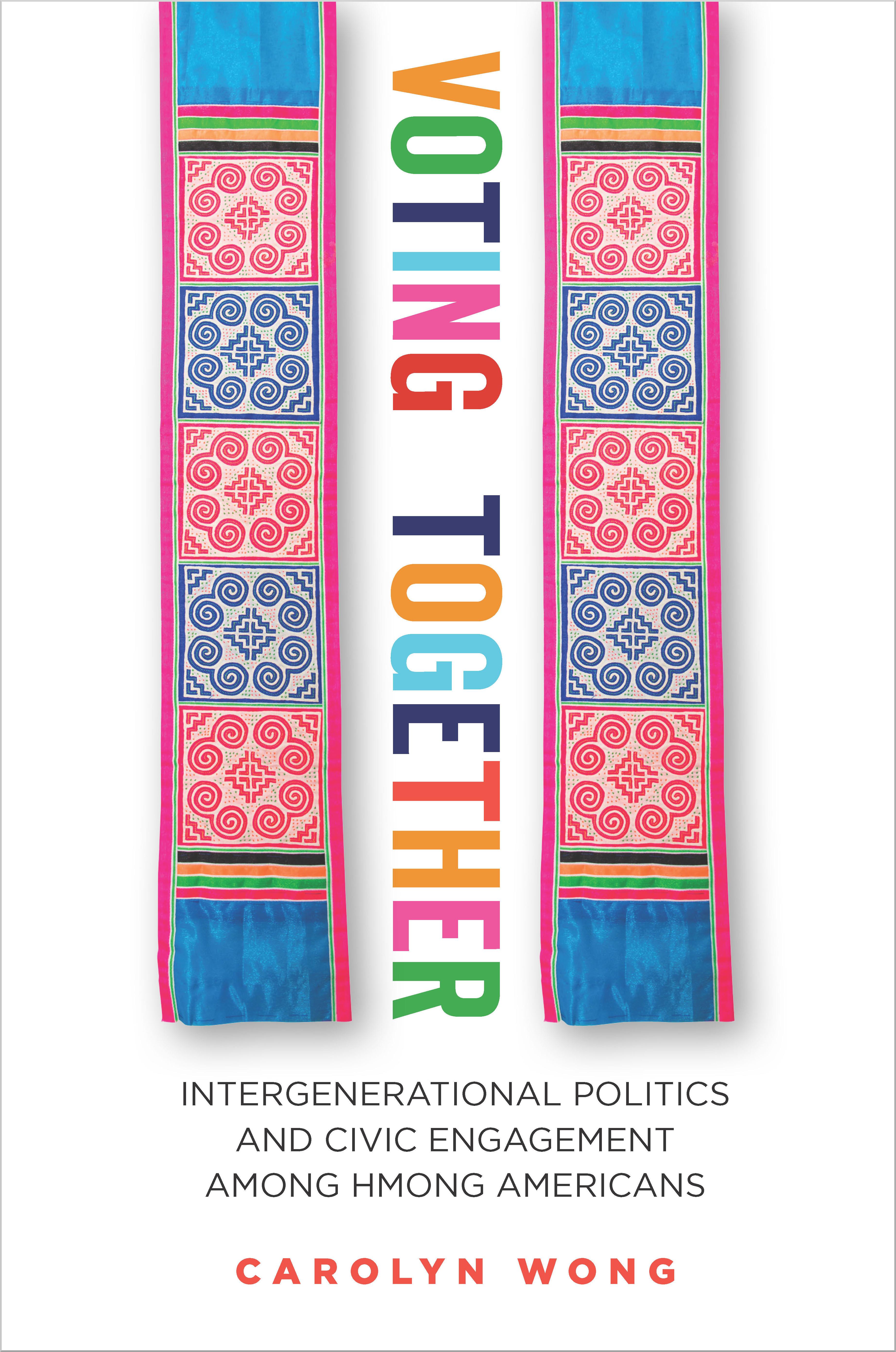
Hmong American immigrants first came to the United States as refugees of the Vietnam War. Forty years on, they have made a notable impact in American political life. They have voter participation rates higher than most other Asian American ethnic groups, and they have won seats in local and state legislative bodies. Yet the average level of education among Hmong Americans still lags behind that of the general U.S. population and high rates of poverty persist in their community, highlighting a curious disparity across the typical benchmarks of immigrant incorporation.
Carolyn Wong analyzes how the Hmong came to pursue politics as a key path to advancement and inclusion in the United States. Drawing on interviews with community leaders, refugees, and the second-generation children of immigrants, Wong shows that intergenerational mechanisms of social voting underlie the political participation of Hmong Americans. Younger Hmong Americans engage older community residents in grassroots elections and conversation about public affairs. And in turn, within families and communities, elders often transmit stories that draw connections between ancient Hmong aspirations for freedom and contemporary American egalitarian projects.
Zahle einfach mit Karte, Klarna, Apple Pay oder Google Pay. Nicht zufrieden? Du hast immer ein 14-tägiges Widerrufsrecht. Lies mehr in unseren AGB. Hast du Fragen, schreib uns eine E-Mail an hello@memmo.org.
Memmo macht das Lernen einfacher – wo auch immer du bist. Bei uns findest du deine Kursbücher und smarte Lerntools an einem Ort: Zusammenfassungen, Quizzes, Podcasts und Lernkarten. Und Ted, dein Lernbuddy, beantwortet alles, was du wissen möchtest. Über 50.000 Studierende lernen bereits hier – gemacht, damit du schneller lernst und weniger Stress hast.