
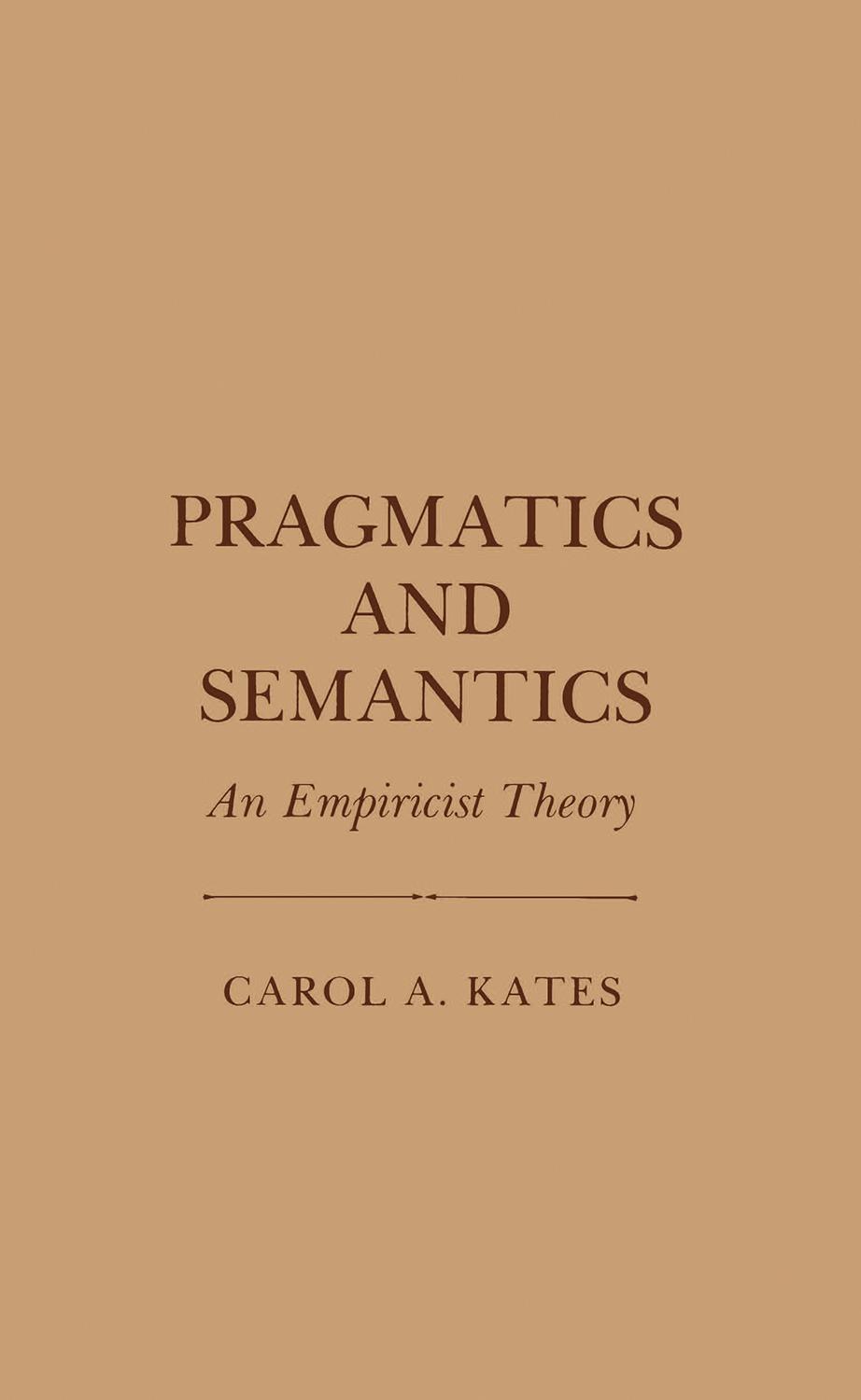
What is the nature of communicative competence? Carol Kates addresses this crucial linguistic question, examining and finally rejecting the rationalistic theory proposed by Noam Chomsky and elaborated by Jerrold J. Katz, among others. She sets forth three reasons why the rationalistic model shoudl be rejected: (1) it has not been supported by empirical tests; (2) it cannot accommodate the pragmatic relation between speaker and sign; and (3) the theory of universal grammar carries with it unacceptable metaphysical implications unless it is interpreted in light of empiricism. Kates proposes an empiricist model in place of the rationalistic theory—a model that, in her view, is more consistent with recent findings in linguistics and psycholinguistics.
In attempting to clarify the nature of utterance meaning, Kates develops theoretical perspectives on phenomenological empiricism and produces an account of reference and intentionality directly relevant to empiricaly based theories of speaking and understanding.
Among the major topics addressed in the book are transformational-generative and universal grammer, cognitive theories of language acquisition, pragmatic structure, predication and topic-comment structure, and empiricism and the philosophical problem of universals.
An innovative and probing work, Pragmatics and Semantics will be welcomed by philosophers, linguists, and psycholinguists.
Zahle einfach mit Karte, Klarna, Apple Pay oder Google Pay. Nicht zufrieden? Du hast immer ein 14-tägiges Widerrufsrecht. Lies mehr in unseren AGB. Hast du Fragen, schreib uns eine E-Mail an hello@memmo.org.
Memmo macht das Lernen einfacher – wo auch immer du bist. Bei uns findest du deine Kursbücher und smarte Lerntools an einem Ort: Zusammenfassungen, Quizzes, Podcasts und Lernkarten. Und Ted, dein Lernbuddy, beantwortet alles, was du wissen möchtest. Über 50.000 Studierende lernen bereits hier – gemacht, damit du schneller lernst und weniger Stress hast.