
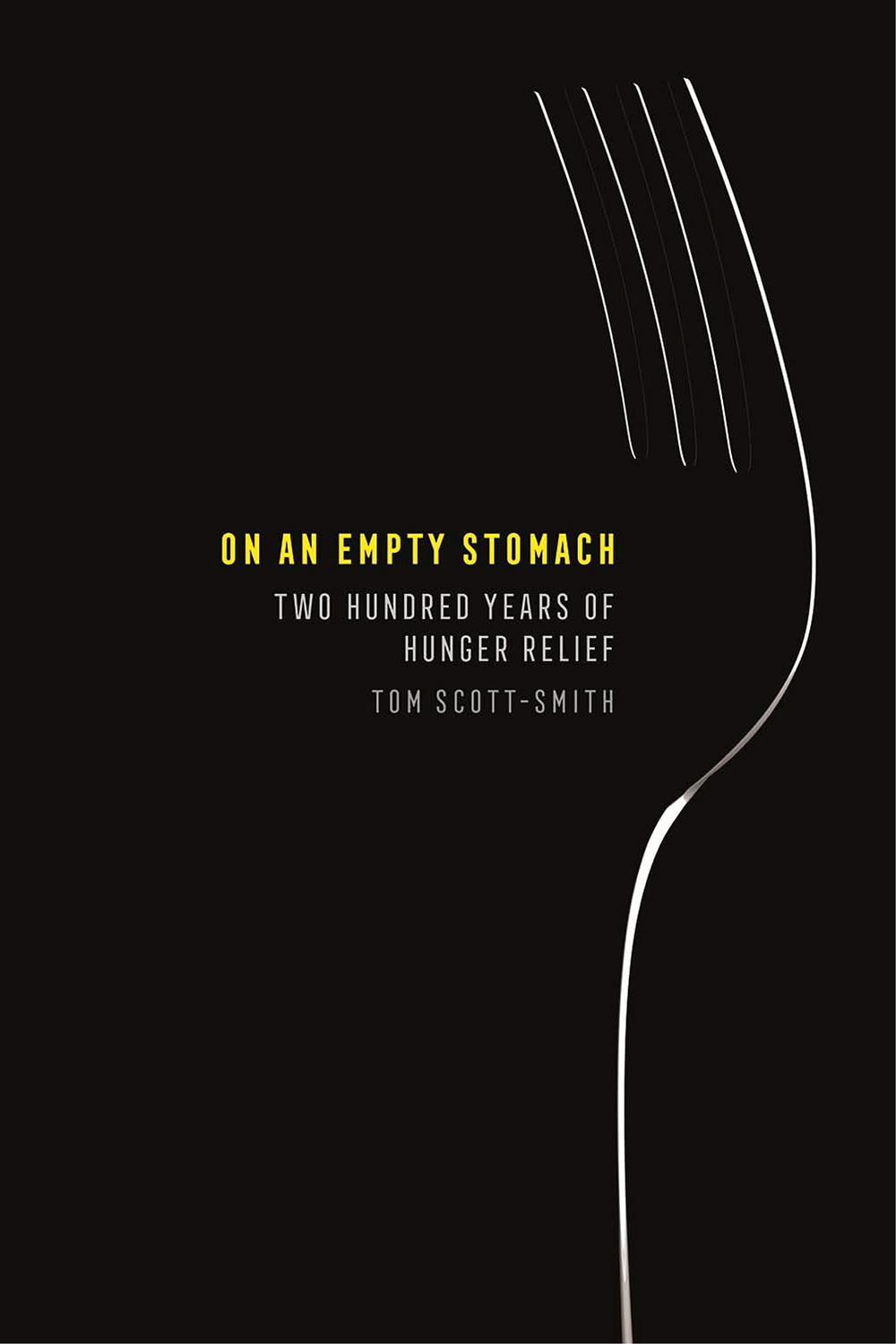
On an Empty Stomach examines the practical techniques humanitarians have used to manage and measure starvation, from Victorian "scientific" soup kitchens to space-age, high-protein foods. Tracing the evolution of these techniques since the start of the nineteenth century, Tom Scott-Smith argues that humanitarianism is not a simple story of progress and improvement, but rather is profoundly shaped by sociopolitical conditions. Aid is often presented as an apolitical and technical project, but the way humanitarians conceive and tackle human needs has always been deeply influenced by culture, politics, and society. Txhese influences extend down to the most detailed mechanisms for measuring malnutrition and providing sustenance.
As Scott-Smith shows, over the past century, the humanitarian approach to hunger has redefined food as nutrients and hunger as a medical condition. Aid has become more individualized, medicalized, and rationalized, shaped by modernism in bureaucracy, commerce, and food technology. On an Empty Stomach focuses on the gains and losses that result, examining the complex compromises that arise between efficiency of distribution and quality of care. Scott-Smith concludes that humanitarian groups have developed an approach to the empty stomach that is dependent on compact, commercially produced devices and is often paternalistic and culturally insensitive.
Zahle einfach mit Karte, Klarna, Apple Pay oder Google Pay. Nicht zufrieden? Du hast immer ein 14-tägiges Widerrufsrecht. Lies mehr in unseren AGB. Hast du Fragen, schreib uns eine E-Mail an hello@memmo.org.
Memmo macht das Lernen einfacher – wo auch immer du bist. Bei uns findest du deine Kursbücher und smarte Lerntools an einem Ort: Zusammenfassungen, Quizzes, Podcasts und Lernkarten. Und Ted, dein Lernbuddy, beantwortet alles, was du wissen möchtest. Über 50.000 Studierende lernen bereits hier – gemacht, damit du schneller lernst und weniger Stress hast.