
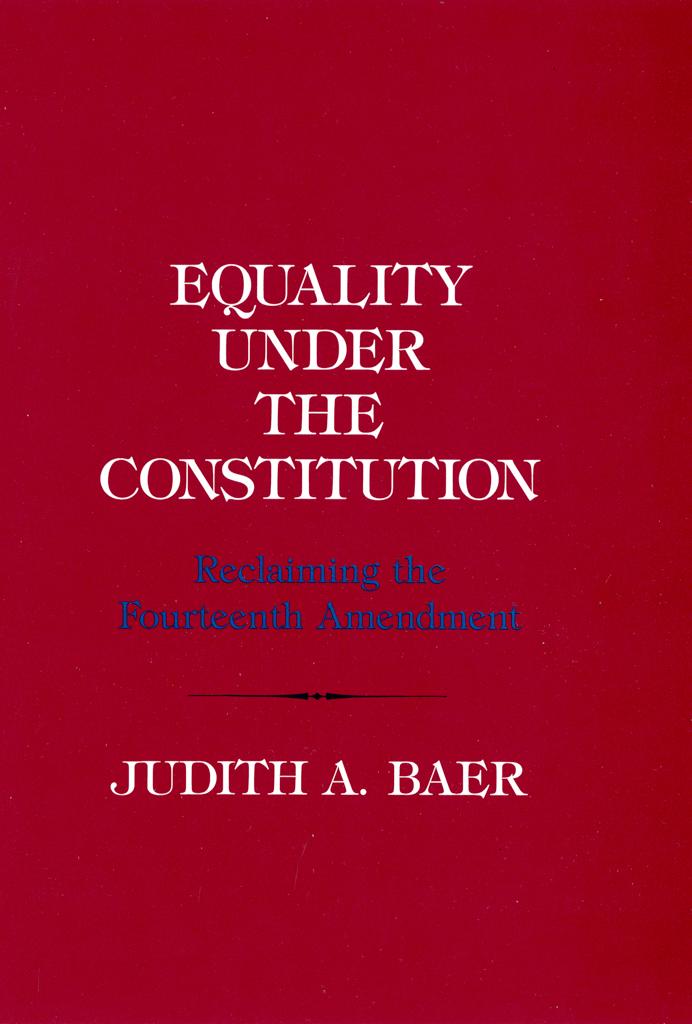
The principle of equality embedded in the Declaration of Independence and reaffirmed in the Constitution does not distinguish between individuals according to their capacities or merits. It is written into these documents to ensure that each and every person enjoys equal respect and equal rights. Judith Baer maintains, however, that in fact American judicial decisions have consistently denied individuals the form of equality to which they are legally entitled—that the courts have interpreted constitutional guarantees of equal protection in ways that undermine the original intent of Congress. In Equality under the Constitution, Baer examines the background, scope, and purpose of the Constitution's Fourteenth Amendment and the history of its interpretation by the courts. She traces the development of the idea of equality, drawing on the Bill of Rights, Congressional records, the Civil War amendments, and other sections of the Constitution. Baer discusses many of the significant equal-protection cases decided by the Supreme Court from the time of the amendment's ratification, including decisions on reverse discrimination, age discrimination, the rights of the disabled, and gay rights. She concludes with a theory of equality more faithful to the history, language, and spirit of the Constitution.
Zahle einfach mit Karte, Klarna, Apple Pay oder Google Pay. Nicht zufrieden? Du hast immer ein 14-tägiges Widerrufsrecht. Lies mehr in unseren AGB. Hast du Fragen, schreib uns eine E-Mail an hello@memmo.org.
Memmo macht das Lernen einfacher – wo auch immer du bist. Bei uns findest du deine Kursbücher und smarte Lerntools an einem Ort: Zusammenfassungen, Quizzes, Podcasts und Lernkarten. Und Ted, dein Lernbuddy, beantwortet alles, was du wissen möchtest. Über 50.000 Studierende lernen bereits hier – gemacht, damit du schneller lernst und weniger Stress hast.