
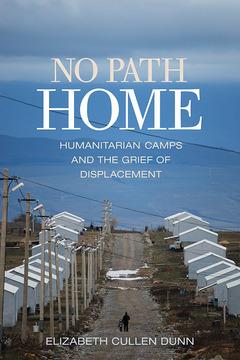
For more than 60 million displaced people around the world, humanitarian aid has become a chronic condition. No Path Home describes its symptoms in detail. Elizabeth Cullen Dunn shows how war creates a deeply damaged world in which the structures that allow people to occupy social roles, constitute economic value, preserve bodily integrity, and engage in meaningful daily practice have been blown apart.
After the Georgian war with Russia in 2008, Dunn spent sixteen months immersed in the everyday lives of the 28,000 people placed in thirty-six resettlement camps by official and nongovernmental organizations acting in concert with the Georgian government. She reached the conclusion that the humanitarian condition poses a survival problem that is not only biological but also existential. In No Path Home, she paints a moving picture of the ways in which humanitarianism leaves displaced people in limbo, neither in a state of emergency nor able to act as normal citizens in the country where they reside.
Zahle einfach mit Karte, Klarna, Apple Pay oder Google Pay. Nicht zufrieden? Du hast immer ein 14-tägiges Widerrufsrecht. Lies mehr in unseren AGB. Hast du Fragen, schreib uns eine E-Mail an hello@memmo.org.
Memmo macht das Lernen einfacher – wo auch immer du bist. Bei uns findest du deine Kursbücher und smarte Lerntools an einem Ort: Zusammenfassungen, Quizzes, Podcasts und Lernkarten. Und Ted, dein Lernbuddy, beantwortet alles, was du wissen möchtest. Über 50.000 Studierende lernen bereits hier – gemacht, damit du schneller lernst und weniger Stress hast.