
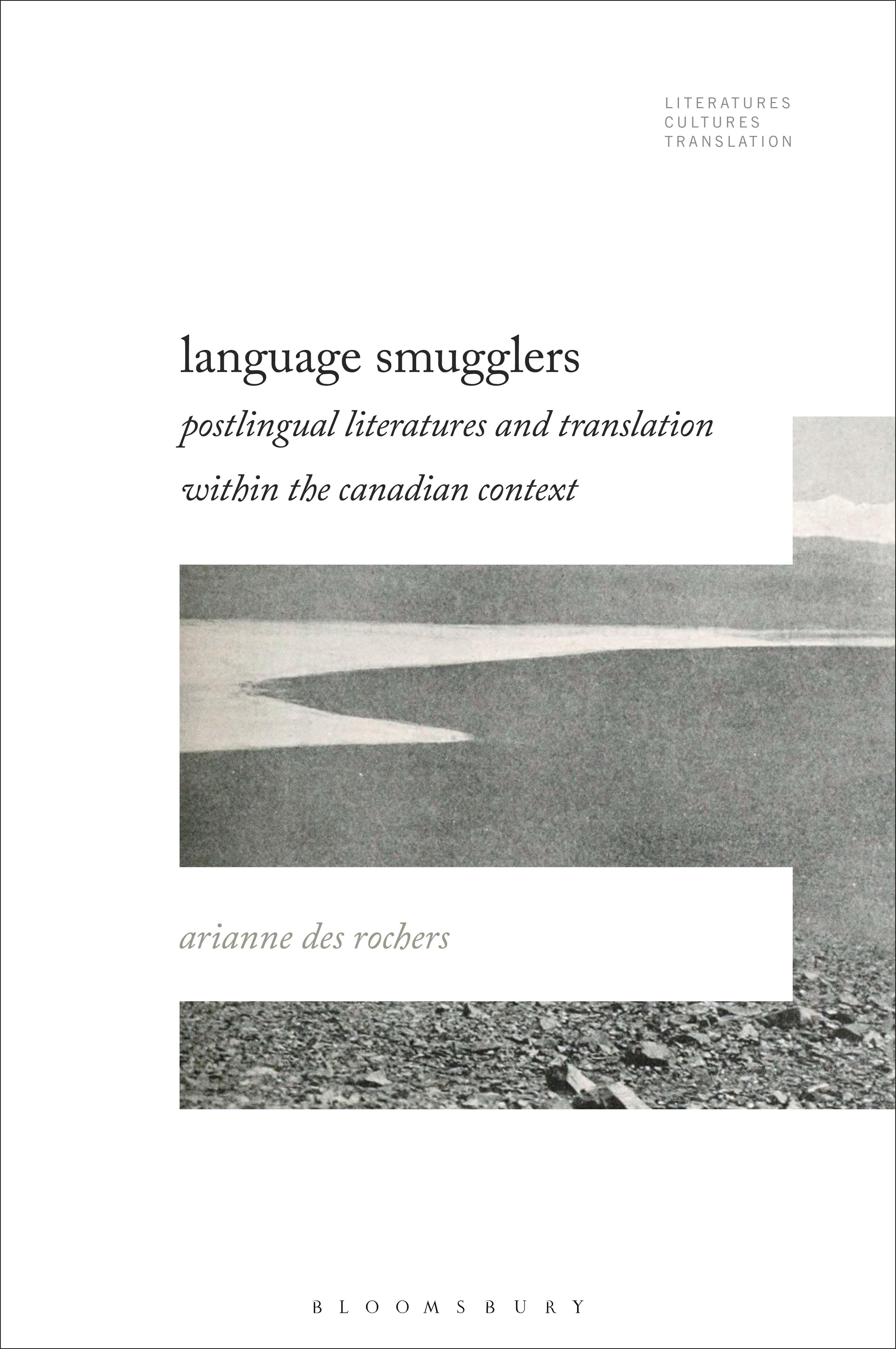
Translation is commonly understood as the rendering of a text from one language to another – a border-crossing activity, where the border is a linguistic one. But what if the text one is translating is not written in “one language;” indeed, what if no text is ever written in a single language?
In recent years, many books of fiction and poetry published in so-called Canada, especially by queer, racialized and Indigenous writers, have challenged the structural notions of linguistic autonomy and singularity that underlie not only the formation of the nation-state, but the bulk of Western translation theory and the field of comparative literature.
Language Smugglers argues that the postnational cartographies of language found in minoritized Canadian literary works force a radical redefinition of the activity of translation altogether. Canada is revealed as an especially rich site for this study, with its official bilingualism and multiculturalism policies, its robust translation industry and practitioners, and the strong challenges to its national narratives and accompanying language politics presented by Indigenous people, the province of Québec, and high levels of immigration.
In recent years, many books of fiction and poetry published in so-called Canada, especially by queer, racialized and Indigenous writers, have challenged the structural notions of linguistic autonomy and singularity that underlie not only the formation of the nation-state, but the bulk of Western translation theory and the field of comparative literature.
Language Smugglers argues that the postnational cartographies of language found in minoritized Canadian literary works force a radical redefinition of the activity of translation altogether. Canada is revealed as an especially rich site for this study, with its official bilingualism and multiculturalism policies, its robust translation industry and practitioners, and the strong challenges to its national narratives and accompanying language politics presented by Indigenous people, the province of Québec, and high levels of immigration.
Seiten: 256
Kategorie: Kultur-, Genus- & Postkoloniala studier
e-ISBN: 9781501394126
Versandgewicht: 1.2 kg
Versand in: 1-2 Tage
Zahle einfach mit Karte, Klarna, Apple Pay oder Google Pay. Nicht zufrieden? Du hast immer ein 14-tägiges Widerrufsrecht. Lies mehr in unseren AGB. Hast du Fragen, schreib uns eine E-Mail an hello@memmo.org.
Memmo macht das Lernen einfacher – wo auch immer du bist. Bei uns findest du deine Kursbücher und smarte Lerntools an einem Ort: Zusammenfassungen, Quizzes, Podcasts und Lernkarten. Und Ted, dein Lernbuddy, beantwortet alles, was du wissen möchtest. Über 50.000 Studierende lernen bereits hier – gemacht, damit du schneller lernst und weniger Stress hast.