
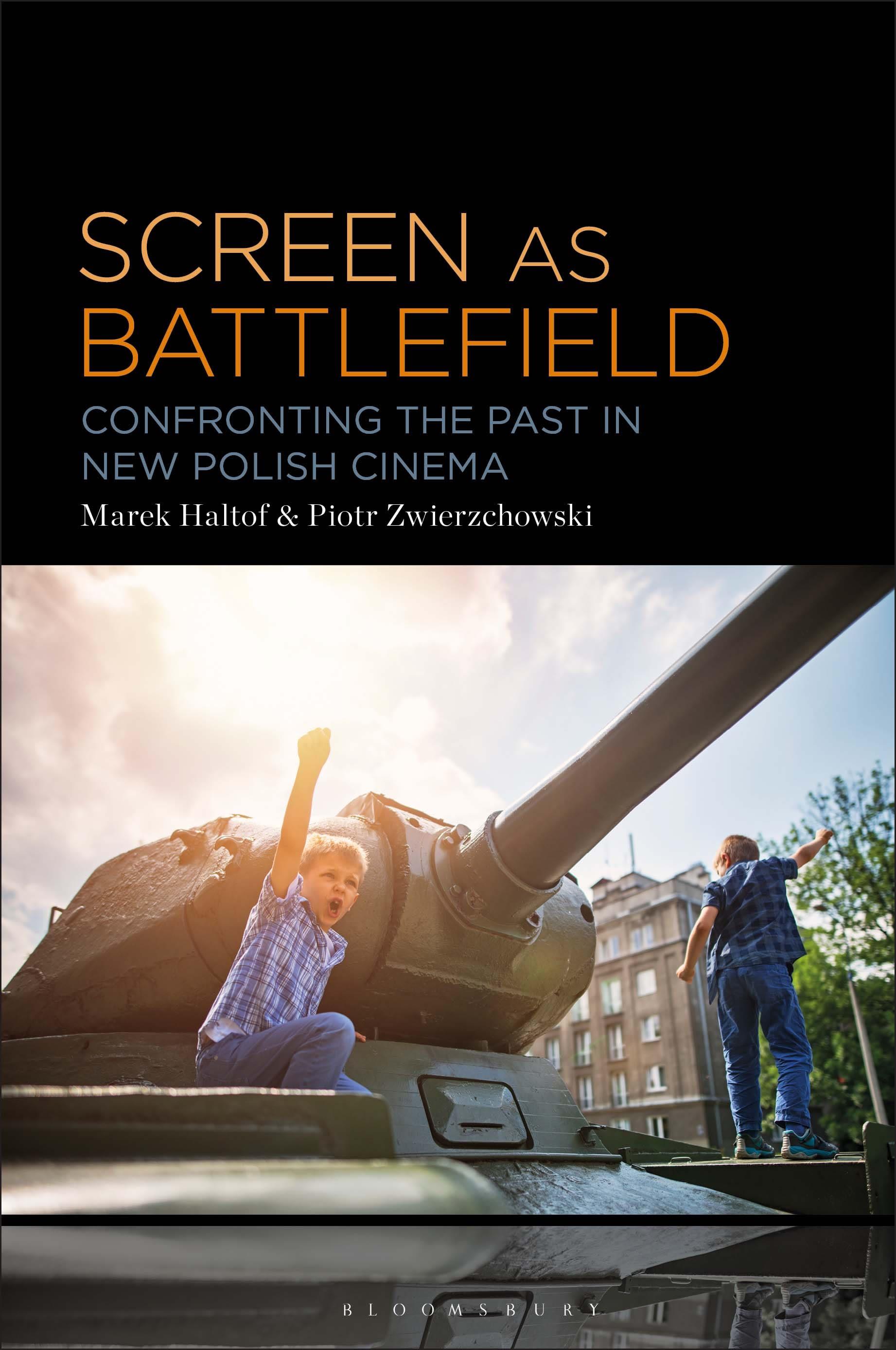
Screen as Battlefield deals with the treatment of history in Polish cinema after the end of communist rule in 1989 and the return of democracy.
It analyzes not only how local filmmakers have represented the last century's complex history, but also how various government institutions have tried to influence the cinematic vision of the past through funding (or the lack of it) and by using political pressure.
The year 1989 was as a turning point in Polish history, marking the peaceful transition from a totalitarian system to democracy. After years of mythologizing history, Polish past was finally present on Polish screens. Previously banned or available only in censored versions, historical subjects became prominent in cinema theatres and on television. These topics have included, among others, the Soviet-Nazi pact and aggression on Poland in 1939, the Soviet occupation of the entire region after 1945, the brutal imposition of communist rule, and the Stalinist legacy. Since the founding of the Polish Film Institute (PISF) in 2005, more than one hundred theatrically released films have dealt with Polish history. Several of them received international acclaim and festival awards; they were also popular at the box office. Screen as Battlefield discusses several internationally known films, among them The Pianist (2002), Katyn (2007), Rose (2011), Ida (2013), Warsaw '44 (2014), Volhynia (aka Hatred, 2016), and Cold War (2018).
It analyzes not only how local filmmakers have represented the last century's complex history, but also how various government institutions have tried to influence the cinematic vision of the past through funding (or the lack of it) and by using political pressure.
The year 1989 was as a turning point in Polish history, marking the peaceful transition from a totalitarian system to democracy. After years of mythologizing history, Polish past was finally present on Polish screens. Previously banned or available only in censored versions, historical subjects became prominent in cinema theatres and on television. These topics have included, among others, the Soviet-Nazi pact and aggression on Poland in 1939, the Soviet occupation of the entire region after 1945, the brutal imposition of communist rule, and the Stalinist legacy. Since the founding of the Polish Film Institute (PISF) in 2005, more than one hundred theatrically released films have dealt with Polish history. Several of them received international acclaim and festival awards; they were also popular at the box office. Screen as Battlefield discusses several internationally known films, among them The Pianist (2002), Katyn (2007), Rose (2011), Ida (2013), Warsaw '44 (2014), Volhynia (aka Hatred, 2016), and Cold War (2018).
Seiten: 328
Kategorie: Film- & Medievetenskap
e-ISBN: 9781501382765
Versandgewicht: 1.2 kg
Versand in: 1-2 Tage
Zahle einfach mit Karte, Klarna, Apple Pay oder Google Pay. Nicht zufrieden? Du hast immer ein 14-tägiges Widerrufsrecht. Lies mehr in unseren AGB. Hast du Fragen, schreib uns eine E-Mail an hello@memmo.org.
Memmo macht das Lernen einfacher – wo auch immer du bist. Bei uns findest du deine Kursbücher und smarte Lerntools an einem Ort: Zusammenfassungen, Quizzes, Podcasts und Lernkarten. Und Ted, dein Lernbuddy, beantwortet alles, was du wissen möchtest. Über 50.000 Studierende lernen bereits hier – gemacht, damit du schneller lernst und weniger Stress hast.