
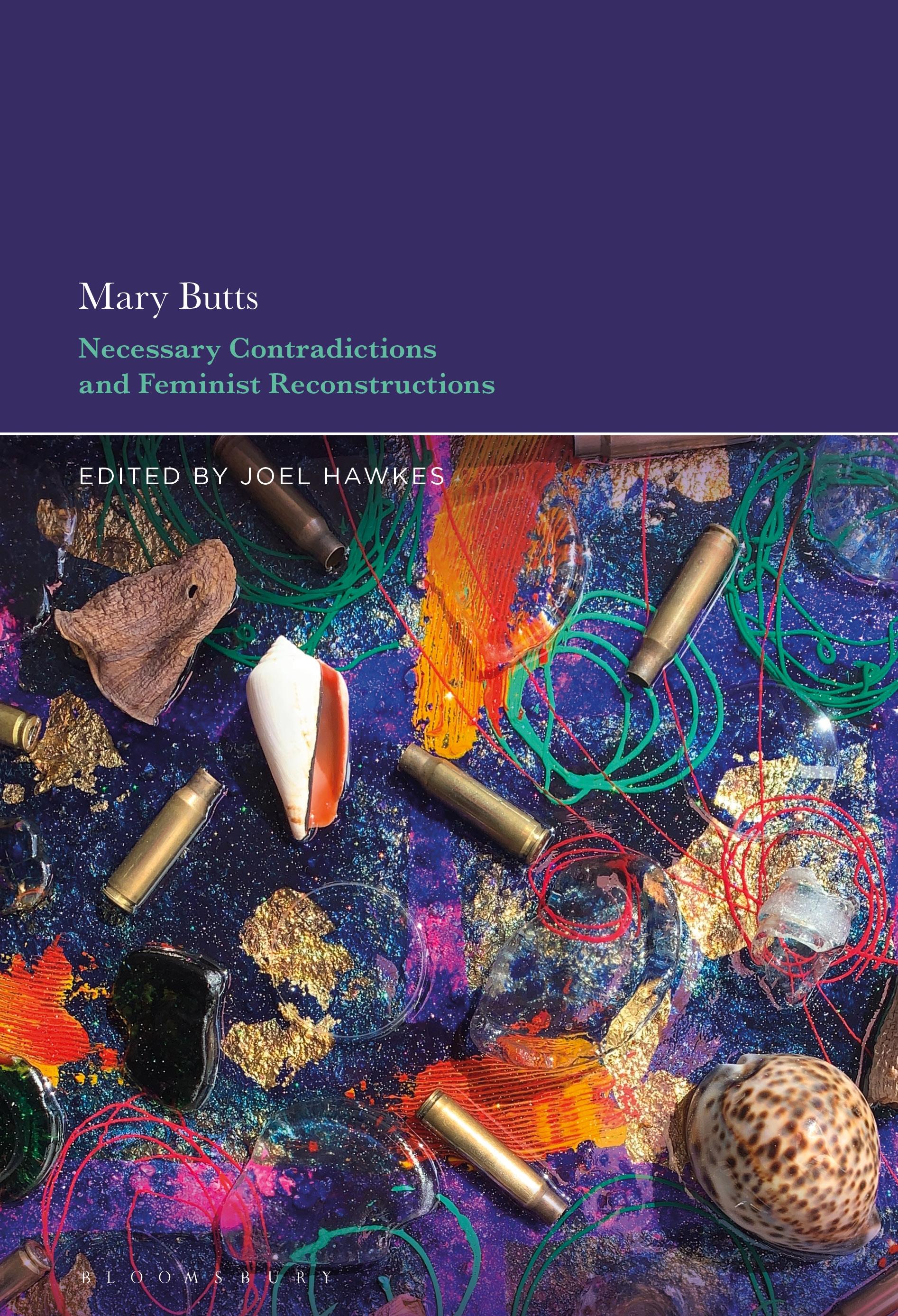
A scholarly and experimental collection that offers fresh insight-with a feminist focus-into the often overlooked modernist writer Mary Butts and the contested processes of recovering such an author.
Scholars instrumental in the recovery of Mary Butts, along with newer writers, publishers, printers, and artists, enter into conversation exploring the work of the British author, whose body of work plays between high modernist forms and more popular genres-writing that can be described as occult, Gothic, queer, proto-environmental, and feminist. Taking its cue from Butts's experimental, rhythmic writing and the transnational artistic communities in which Butts moved in the 1920s, the collection is a non-linear exchange rather than a collection of isolated arguments-a conversation constructed from "classical" academic chapters, "knight's move" non-academic reflections, and short responses to these.
This conversation lies at the intersection of "feminism" and "reconstruction": Chapters range between Butts's writing techniques and forms, her position in the modernist canon, contested sites of feminism in her work, critical reception of that work, queer and post-critical readings, and the success of, and the need for, a feminist recovery of the author. The collection aims to be a feminist engagement, while asking questions of what this might look like, why it is needed, and how such an approach offers fresh insight into an erudite, playful, difficult, contradictory, and experimental body of work. Ultimately, the collection asks, how should we reconstruct the author and her work for the contemporary reader?
Scholars instrumental in the recovery of Mary Butts, along with newer writers, publishers, printers, and artists, enter into conversation exploring the work of the British author, whose body of work plays between high modernist forms and more popular genres-writing that can be described as occult, Gothic, queer, proto-environmental, and feminist. Taking its cue from Butts's experimental, rhythmic writing and the transnational artistic communities in which Butts moved in the 1920s, the collection is a non-linear exchange rather than a collection of isolated arguments-a conversation constructed from "classical" academic chapters, "knight's move" non-academic reflections, and short responses to these.
This conversation lies at the intersection of "feminism" and "reconstruction": Chapters range between Butts's writing techniques and forms, her position in the modernist canon, contested sites of feminism in her work, critical reception of that work, queer and post-critical readings, and the success of, and the need for, a feminist recovery of the author. The collection aims to be a feminist engagement, while asking questions of what this might look like, why it is needed, and how such an approach offers fresh insight into an erudite, playful, difficult, contradictory, and experimental body of work. Ultimately, the collection asks, how should we reconstruct the author and her work for the contemporary reader?
Zahle einfach mit Karte, Klarna, Apple Pay oder Google Pay. Nicht zufrieden? Du hast immer ein 14-tägiges Widerrufsrecht. Lies mehr in unseren AGB. Hast du Fragen, schreib uns eine E-Mail an hello@memmo.org.
Memmo macht das Lernen einfacher – wo auch immer du bist. Bei uns findest du deine Kursbücher und smarte Lerntools an einem Ort: Zusammenfassungen, Quizzes, Podcasts und Lernkarten. Und Ted, dein Lernbuddy, beantwortet alles, was du wissen möchtest. Über 50.000 Studierende lernen bereits hier – gemacht, damit du schneller lernst und weniger Stress hast.