
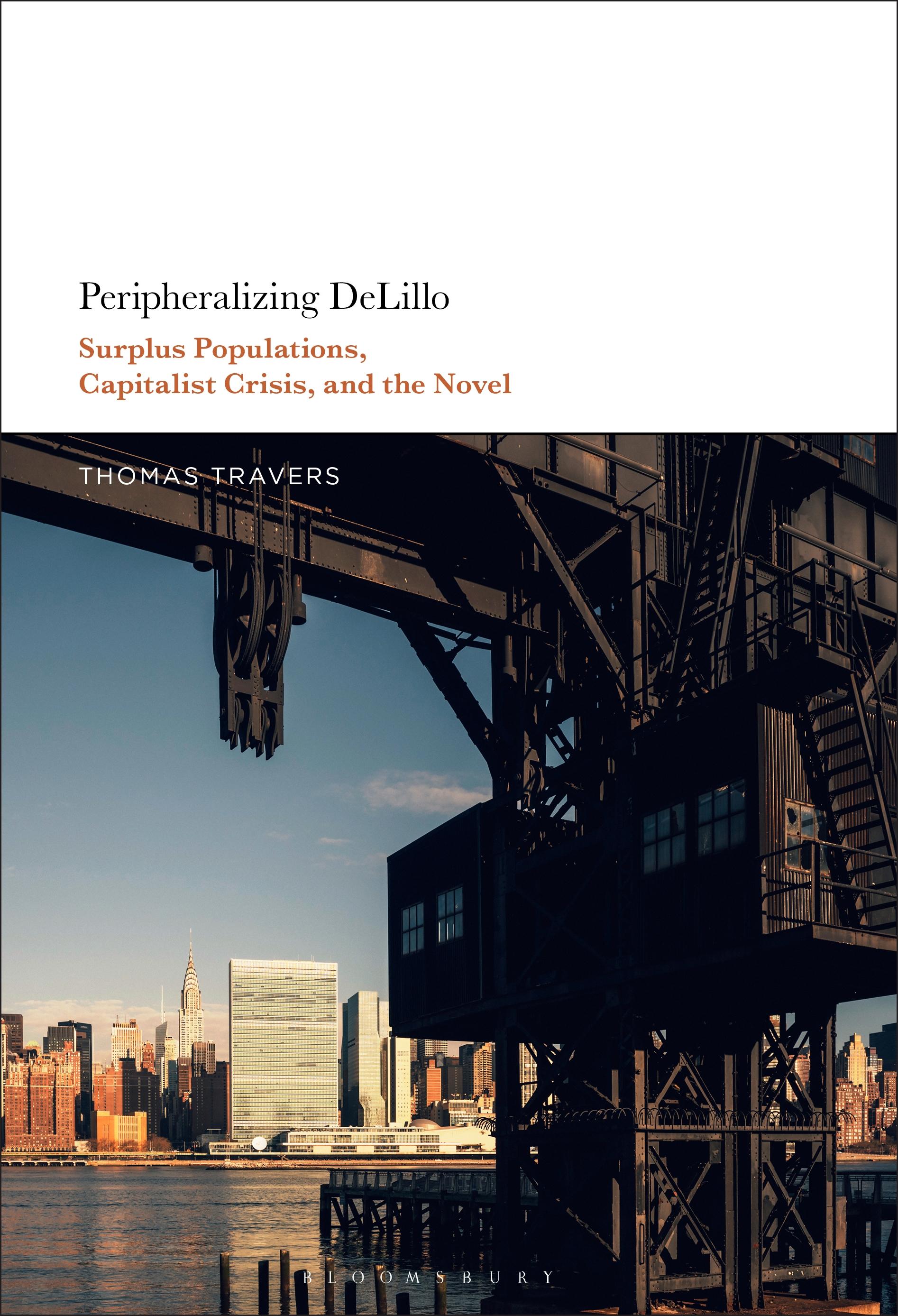
Peripheralizing DeLillo tracks the historical arc of Don DeLillo's poetics as it recomposes itself across the genres of short fiction, romance, the historical novel, and the philosophical novel of time.
Drawing on theories that capital, rather than the bourgeoisie, is the displaced subject of the novel, Thomas Travers investigates DeLillo's representation of fully commodified social worlds and re-evaluates Marxist accounts of the novel and its philosophy of history. Deploying an innovative re-periodisation, Travers considers the evolution of DeLillo's aesthetic forms as they register and encode one of the crises of contemporary historicity: the secular dynamics through which a society organised around waged work tends towards conditions of under- and unemployment.
Situating DeLillo within global histories of uneven and combined development, Travers explores how DeLillo's treatment of capital and labour, affect and narration, reconfigures debates around realism and modernism. The DeLillo that emerges from this study is no longer an exemplary postmodern writer, but a composer of capitalist epics, a novelist drawn to peripheral zones of accumulation, zones of social death whose surplus populations his fiction strives to re-historicise, if not re-dialecticise as subjects of history.
Drawing on theories that capital, rather than the bourgeoisie, is the displaced subject of the novel, Thomas Travers investigates DeLillo's representation of fully commodified social worlds and re-evaluates Marxist accounts of the novel and its philosophy of history. Deploying an innovative re-periodisation, Travers considers the evolution of DeLillo's aesthetic forms as they register and encode one of the crises of contemporary historicity: the secular dynamics through which a society organised around waged work tends towards conditions of under- and unemployment.
Situating DeLillo within global histories of uneven and combined development, Travers explores how DeLillo's treatment of capital and labour, affect and narration, reconfigures debates around realism and modernism. The DeLillo that emerges from this study is no longer an exemplary postmodern writer, but a composer of capitalist epics, a novelist drawn to peripheral zones of accumulation, zones of social death whose surplus populations his fiction strives to re-historicise, if not re-dialecticise as subjects of history.
Seiten: 240
Kategorie: Litteraturvetenskap & Teori
e-ISBN: 9781501378423
Versandgewicht: 1.2 kg
Versand in: 1-2 Tage
Zahle einfach mit Karte, Klarna, Apple Pay oder Google Pay. Nicht zufrieden? Du hast immer ein 14-tägiges Widerrufsrecht. Lies mehr in unseren AGB. Hast du Fragen, schreib uns eine E-Mail an hello@memmo.org.
Memmo macht das Lernen einfacher – wo auch immer du bist. Bei uns findest du deine Kursbücher und smarte Lerntools an einem Ort: Zusammenfassungen, Quizzes, Podcasts und Lernkarten. Und Ted, dein Lernbuddy, beantwortet alles, was du wissen möchtest. Über 50.000 Studierende lernen bereits hier – gemacht, damit du schneller lernst und weniger Stress hast.