
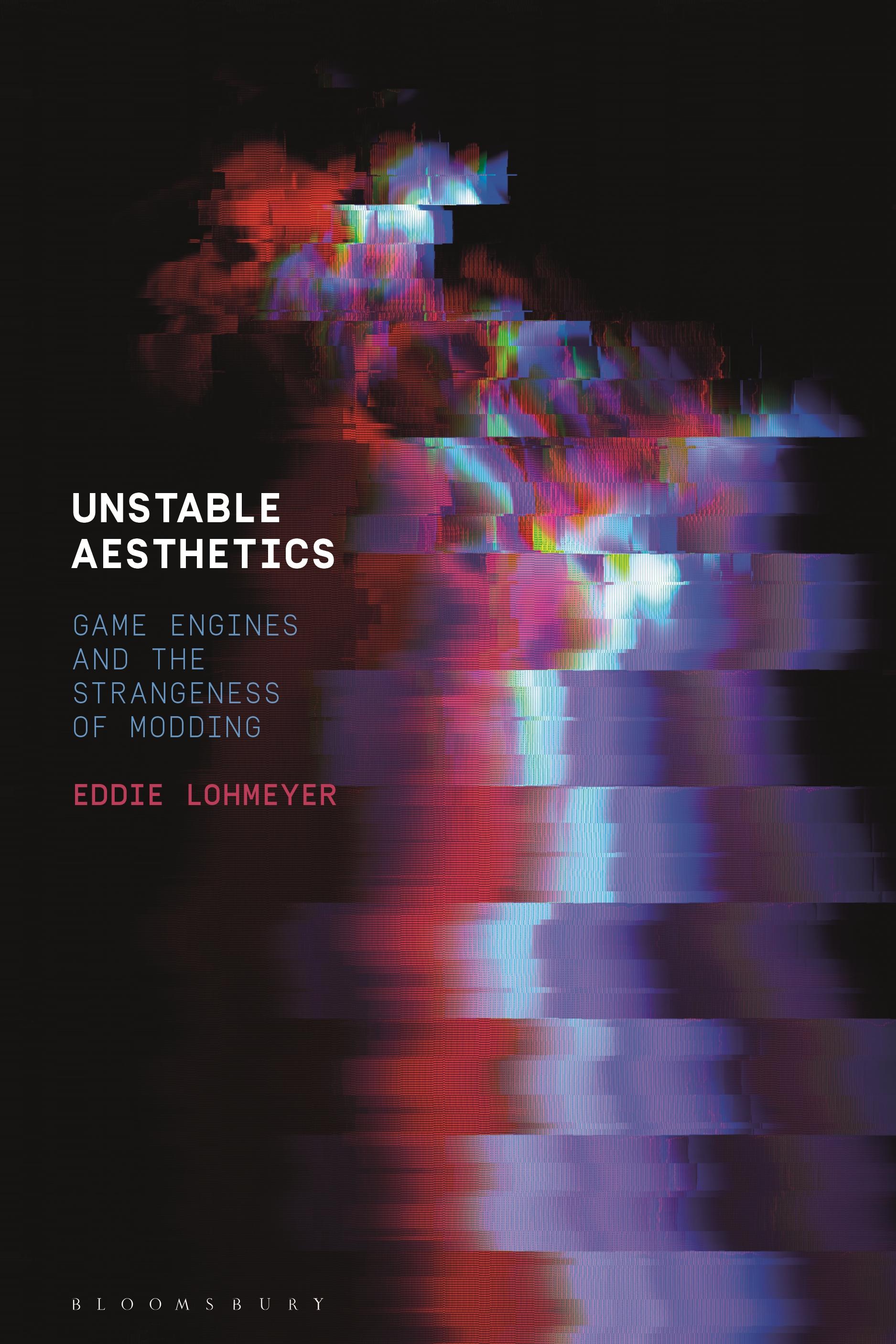
Throughout the 1990s, artists experimented with game engine technologies to disrupt our habitual relationships to video games. They hacked, glitched, and dismantled popular first-person shooters such as Doom (1993) and Quake (1996) to engage players in new kinds of embodied activity. In Unstable Aesthetics: Game Engines and the Strangeness of Art Modding, Eddie Lohmeyer investigates historical episodes of art modding practices-the alteration of a game system's existing code or hardware to generate abstract spaces-situated around a recent archaeology of the game engine: software for rendering two and three-dimensional gameworlds.
The contemporary artists highlighted throughout this book-Cory Arcangel, JODI, Julian Oliver, Krista Hoefle, and Brent Watanabe, among others –- were attracted to the architectures of engines because they allowed them to explore vital relationships among abstraction, technology, and the body. Artists employed a range of modding techniques-hacking the ROM chips on Nintendo cartridges to produce experimental video, deconstructing source code to generate psychedelic glitch patterns, and collaging together surreal gameworlds-to intentionally dissect the engine's operations and unveil illusions of movement within algorithmic spaces. Through key moments in game engine history, Lohmeyer formulates a rich phenomenology of video games by focusing on the liminal spaces of interaction among system and body, or rather the strangeness of art modding.
The contemporary artists highlighted throughout this book-Cory Arcangel, JODI, Julian Oliver, Krista Hoefle, and Brent Watanabe, among others –- were attracted to the architectures of engines because they allowed them to explore vital relationships among abstraction, technology, and the body. Artists employed a range of modding techniques-hacking the ROM chips on Nintendo cartridges to produce experimental video, deconstructing source code to generate psychedelic glitch patterns, and collaging together surreal gameworlds-to intentionally dissect the engine's operations and unveil illusions of movement within algorithmic spaces. Through key moments in game engine history, Lohmeyer formulates a rich phenomenology of video games by focusing on the liminal spaces of interaction among system and body, or rather the strangeness of art modding.
Seiten: 216
Kategorie: Film- & Medievetenskap
e-ISBN: 9781501364891
Versandgewicht: 1.2 kg
Versand in: 1-2 Tage
Zahle einfach mit Karte, Klarna, Apple Pay oder Google Pay. Nicht zufrieden? Du hast immer ein 14-tägiges Widerrufsrecht. Lies mehr in unseren AGB. Hast du Fragen, schreib uns eine E-Mail an hello@memmo.org.
Memmo macht das Lernen einfacher – wo auch immer du bist. Bei uns findest du deine Kursbücher und smarte Lerntools an einem Ort: Zusammenfassungen, Quizzes, Podcasts und Lernkarten. Und Ted, dein Lernbuddy, beantwortet alles, was du wissen möchtest. Über 50.000 Studierende lernen bereits hier – gemacht, damit du schneller lernst und weniger Stress hast.