
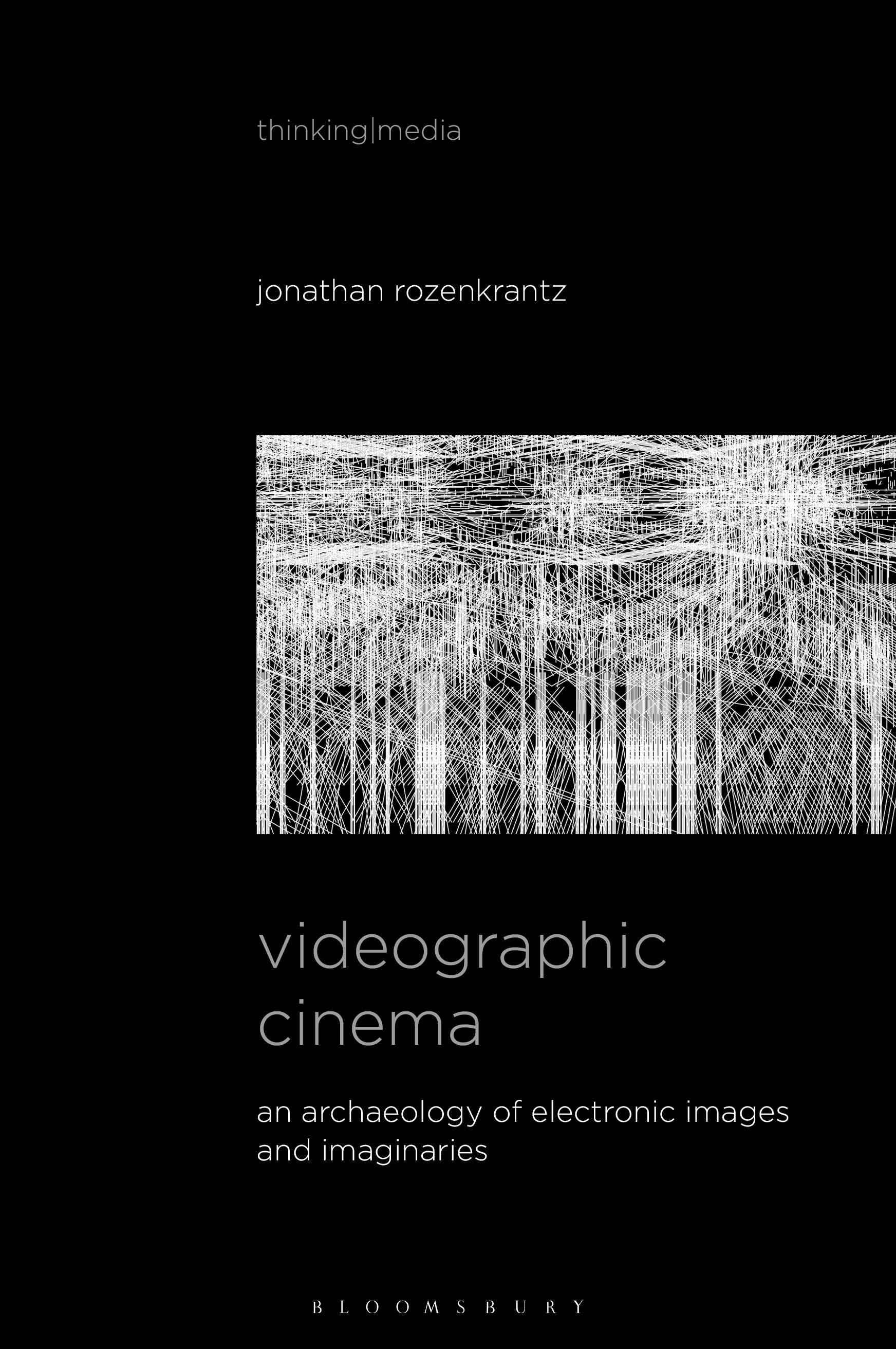
In 1957, A Face in the Crowd incorporated live video images to warn about the future of broadcast TV. In 2015, Kung Fury was infused with analogue noise to evoke the nostalgic feeling of watching an old VHS tape. Between the two films, numerous ones would incorporate video images to imagine the implications of video practices. Drawing on media archaeology, Videographic Cinema shows how such images and imaginaries have emerged, changed and remained over time according to their shifting technical, historical and institutional conditions.
Rediscovering forgotten films like Anti-Clock (1979) and reassessing ones like Lost Highway (1997), Jonathan Rozenkrantz charts neglected chapters of video history, including self-confrontation techniques in psychiatry, their complex relation with surveillance, and the invention/discovery of the “videographic psyche” by artists, therapists and filmmakers. Spanning six decades, Videographic Cinema discovers an epistemic shift from prospective imaginaries of surveillance and control conditioned on video as a medium for live transmission, to retrospective ones concerned with videotape as a recording memory. It ends by considering videographic filmmaking itself as a form of archaeology in the age of analogue obsolescence.
Rediscovering forgotten films like Anti-Clock (1979) and reassessing ones like Lost Highway (1997), Jonathan Rozenkrantz charts neglected chapters of video history, including self-confrontation techniques in psychiatry, their complex relation with surveillance, and the invention/discovery of the “videographic psyche” by artists, therapists and filmmakers. Spanning six decades, Videographic Cinema discovers an epistemic shift from prospective imaginaries of surveillance and control conditioned on video as a medium for live transmission, to retrospective ones concerned with videotape as a recording memory. It ends by considering videographic filmmaking itself as a form of archaeology in the age of analogue obsolescence.
Seiten: 232
Kategorie: Film- & Medievetenskap
e-ISBN: 9781501362415
Versandgewicht: 1.2 kg
Versand in: 1-2 Tage
Zahle einfach mit Karte, Klarna, Apple Pay oder Google Pay. Nicht zufrieden? Du hast immer ein 14-tägiges Widerrufsrecht. Lies mehr in unseren AGB. Hast du Fragen, schreib uns eine E-Mail an hello@memmo.org.
Memmo macht das Lernen einfacher – wo auch immer du bist. Bei uns findest du deine Kursbücher und smarte Lerntools an einem Ort: Zusammenfassungen, Quizzes, Podcasts und Lernkarten. Und Ted, dein Lernbuddy, beantwortet alles, was du wissen möchtest. Über 50.000 Studierende lernen bereits hier – gemacht, damit du schneller lernst und weniger Stress hast.