
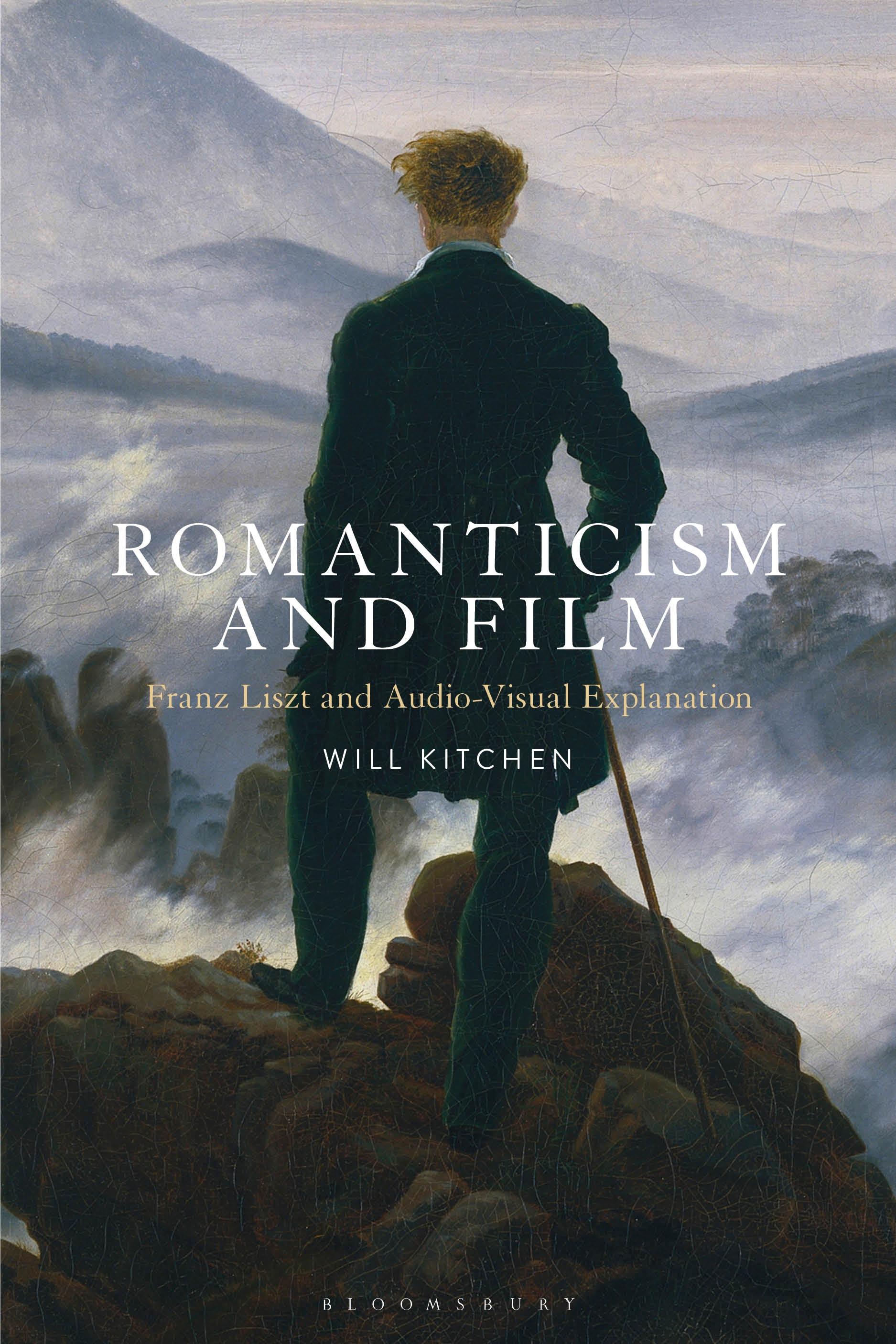
The relationship between Romanticism and film remains one of the most neglected topics in film theory and history, with analysis often focusing on the proto-cinematic significance of Richard Wagner's music-dramas. One new and interesting way of examining this relationship is by looking beyond Wagner, and developing a concept of audio-visual explanation rooted in Romantic philosophical aesthetics, and employing it in the analysis of film discourse and representation.
Using this concept of audio-visual explanation, the cultural image of the Hungarian pianist and composer Franz Liszt, a contemporary of Wagner and another significant practitioner of Romantic audio-visual aesthetics, is examined in reference to specific case studies, including the rarely-explored films Song Without End (1960) and Lisztomania (1975).
This multifaceted study of film discourse and representation employs Liszt as a guiding-thread, structuring a general exploration of the concept of Romanticism and its relationship with film more generally. This exploration is supported by new theories of representation based on schematic cognition, the philosophy of explanation, and the recently-developed film theory of Jacques Rancière.
Individual chapters address the historical background of audio-visual explanation in Romantic philosophical aesthetics, Liszt's role in the historical discourses of film and film music, and various filmic representations of Liszt and his compositions. Throughout these investigations, Will Kitchen explores the various ways that films explain, or 'make sense' of things, through a 'Romantic' aesthetic combination of sound and vision.
Using this concept of audio-visual explanation, the cultural image of the Hungarian pianist and composer Franz Liszt, a contemporary of Wagner and another significant practitioner of Romantic audio-visual aesthetics, is examined in reference to specific case studies, including the rarely-explored films Song Without End (1960) and Lisztomania (1975).
This multifaceted study of film discourse and representation employs Liszt as a guiding-thread, structuring a general exploration of the concept of Romanticism and its relationship with film more generally. This exploration is supported by new theories of representation based on schematic cognition, the philosophy of explanation, and the recently-developed film theory of Jacques Rancière.
Individual chapters address the historical background of audio-visual explanation in Romantic philosophical aesthetics, Liszt's role in the historical discourses of film and film music, and various filmic representations of Liszt and his compositions. Throughout these investigations, Will Kitchen explores the various ways that films explain, or 'make sense' of things, through a 'Romantic' aesthetic combination of sound and vision.
Seiten: 264
Kategorie: Film- & Medievetenskap
e-ISBN: 9781501361357
Versandgewicht: 1.2 kg
Versand in: 1-2 Tage
Zahle einfach mit Karte, Klarna, Apple Pay oder Google Pay. Nicht zufrieden? Du hast immer ein 14-tägiges Widerrufsrecht. Lies mehr in unseren AGB. Hast du Fragen, schreib uns eine E-Mail an hello@memmo.org.
Memmo macht das Lernen einfacher – wo auch immer du bist. Bei uns findest du deine Kursbücher und smarte Lerntools an einem Ort: Zusammenfassungen, Quizzes, Podcasts und Lernkarten. Und Ted, dein Lernbuddy, beantwortet alles, was du wissen möchtest. Über 50.000 Studierende lernen bereits hier – gemacht, damit du schneller lernst und weniger Stress hast.