
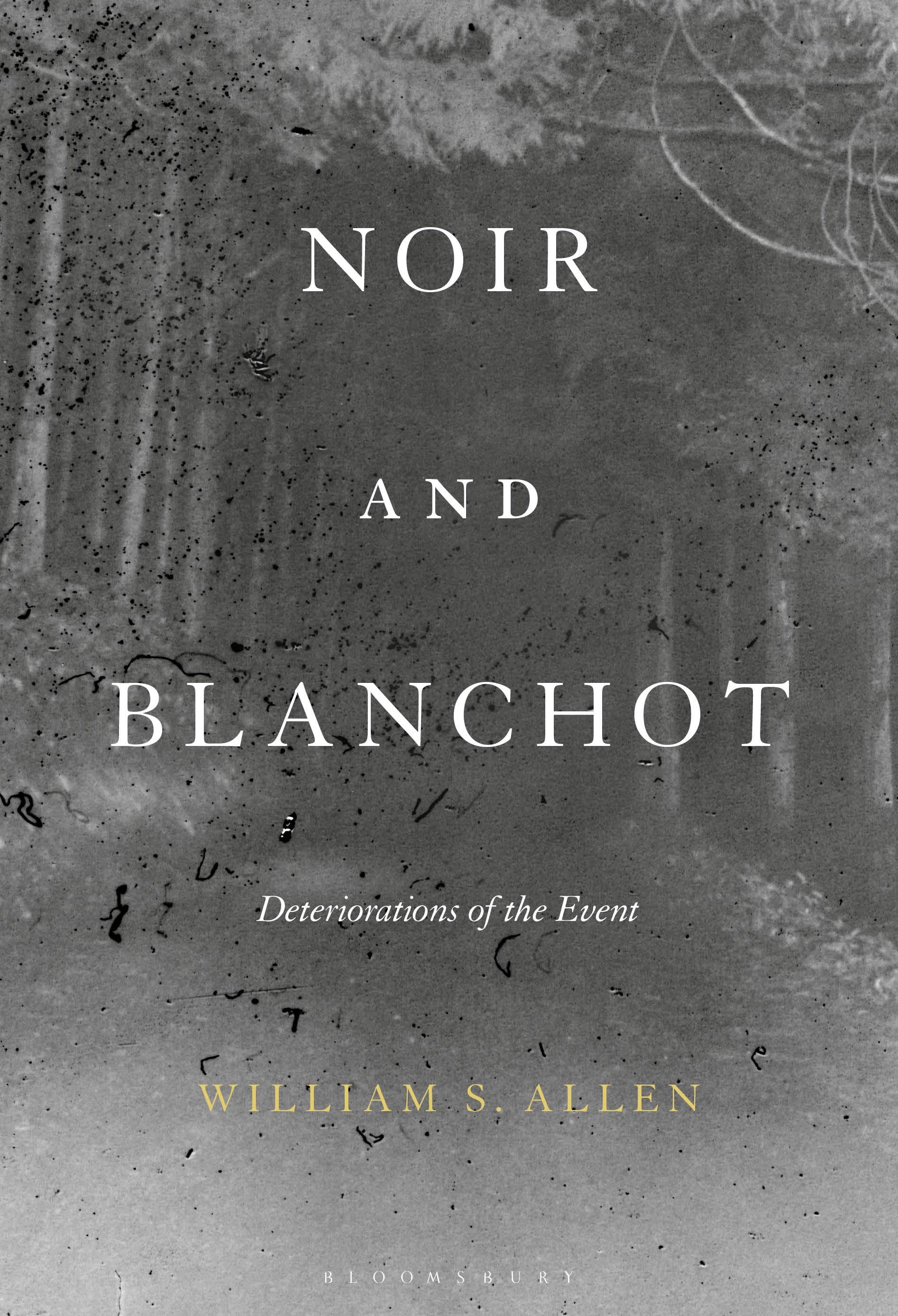
In dark or desperate times, the artwork is placed in a difficult position. Optimism seems naïve, while pessimism is no better. During some of the most demanding years of the 20th century two distinctive bodies of work sought to respond to this problem: the writings of Maurice Blanchot and American film noir. Both were seeking not only to respond to the times but also to critically reflect them, but both were often criticised for their own darkness. Understanding how this darkness became the means of responding to the darkness of the times is the focus of Noir and Blanchot, which examines key films from the period (including Double Indemnity and Vertigo) alongside Blanchot's writings (particularly his 1948 narrative Death Sentence).
What emerges from this investigation is the complex manner in which these works disrupt the experience of time and the event and in doing so expose an entirely different mode of material expression.
What emerges from this investigation is the complex manner in which these works disrupt the experience of time and the event and in doing so expose an entirely different mode of material expression.
Seiten: 200
Kategorie: Film- & Medievetenskap
e-ISBN: 9781501358920
Versandgewicht: 1.2 kg
Versand in: 1-2 Tage
Zahle einfach mit Karte, Klarna, Apple Pay oder Google Pay. Nicht zufrieden? Du hast immer ein 14-tägiges Widerrufsrecht. Lies mehr in unseren AGB. Hast du Fragen, schreib uns eine E-Mail an hello@memmo.org.
Memmo macht das Lernen einfacher – wo auch immer du bist. Bei uns findest du deine Kursbücher und smarte Lerntools an einem Ort: Zusammenfassungen, Quizzes, Podcasts und Lernkarten. Und Ted, dein Lernbuddy, beantwortet alles, was du wissen möchtest. Über 50.000 Studierende lernen bereits hier – gemacht, damit du schneller lernst und weniger Stress hast.