
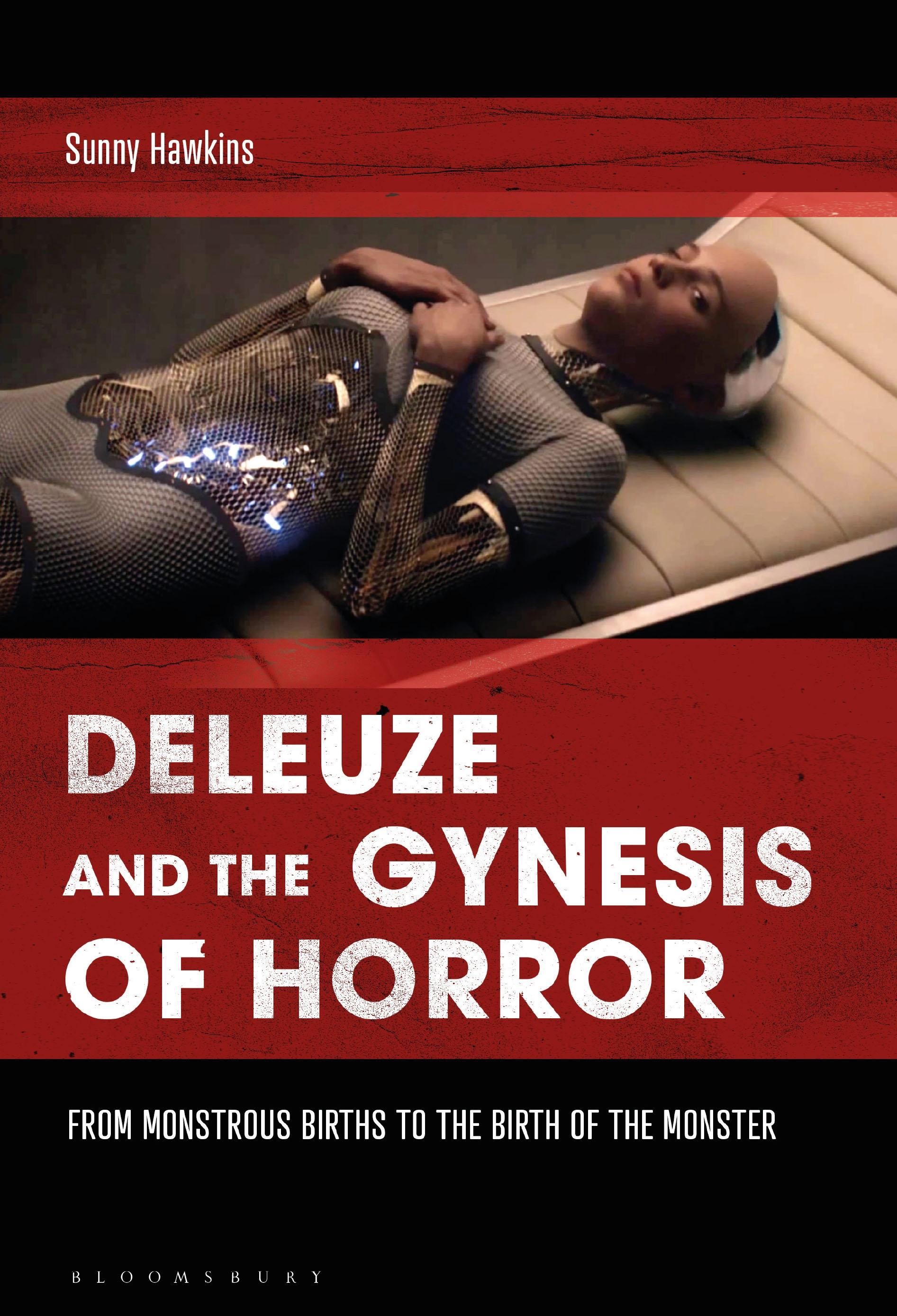
Applying Deleuze's schizoanalytic techniques to film theory, Deleuze and the Gynesis of Horror demonstrates how an embodied approach to horror film analysis can help us understand how film affects its viewers and distinguish those films which reify static, hegemonic, “molar” beings from those which prompt fluid, nonbinary, “molecular” becomings. It does so by analyzing the politics of reproduction in contemporary films such as Ex Machina; Mary Shelley's Frankenstein; Mad Max: Fury Road; the Twilight saga; and the original Alien quadrilogy and its more recent prequels, Prometheus and Alien: Covenant.
Author Sunny Hawkins argues that films which promote a “monstrous philosophy” of qualitative, affirmative difference as difference-in-itself, and which tend to be more molecular than molar in their expressions, can help us trace a “line of flight” from the gender binary in the real world. Deleuze and the Gynesis of Horror demonstrates how the techniques of horror film – editing, sound and visual effects, lighting and colour, camera movement – work in tandem with a film's content to affect the viewer's body in ways that disrupt the sense of self as a whole, unified subject with a stable, monolithic identity and, in some cases, can serve to breakdown the binary between self/Other, as we come to realize that we are none of us static, categorizable beings but are, as Henri Bergson said, “living things constantly becoming.”
Author Sunny Hawkins argues that films which promote a “monstrous philosophy” of qualitative, affirmative difference as difference-in-itself, and which tend to be more molecular than molar in their expressions, can help us trace a “line of flight” from the gender binary in the real world. Deleuze and the Gynesis of Horror demonstrates how the techniques of horror film – editing, sound and visual effects, lighting and colour, camera movement – work in tandem with a film's content to affect the viewer's body in ways that disrupt the sense of self as a whole, unified subject with a stable, monolithic identity and, in some cases, can serve to breakdown the binary between self/Other, as we come to realize that we are none of us static, categorizable beings but are, as Henri Bergson said, “living things constantly becoming.”
Seiten: 208
Kategorie: Kultur-, Genus- & Postkoloniala studier
e-ISBN: 9781501358449
Versandgewicht: 1.2 kg
Versand in: 1-2 Tage
Zahle einfach mit Karte, Klarna, Apple Pay oder Google Pay. Nicht zufrieden? Du hast immer ein 14-tägiges Widerrufsrecht. Lies mehr in unseren AGB. Hast du Fragen, schreib uns eine E-Mail an hello@memmo.org.
Memmo macht das Lernen einfacher – wo auch immer du bist. Bei uns findest du deine Kursbücher und smarte Lerntools an einem Ort: Zusammenfassungen, Quizzes, Podcasts und Lernkarten. Und Ted, dein Lernbuddy, beantwortet alles, was du wissen möchtest. Über 50.000 Studierende lernen bereits hier – gemacht, damit du schneller lernst und weniger Stress hast.