
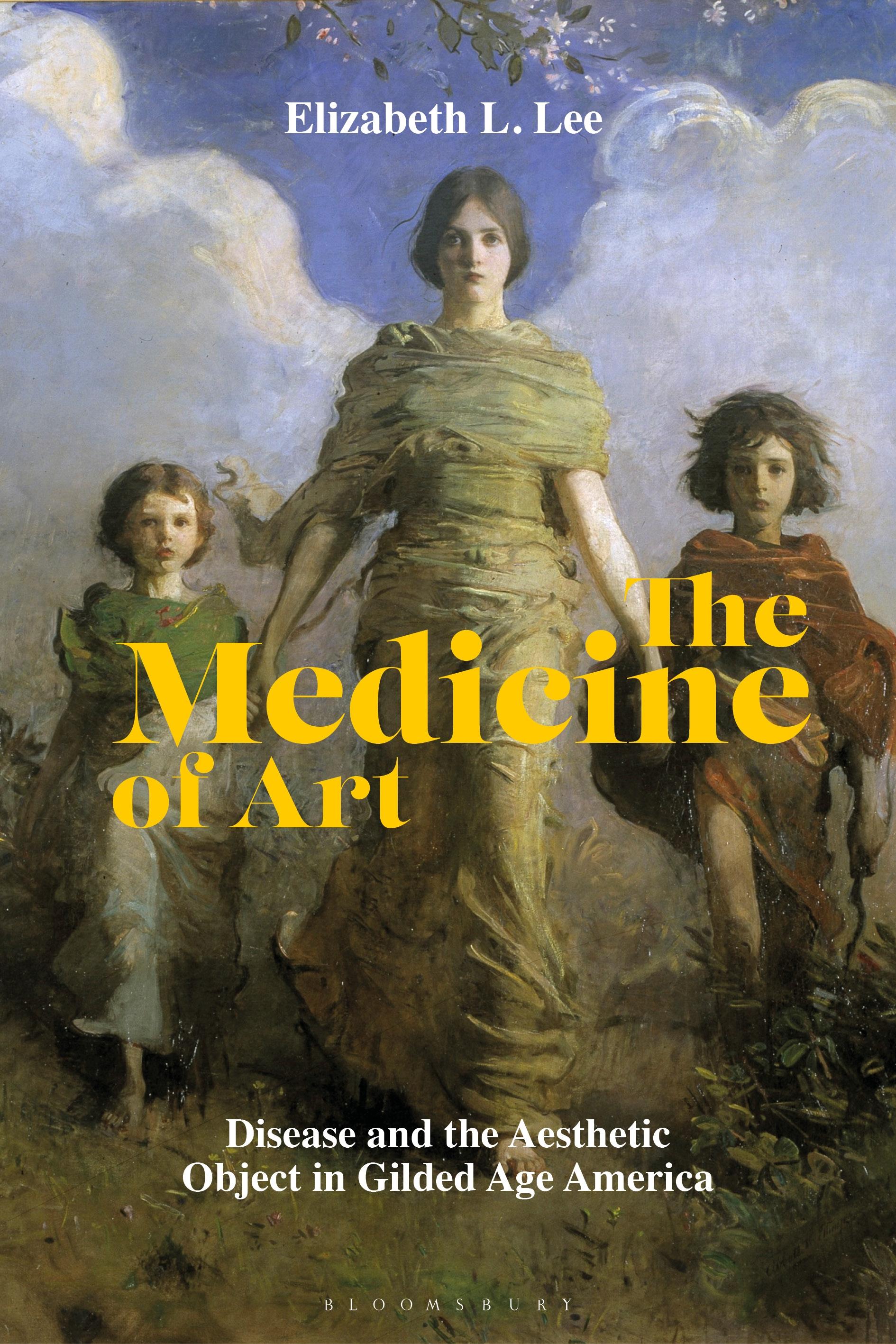
In 1901, the sculptor Augustus Saint-Gaudens proclaimed in a letter to Will Low, “Health-is the thing!” Though recently diagnosed with intestinal cancer, Saint-Gaudens was revitalized by recreational sports, having realized midcareer “there is something else in life besides the four walls of an ill-ventilated studio.” The Medicine of Art puts such moments center stage in order to consider the role of health and illness in the way art was produced and consumed.
Not merely beautiful or entertaining objects, works by Gilded-Age artists such as John Singer Sargent, Abbott Thayer, and Augustus Saint-Gaudens are shown to function as balm for the ill, providing relief from physical suffering and pain. Art did so by blunting the edges of contagious disease through a process of visual translation. In painting, for instance, hacking coughs, bloody sputum, and bodily enervation were recast as signs of spiritual elevation and refinement for the tuberculous, who were shown with a pale, chalky pallor that signalled rarefied beauty rather than an alarming indication of death. Works of art thus redirected the experience of illness in an era prior to the life-saving discoveries that would soon become hallmarks of modern medical science to offer an alternate therapy.
The first study to address the place of organic disease-cancer, tuberculosis, syphilis-in the life and work of Gilded-Age artists, this book looks at how well-known works of art were marked by disease and argues that art itself functioned in medicinal terms for artists and viewers in the late 19th century.
Not merely beautiful or entertaining objects, works by Gilded-Age artists such as John Singer Sargent, Abbott Thayer, and Augustus Saint-Gaudens are shown to function as balm for the ill, providing relief from physical suffering and pain. Art did so by blunting the edges of contagious disease through a process of visual translation. In painting, for instance, hacking coughs, bloody sputum, and bodily enervation were recast as signs of spiritual elevation and refinement for the tuberculous, who were shown with a pale, chalky pallor that signalled rarefied beauty rather than an alarming indication of death. Works of art thus redirected the experience of illness in an era prior to the life-saving discoveries that would soon become hallmarks of modern medical science to offer an alternate therapy.
The first study to address the place of organic disease-cancer, tuberculosis, syphilis-in the life and work of Gilded-Age artists, this book looks at how well-known works of art were marked by disease and argues that art itself functioned in medicinal terms for artists and viewers in the late 19th century.
Seiten: 240
Kategorie: Konst, Design & Fotografi
e-ISBN: 9781501346880
Versandgewicht: 1.2 kg
Versand in: 1-2 Tage
Zahle einfach mit Karte, Klarna, Apple Pay oder Google Pay. Nicht zufrieden? Du hast immer ein 14-tägiges Widerrufsrecht. Lies mehr in unseren AGB. Hast du Fragen, schreib uns eine E-Mail an hello@memmo.org.
Memmo macht das Lernen einfacher – wo auch immer du bist. Bei uns findest du deine Kursbücher und smarte Lerntools an einem Ort: Zusammenfassungen, Quizzes, Podcasts und Lernkarten. Und Ted, dein Lernbuddy, beantwortet alles, was du wissen möchtest. Über 50.000 Studierende lernen bereits hier – gemacht, damit du schneller lernst und weniger Stress hast.