
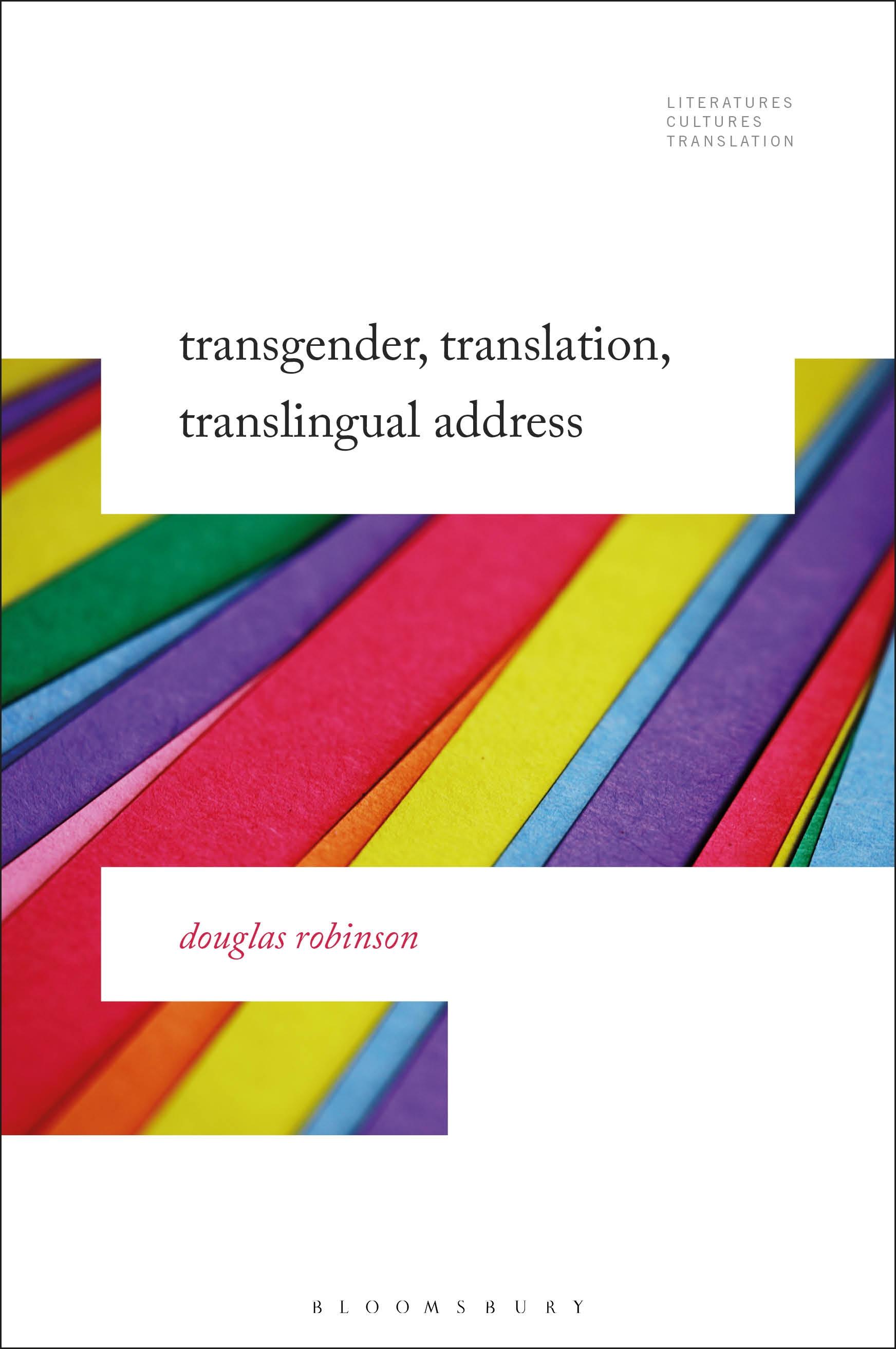
Finalist for the 2020 Prose Awards (Language and Linguistics Category)
The emergence of transgender communities into the public eye over the past few decades has brought some new understanding, but also renewed outbreaks of violent backlash. In Transgender, Translation, Translingual Address Douglas Robinson seeks to understand the “translational” or “translingual” dialogues between cisgendered and transgendered people.
Drawing on a wide range of LGBT scholars, philosophers, sociologists, sexologists, and literary voices, Robinson sets up cis-trans dialogues on such issues as “being born in the wrong body,” binary vs. anti-binary sex/gender identities, and the nature of transition and transformation. Prominent voices in the book include Kate Bornstein, C. Jacob Hale, and Sassafras Lowrey.
The theory of translation mobilized in the book is not the traditional equivalence-based one, but Callon and Latour's sociology of translation as “speaking for someone else,” which grounds the study of translation in social pressures to conform to group norms. In addition, however, Robinson translates a series of passages from Finnish trans novels into English, and explores the “translingual address” that emerges when those English translations are put into dialogue with cis and trans scholars.
The emergence of transgender communities into the public eye over the past few decades has brought some new understanding, but also renewed outbreaks of violent backlash. In Transgender, Translation, Translingual Address Douglas Robinson seeks to understand the “translational” or “translingual” dialogues between cisgendered and transgendered people.
Drawing on a wide range of LGBT scholars, philosophers, sociologists, sexologists, and literary voices, Robinson sets up cis-trans dialogues on such issues as “being born in the wrong body,” binary vs. anti-binary sex/gender identities, and the nature of transition and transformation. Prominent voices in the book include Kate Bornstein, C. Jacob Hale, and Sassafras Lowrey.
The theory of translation mobilized in the book is not the traditional equivalence-based one, but Callon and Latour's sociology of translation as “speaking for someone else,” which grounds the study of translation in social pressures to conform to group norms. In addition, however, Robinson translates a series of passages from Finnish trans novels into English, and explores the “translingual address” that emerges when those English translations are put into dialogue with cis and trans scholars.
Seiten: 288
Kategorie: Kultur-, Genus- & Postkoloniala studier
e-ISBN: 9781501345555
Versandgewicht: 1.2 kg
Versand in: 1-2 Tage
Zahle einfach mit Karte, Klarna, Apple Pay oder Google Pay. Nicht zufrieden? Du hast immer ein 14-tägiges Widerrufsrecht. Lies mehr in unseren AGB. Hast du Fragen, schreib uns eine E-Mail an hello@memmo.org.
Memmo macht das Lernen einfacher – wo auch immer du bist. Bei uns findest du deine Kursbücher und smarte Lerntools an einem Ort: Zusammenfassungen, Quizzes, Podcasts und Lernkarten. Und Ted, dein Lernbuddy, beantwortet alles, was du wissen möchtest. Über 50.000 Studierende lernen bereits hier – gemacht, damit du schneller lernst und weniger Stress hast.