
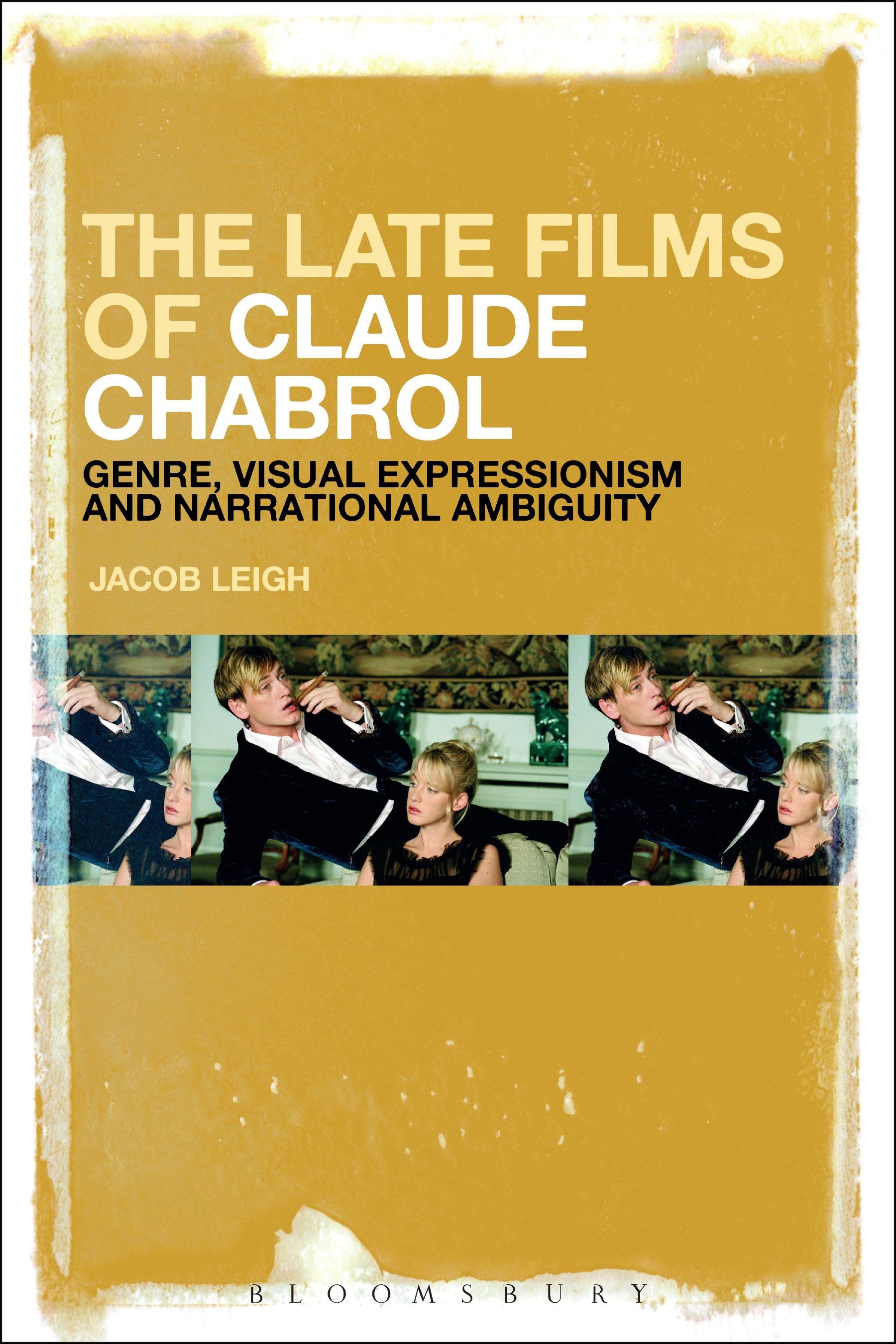
A member of the French New Wave group of filmmakers who first came to prominence at the end of the 1950s, Claude Chabrol has received the least amount of critical and scholarly attention, although he was the more prolific and commercially successful of them all. Jacob Leigh fills this lacuna by focusing on the last nine feature films of Chabrol's career, exploring his imagery, camerawork, use of sound and music, and performances, revealing the stylistic characteristics of his films while identifying the fundamental thematic issues that lie at the heart of his career-length exploration of the relationship between individuals and societies.
Key areas of focus includes Chabrol's careful depiction of upper-class settings in films such as La Cérémonie (1995), Merci pour le chocolat (2000) and La Fille coupée en deux (2007) and on what Robin Wood and Michael Walker call 'the beast in man' (1970), the quasi-sympathetic 'id-figures' of which Le Boucher's Popaul is the most celebrated. Chabrol's 'id-figures' inherit the traits of Shadow of a Doubt's Uncle Charlie, Rope's Brandon and Strangers on a Train's Bruno, all three of whom have characteristics of the Nietzsche-quoting psychopath familiar in crime fiction. Additionally, The Late Films of Claude Chabrol considers the influence on Chabrol of a range of significant writers, including Patrick Hamilton, Patricia Highsmith, Charlotte Armstrong and Ruth Rendell.
Key areas of focus includes Chabrol's careful depiction of upper-class settings in films such as La Cérémonie (1995), Merci pour le chocolat (2000) and La Fille coupée en deux (2007) and on what Robin Wood and Michael Walker call 'the beast in man' (1970), the quasi-sympathetic 'id-figures' of which Le Boucher's Popaul is the most celebrated. Chabrol's 'id-figures' inherit the traits of Shadow of a Doubt's Uncle Charlie, Rope's Brandon and Strangers on a Train's Bruno, all three of whom have characteristics of the Nietzsche-quoting psychopath familiar in crime fiction. Additionally, The Late Films of Claude Chabrol considers the influence on Chabrol of a range of significant writers, including Patrick Hamilton, Patricia Highsmith, Charlotte Armstrong and Ruth Rendell.
Seiten: 208
Kategorie: Film- & Medievetenskap
e-ISBN: 9781501312519
Versandgewicht: 1.2 kg
Versand in: 1-2 Tage
Zahle einfach mit Karte, Klarna, Apple Pay oder Google Pay. Nicht zufrieden? Du hast immer ein 14-tägiges Widerrufsrecht. Lies mehr in unseren AGB. Hast du Fragen, schreib uns eine E-Mail an hello@memmo.org.
Memmo macht das Lernen einfacher – wo auch immer du bist. Bei uns findest du deine Kursbücher und smarte Lerntools an einem Ort: Zusammenfassungen, Quizzes, Podcasts und Lernkarten. Und Ted, dein Lernbuddy, beantwortet alles, was du wissen möchtest. Über 50.000 Studierende lernen bereits hier – gemacht, damit du schneller lernst und weniger Stress hast.