
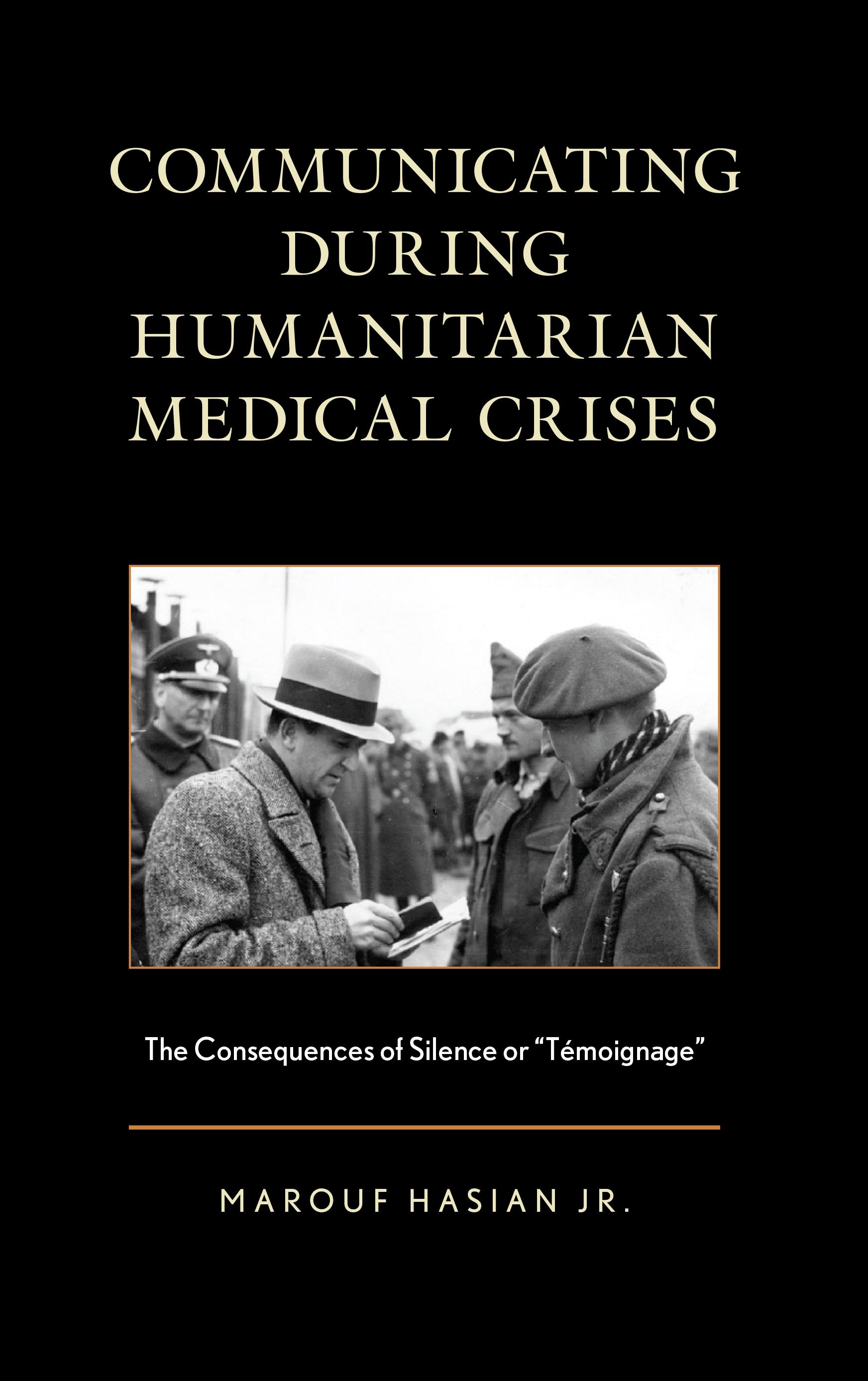
The Promise and Perils of " Silence" or " Temoignage" During Humanitarian Crises provides readers with a nuanced study of what happens when historical and 21st century medical humanitarian communities, armed with their idealistic rhetorics, choose whether to speak out or remain silent during various military or medical crises. The author uses a series of case studies from the late nineteenth century to the early twenty-first century to illustrate the politicized nature of these decisions. Unlike some that focus on the prescriptive need to follow certain universal medical humanitarian principles during crises, this book highlights the precarious nature of what some scholars call “medical advocacy/witnessing” or what the French call “témoignage.”
The author argues that regardless of whether we are talking about lack of action during colonial crises or the Holocaust, it is oftentimes the lack of political will that determines how like “neutrality” or “impartiality” are interpreted. The book also acquaints readers with some of the challenges that have been recently posed to the “new” humanitarian Doctors Without Borders personnel, who have witnessed the targeting of medical hospitals and clinics. What researchers call the weaponization of medical care affects many in need living in places like Afghanistan, Iraq, Yemen, or Syria.
The author concludes the book by underscoring the point that it is the
presence or absence of political will, and not the inherent epistemic value of medical humanitarian principles, that dictates when this advocacy succeeds or fails.
The author argues that regardless of whether we are talking about lack of action during colonial crises or the Holocaust, it is oftentimes the lack of political will that determines how like “neutrality” or “impartiality” are interpreted. The book also acquaints readers with some of the challenges that have been recently posed to the “new” humanitarian Doctors Without Borders personnel, who have witnessed the targeting of medical hospitals and clinics. What researchers call the weaponization of medical care affects many in need living in places like Afghanistan, Iraq, Yemen, or Syria.
The author concludes the book by underscoring the point that it is the
presence or absence of political will, and not the inherent epistemic value of medical humanitarian principles, that dictates when this advocacy succeeds or fails.
Zahle einfach mit Karte, Klarna, Apple Pay oder Google Pay. Nicht zufrieden? Du hast immer ein 14-tägiges Widerrufsrecht. Lies mehr in unseren AGB. Hast du Fragen, schreib uns eine E-Mail an hello@memmo.org.
Memmo macht das Lernen einfacher – wo auch immer du bist. Bei uns findest du deine Kursbücher und smarte Lerntools an einem Ort: Zusammenfassungen, Quizzes, Podcasts und Lernkarten. Und Ted, dein Lernbuddy, beantwortet alles, was du wissen möchtest. Über 50.000 Studierende lernen bereits hier – gemacht, damit du schneller lernst und weniger Stress hast.