
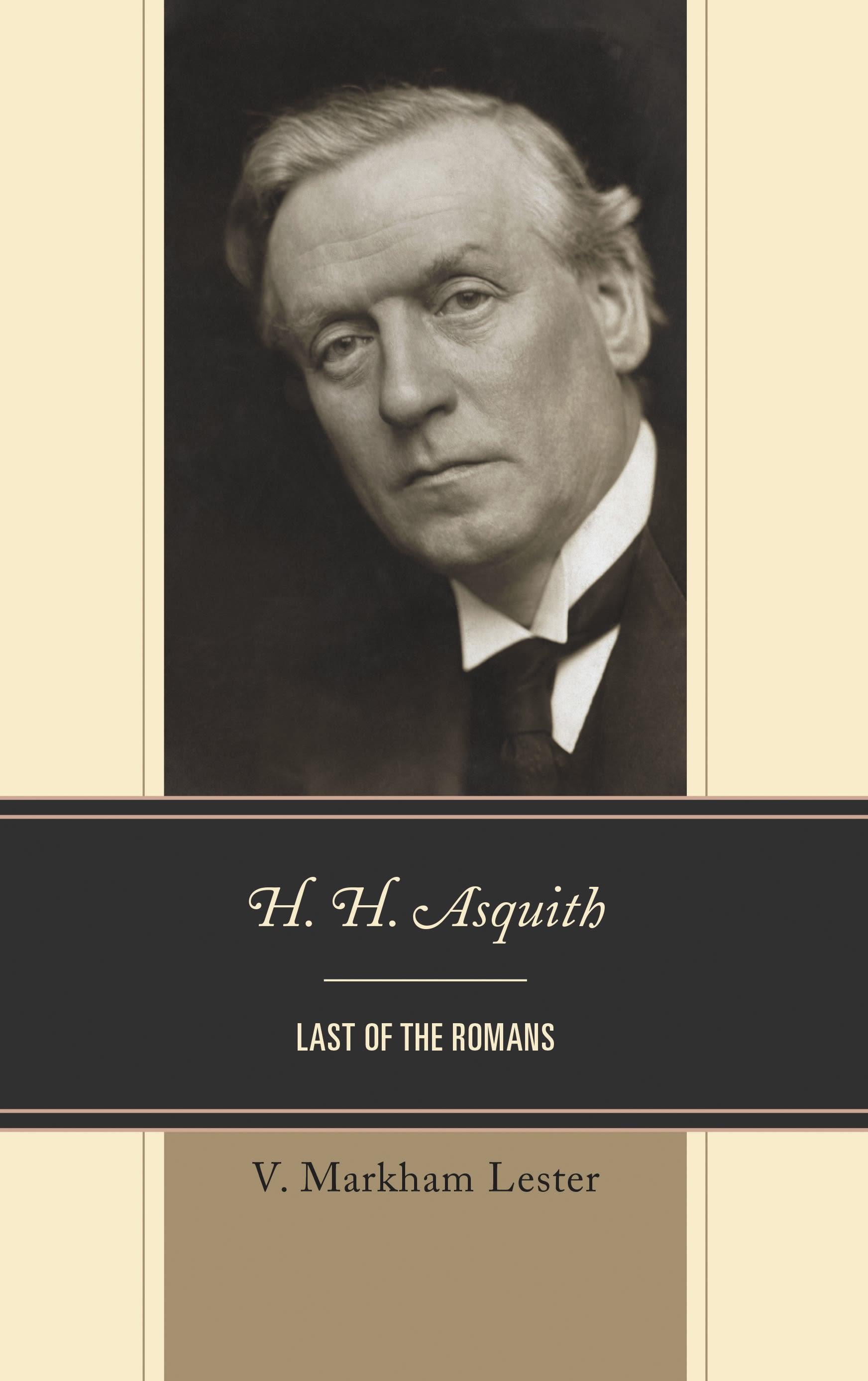
H. H. Asquith: Last of the Romans chronicles the life of H. H. Asquith (1852–1928), the longest-serving British prime minister between Lord Liverpool and Margaret Thatcher. In this study, V. Markham Lester argues that the key to understanding Asquith is to recognize the classical virtues he acquired early in his education.
Employing unpublished sources and documents made public since the last full-scale biography of Asquith was published more than forty years ago, Lester challenges many interpretations in earlier biographies. Previous studies of Asquith have often glossed over his education and early years, contending that his development did not contribute materially to his mature outlook. On the contrary, by examining thoroughly Asquith’s early career—particularly his tenure as home secretary and his time as a barrister—this book offers unappreciated insights into Asquith’s character and development as a political leader.
Lester further challenges the previous conclusions that Asquith failed as a war leader, demonstrating that Asquith succeeded in meeting the novel challenges of World War I and that his accomplishments have been insufficiently understood. He explains how Asquith’s lifelong reliance on rational thought, eloquence, and self-control produced the impressive leadership required to hold the fragile government together as it struggled to handle the unexpected and unprecedented challenges of world war and to lay the foundation for ultimate victory in the Great War.
Employing unpublished sources and documents made public since the last full-scale biography of Asquith was published more than forty years ago, Lester challenges many interpretations in earlier biographies. Previous studies of Asquith have often glossed over his education and early years, contending that his development did not contribute materially to his mature outlook. On the contrary, by examining thoroughly Asquith’s early career—particularly his tenure as home secretary and his time as a barrister—this book offers unappreciated insights into Asquith’s character and development as a political leader.
Lester further challenges the previous conclusions that Asquith failed as a war leader, demonstrating that Asquith succeeded in meeting the novel challenges of World War I and that his accomplishments have been insufficiently understood. He explains how Asquith’s lifelong reliance on rational thought, eloquence, and self-control produced the impressive leadership required to hold the fragile government together as it struggled to handle the unexpected and unprecedented challenges of world war and to lay the foundation for ultimate victory in the Great War.
Zahle einfach mit Karte, Klarna, Apple Pay oder Google Pay. Nicht zufrieden? Du hast immer ein 14-tägiges Widerrufsrecht. Lies mehr in unseren AGB. Hast du Fragen, schreib uns eine E-Mail an hello@memmo.org.
Memmo macht das Lernen einfacher – wo auch immer du bist. Bei uns findest du deine Kursbücher und smarte Lerntools an einem Ort: Zusammenfassungen, Quizzes, Podcasts und Lernkarten. Und Ted, dein Lernbuddy, beantwortet alles, was du wissen möchtest. Über 50.000 Studierende lernen bereits hier – gemacht, damit du schneller lernst und weniger Stress hast.