
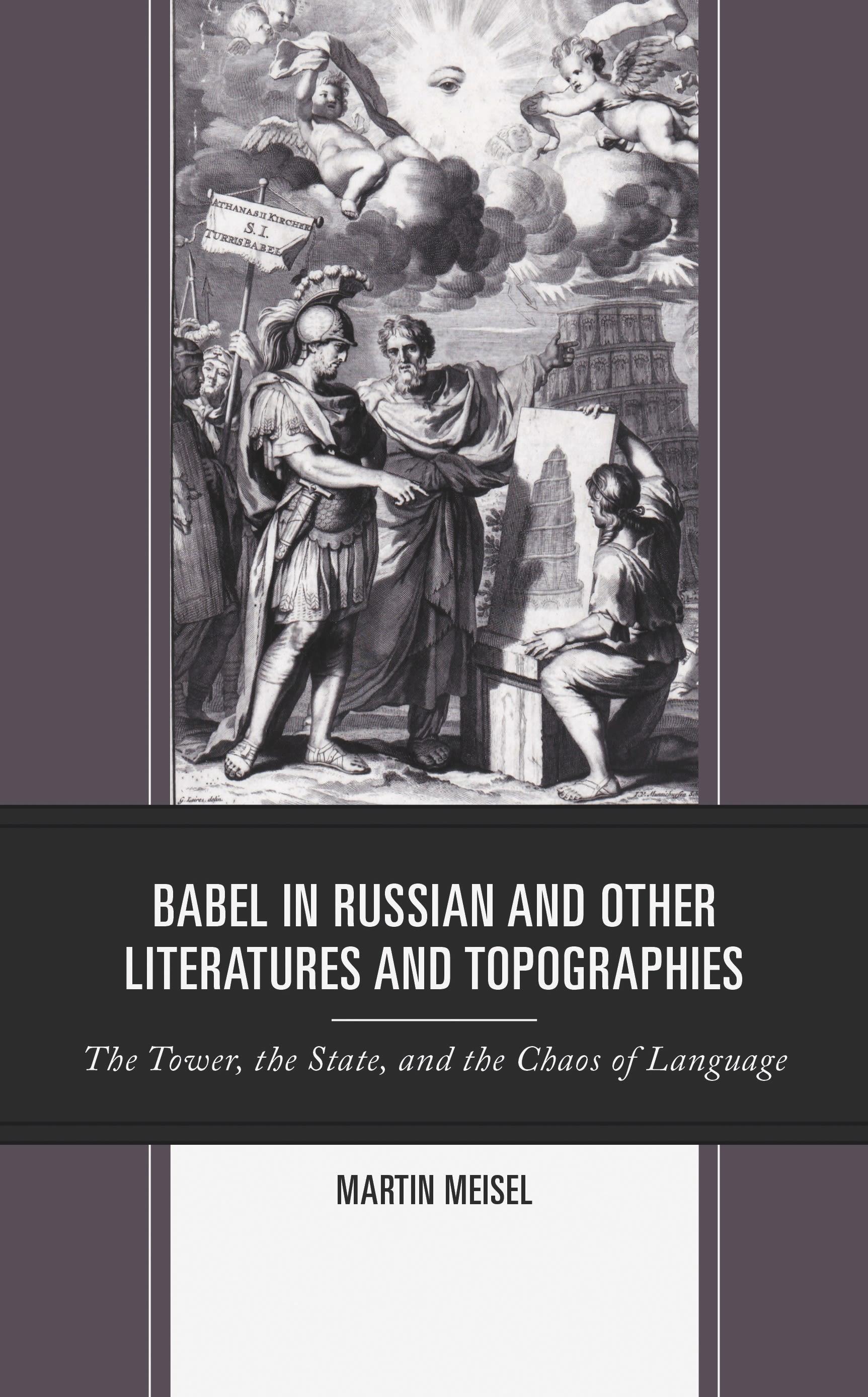
This study analyzes the biblical Tower of Babel story, a cautionary tale that accounts for the diversity of languages and peoples, in Russian literature and other topographies. The author pursues its linking of language, architecture, and society as well as its relevance in art and literature over centuries. To come to terms with a perceived disorder in the realm of language, alternative explanations and projects for remediation abound. The disorder and diversity themselves find expression in art, literature, and philosophical reflection and caused the emergence of a historical linguistics. The ambition of the builders—with its social and organizational premise—reemerges in both political and material form as cities, states, and monumental constructions. Utopian aspirations and linguistic claims permeate both revolutionary notions of universality and the romantic essentialism of the nation state. These in turn provoke dystopian critique in literature and film. As Martin Meisel reveals in this study, the wrestle with language in its recalcitrant instability and imperfect social function enters into dialogue with the celebration of its diversity, elasticity, and creativity.
Zahle einfach mit Karte, Klarna, Apple Pay oder Google Pay. Nicht zufrieden? Du hast immer ein 14-tägiges Widerrufsrecht. Lies mehr in unseren AGB. Hast du Fragen, schreib uns eine E-Mail an hello@memmo.org.
Memmo macht das Lernen einfacher – wo auch immer du bist. Bei uns findest du deine Kursbücher und smarte Lerntools an einem Ort: Zusammenfassungen, Quizzes, Podcasts und Lernkarten. Und Ted, dein Lernbuddy, beantwortet alles, was du wissen möchtest. Über 50.000 Studierende lernen bereits hier – gemacht, damit du schneller lernst und weniger Stress hast.