
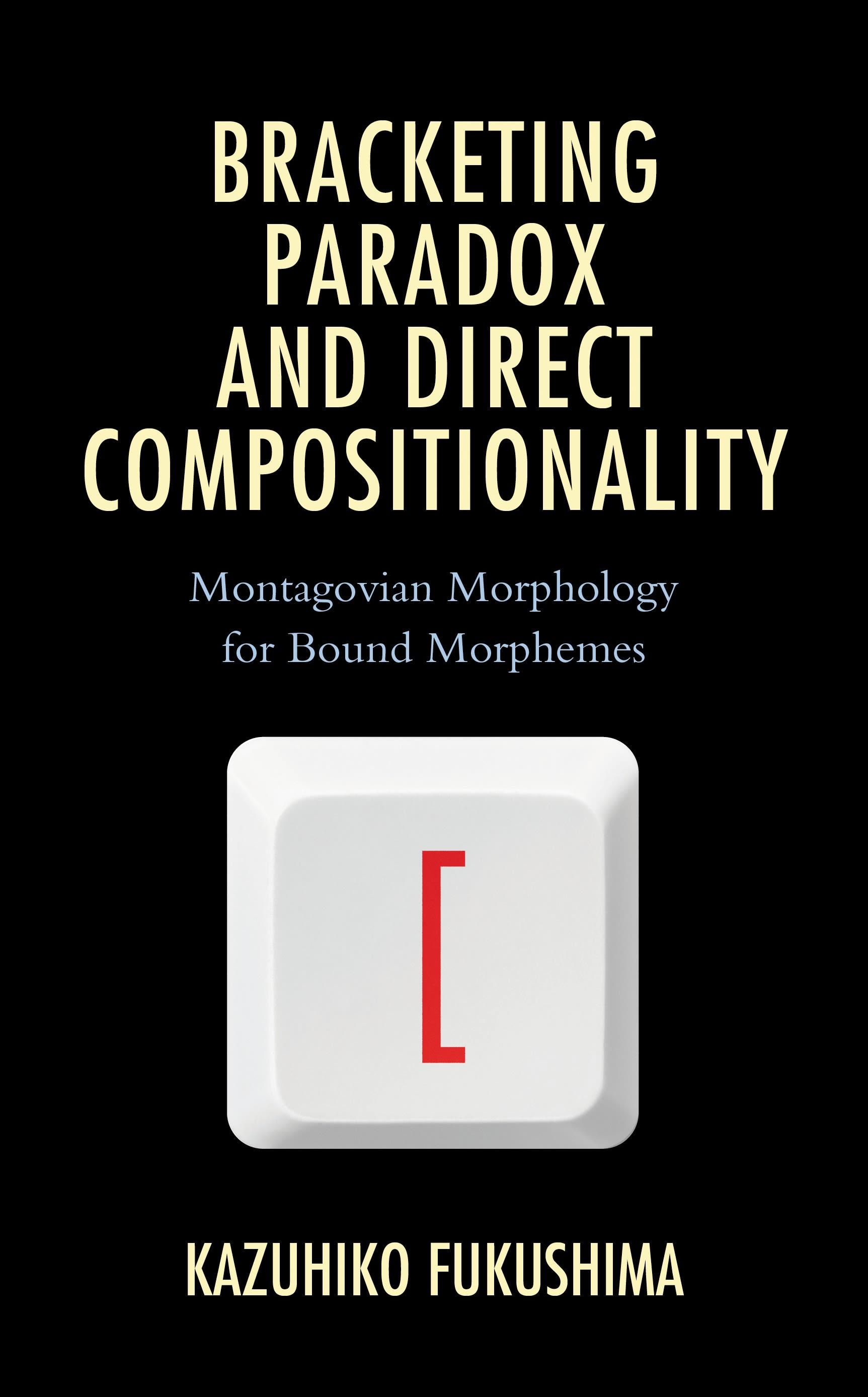
In Bracketing Paradox and Direct Compositionality: Montagovian Morphology for Bound Morphemes, Kazuhiko Fukushima resolves bracketing paradoxes in Japanese—morphological vs. semantic incongruity, which supposedly pose insurmountable obstacles to traditional and simple-minded morphology—within morphology (the lexicon) proper. This resolution is achieved through formal semantic apparatus developed by Richard Montague and his followers, hence the label Montagovian Morphology. More generally and theoretically, this book addresses the issue of the optimal interface between morphology, which deals with minimal units of meaning and their combination within a word, and semantics, which handles increasingly larger units of meaning in the sentence. Fukushima argues that the nature of the interface is directly compositional, requiring no complex syntactic supposition or manipulation other than putting words together as is. The author concludes that a semantically reinforced morphological—that is, lexical—approach is superior to a syntactic one for characterizing the mapping between morphological and semantic domains, and that syntax per se cannot supersede morphology.
Zahle einfach mit Karte, Klarna, Apple Pay oder Google Pay. Nicht zufrieden? Du hast immer ein 14-tägiges Widerrufsrecht. Lies mehr in unseren AGB. Hast du Fragen, schreib uns eine E-Mail an hello@memmo.org.
Memmo macht das Lernen einfacher – wo auch immer du bist. Bei uns findest du deine Kursbücher und smarte Lerntools an einem Ort: Zusammenfassungen, Quizzes, Podcasts und Lernkarten. Und Ted, dein Lernbuddy, beantwortet alles, was du wissen möchtest. Über 50.000 Studierende lernen bereits hier – gemacht, damit du schneller lernst und weniger Stress hast.