
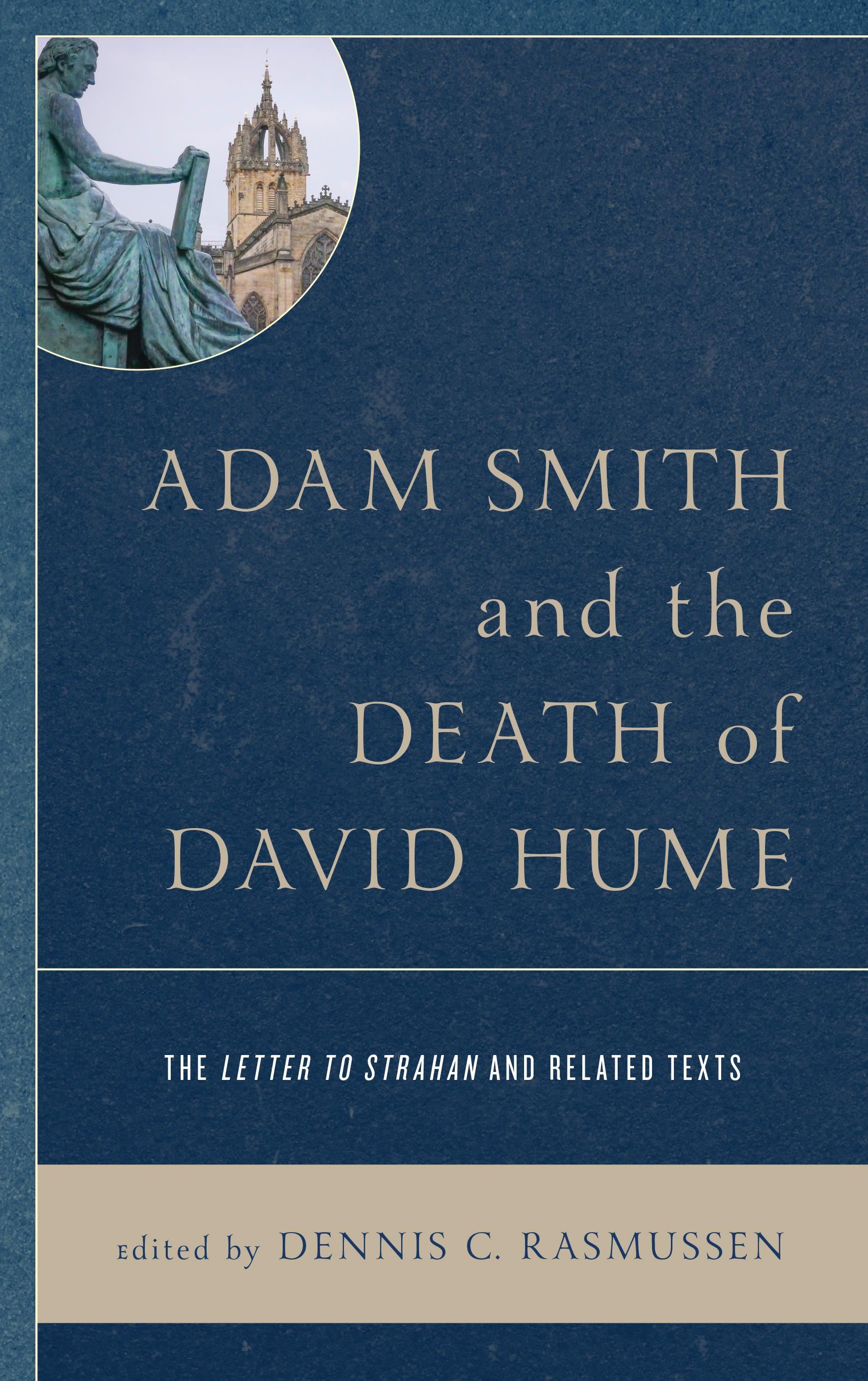
The Letter to Strahan is an ostensible letter that Adam Smith wrote on the last days, death, and character of his closest friend, the philosopher David Hume, and published alongside Hume’s autobiography, My Own Life, in 1777. Other than his two books, it is the only work that Smith published under his name during his lifetime, and it elicited a great deal of commentary and controversy. Because of Hume’s reputation for impiety, Smith’s portrayal of his friend’s cheerfulness and equanimity during his final days provoked outrage among the devout. Smith later commented that this work “brought upon me ten times more abuse than the very violent attack I had made upon the whole commercial system of Great Britain”—meaning, of course, The Wealth of Nations. This is the first annotated version of this fascinating and important work.
Along with the Letter to Strahan, the volume also includes Hume’s My Own Life, the work to which the Letter was a kind of companion piece; two personal letters related to the Letter; and three published responses to the Letter—two viciously critical and one generally favorable. A substantial editor’s introduction discusses the context, composition, publication, and significance of the Letter, along with the strong reaction that it provoked. Taken together, the works included in the volume provide an entertaining and accessible entrée into some of the most controversial debates over religion and morality in the eighteenth century.
Along with the Letter to Strahan, the volume also includes Hume’s My Own Life, the work to which the Letter was a kind of companion piece; two personal letters related to the Letter; and three published responses to the Letter—two viciously critical and one generally favorable. A substantial editor’s introduction discusses the context, composition, publication, and significance of the Letter, along with the strong reaction that it provoked. Taken together, the works included in the volume provide an entertaining and accessible entrée into some of the most controversial debates over religion and morality in the eighteenth century.
Zahle einfach mit Karte, Klarna, Apple Pay oder Google Pay. Nicht zufrieden? Du hast immer ein 14-tägiges Widerrufsrecht. Lies mehr in unseren AGB. Hast du Fragen, schreib uns eine E-Mail an hello@memmo.org.
Memmo macht das Lernen einfacher – wo auch immer du bist. Bei uns findest du deine Kursbücher und smarte Lerntools an einem Ort: Zusammenfassungen, Quizzes, Podcasts und Lernkarten. Und Ted, dein Lernbuddy, beantwortet alles, was du wissen möchtest. Über 50.000 Studierende lernen bereits hier – gemacht, damit du schneller lernst und weniger Stress hast.