
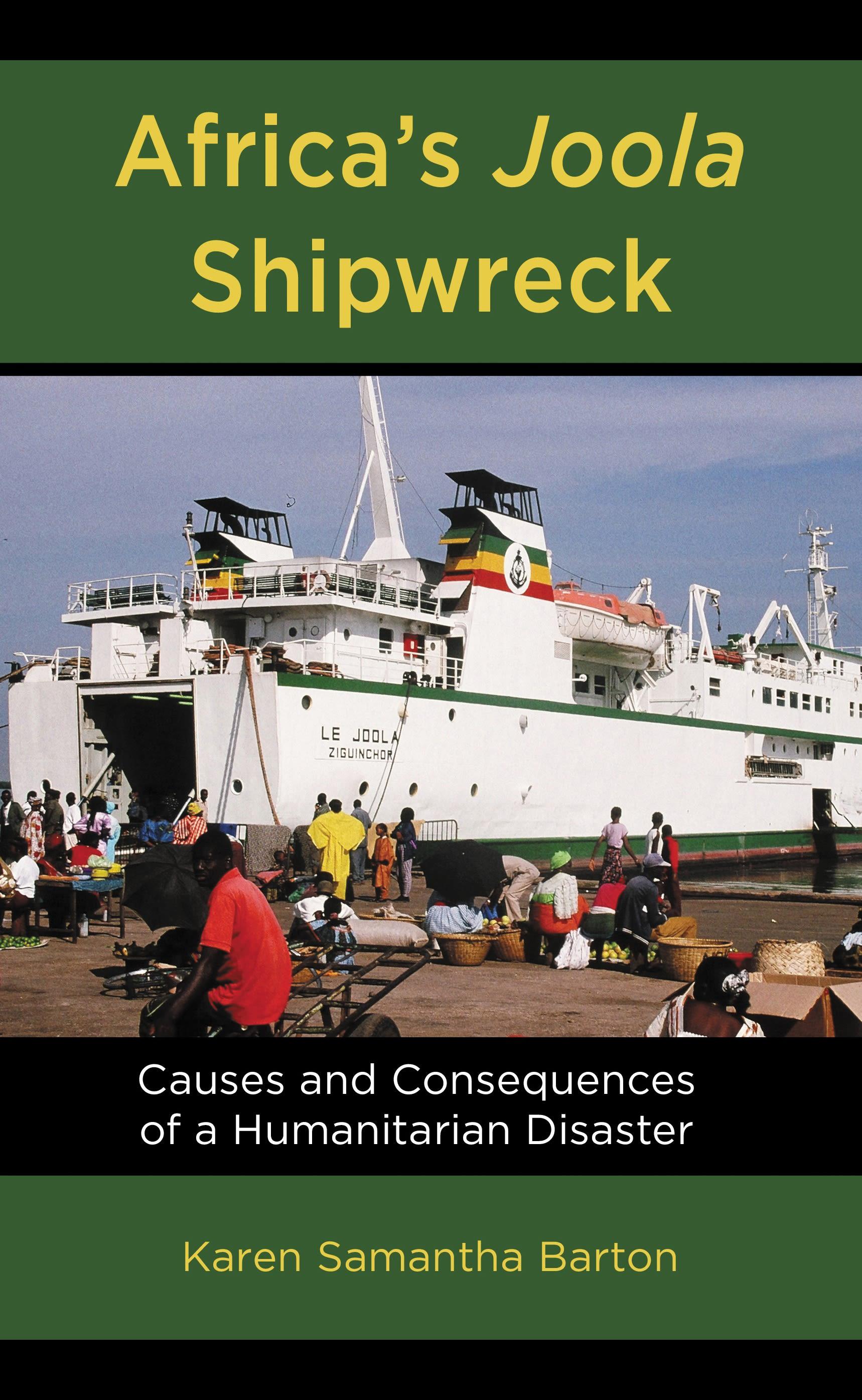
In 2002, a government-owned Senegalese ferry named the Joola capsized in a storm off the coast of The Gambia in a tragedy that killed 1,863 people and left 64 survivors, only one of them female. The Joola caused more human suffering than the Titanic yet no scholarly research to date has explored the political and environmental conditions in which this African crisis occurred. Africa’s Joola Shipwreck: Causes and Consequences of a Humanitarian Disaster investigates the roots of the Joola shipwreck and its consequences for Senegalese people, particularly those living in the rural south. Using three summers of field research in Senegal, Karen Samantha Barton unravels the geographical forces such as migration, colonial cartographies, and geographies of the sea that led to this humanitarian disaster and defined its aftermath. Barton shows how the Sufi tenet of “beautiful optimism” shaped community resilience in the wake of the shipwreck, despite the repercussions the event had on Senegalese society and space.
Zahle einfach mit Karte, Klarna, Apple Pay oder Google Pay. Nicht zufrieden? Du hast immer ein 14-tägiges Widerrufsrecht. Lies mehr in unseren AGB. Hast du Fragen, schreib uns eine E-Mail an hello@memmo.org.
Memmo macht das Lernen einfacher – wo auch immer du bist. Bei uns findest du deine Kursbücher und smarte Lerntools an einem Ort: Zusammenfassungen, Quizzes, Podcasts und Lernkarten. Und Ted, dein Lernbuddy, beantwortet alles, was du wissen möchtest. Über 50.000 Studierende lernen bereits hier – gemacht, damit du schneller lernst und weniger Stress hast.