
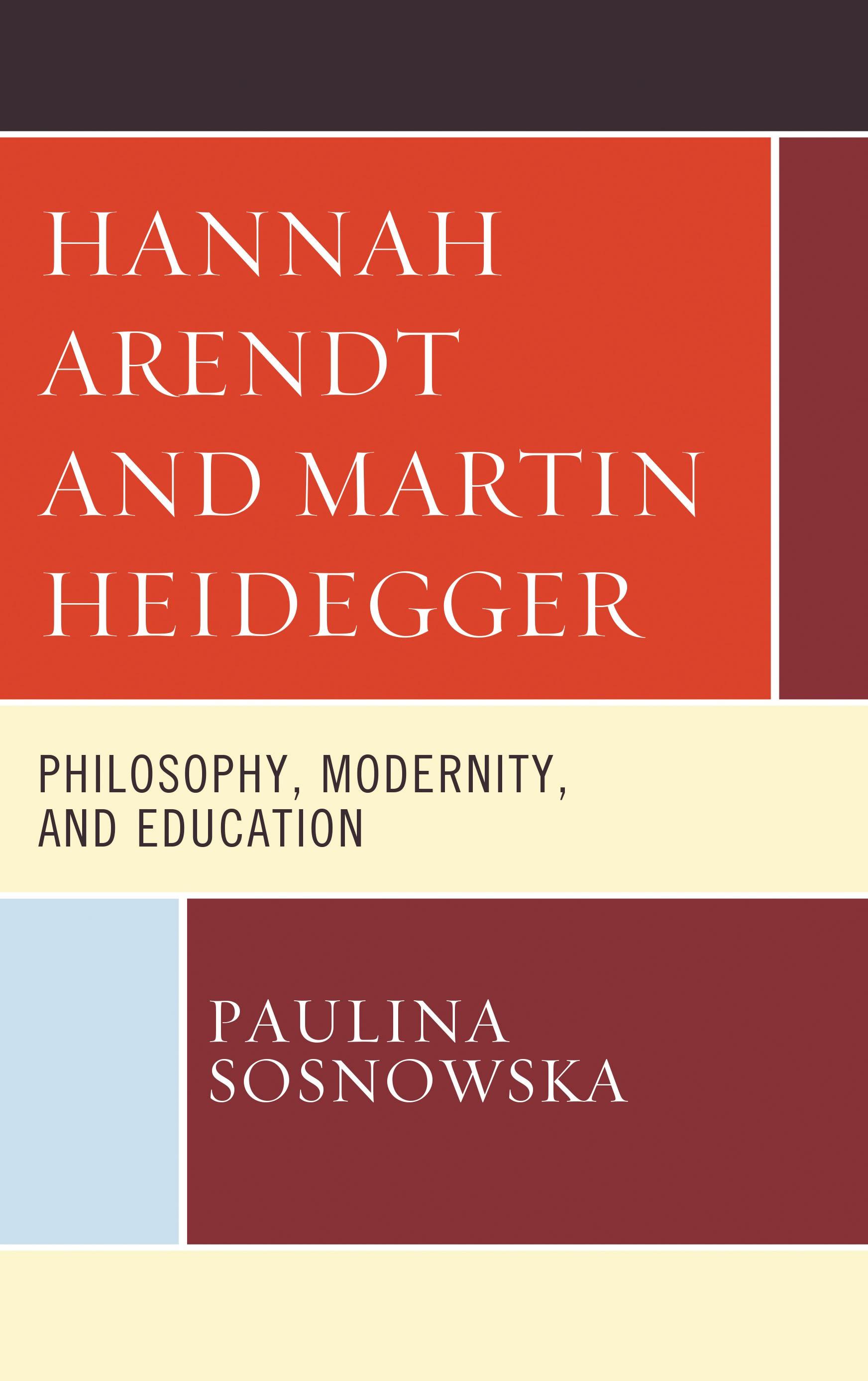
The tragedy of totalitarianism, one of the most important turns in the modern philosophy and history of the West undergirds the intellectual relationship between Martin Heidegger and Hannah Arendt. The rise of totalitarianism caused the disruption of traditional metaphysical and political categories and the necessity of a painstaking forging of new languages for the description of reality.
This book argues that Arendt’s answer to Heidegger’s philosophy, intelligible only within the wider context of both thinkers’ struggles with the philosophical tradition of the West, also opens up a new horizon of conceptualizing the relationship between philosophy and education. Paulina Sosnowska develops Arendt's thesis of the broken thread of tradition and situates it in the wider context of Heideggerian philosophy and his entanglement with Nazism, and consequently, questions the traditional relationship between philosophy and education. The final parts of this book return to the problem of dialogue between philosophy, thinking, and university education in times when the political and ethical framework is no longer determined by the continuity of tradition, but the caesura of twentieth-century totalitarianism.
This book argues that Arendt’s answer to Heidegger’s philosophy, intelligible only within the wider context of both thinkers’ struggles with the philosophical tradition of the West, also opens up a new horizon of conceptualizing the relationship between philosophy and education. Paulina Sosnowska develops Arendt's thesis of the broken thread of tradition and situates it in the wider context of Heideggerian philosophy and his entanglement with Nazism, and consequently, questions the traditional relationship between philosophy and education. The final parts of this book return to the problem of dialogue between philosophy, thinking, and university education in times when the political and ethical framework is no longer determined by the continuity of tradition, but the caesura of twentieth-century totalitarianism.
Zahle einfach mit Karte, Klarna, Apple Pay oder Google Pay. Nicht zufrieden? Du hast immer ein 14-tägiges Widerrufsrecht. Lies mehr in unseren AGB. Hast du Fragen, schreib uns eine E-Mail an hello@memmo.org.
Memmo macht das Lernen einfacher – wo auch immer du bist. Bei uns findest du deine Kursbücher und smarte Lerntools an einem Ort: Zusammenfassungen, Quizzes, Podcasts und Lernkarten. Und Ted, dein Lernbuddy, beantwortet alles, was du wissen möchtest. Über 50.000 Studierende lernen bereits hier – gemacht, damit du schneller lernst und weniger Stress hast.