
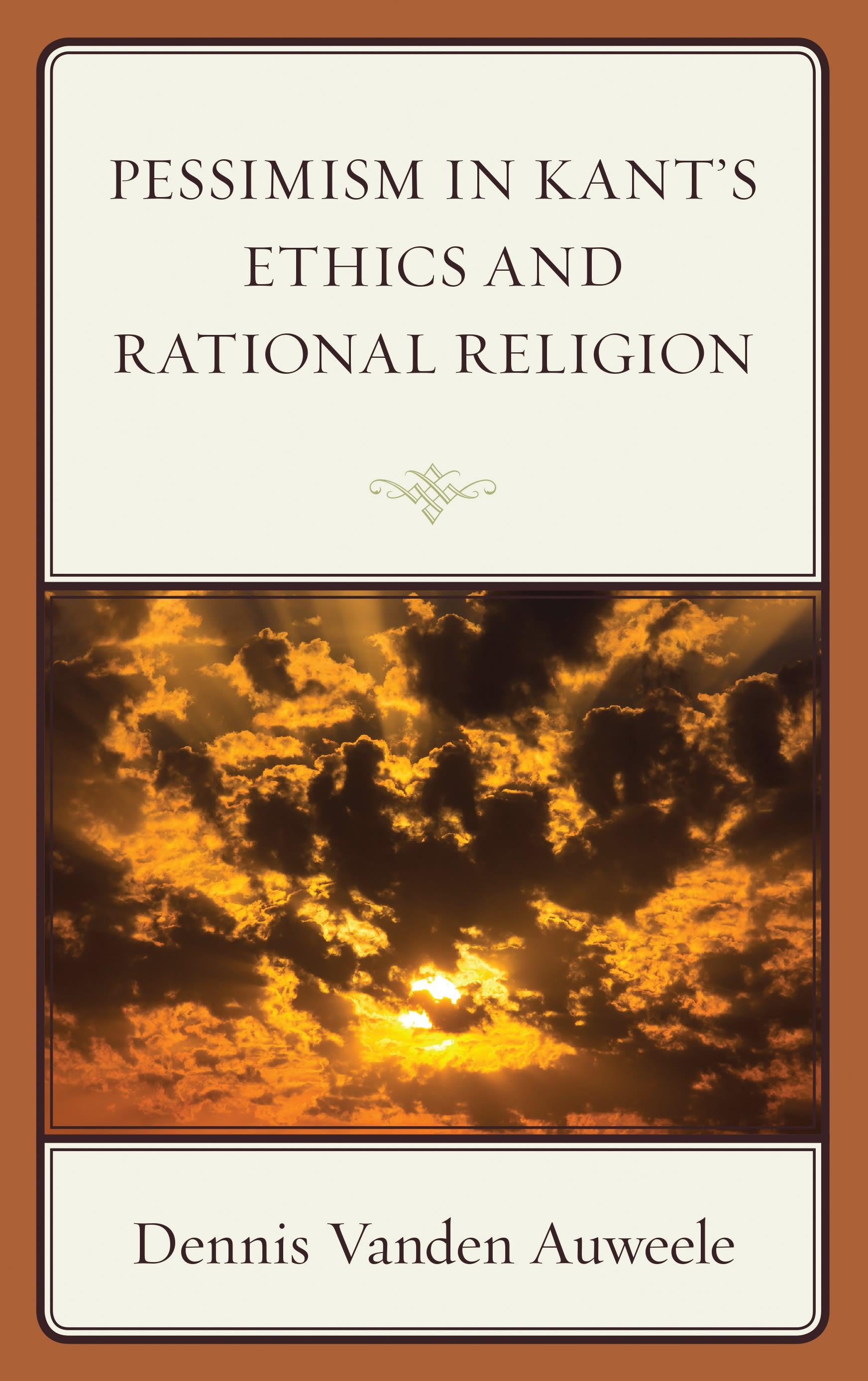
The historical period of the Enlightenment is usually thought of as the high point of philosophical optimism. By breaking the chains of traditional heteronomous morality, the tutelage of dogmatic religion and the oppression of authoritarian politics, the Enlightenment created the space for a new, self-critical and autonomous frame of reference for human effort. Immanuel Kant is undoubtedly the greatest philosopher in the German Enlightenment. And Kant was a pessimist? In this book, the author explores Kant’s moral and religious philosophy and shows that a pessimistic undercurrent pervades these. This provides a new vantage point not only to assess comprehensively Kantian philosophy but also to provide much needed context and reading assistance to the general premises of Kant’s philosophy of autonomy and rationality. For Kant, to be autonomous and rational is not something human nature naturally pursues; instead, reason but must reframe, rethink and reshape human nature. Human nature is a problem, autonomy and rationality are the solution. Kant’s subsequent attempts to establish a rational religion can be explained in extension of this problem. Since human beings are not naturally prone to act autonomously, they have to be educated through historical institutions that are reformed appropriately so as to provide the incentives for human beings to become autonomous. This is where Kant believed religion could play an important pedagogical function.
Zahle einfach mit Karte, Klarna, Apple Pay oder Google Pay. Nicht zufrieden? Du hast immer ein 14-tägiges Widerrufsrecht. Lies mehr in unseren AGB. Hast du Fragen, schreib uns eine E-Mail an hello@memmo.org.
Memmo macht das Lernen einfacher – wo auch immer du bist. Bei uns findest du deine Kursbücher und smarte Lerntools an einem Ort: Zusammenfassungen, Quizzes, Podcasts und Lernkarten. Und Ted, dein Lernbuddy, beantwortet alles, was du wissen möchtest. Über 50.000 Studierende lernen bereits hier – gemacht, damit du schneller lernst und weniger Stress hast.