
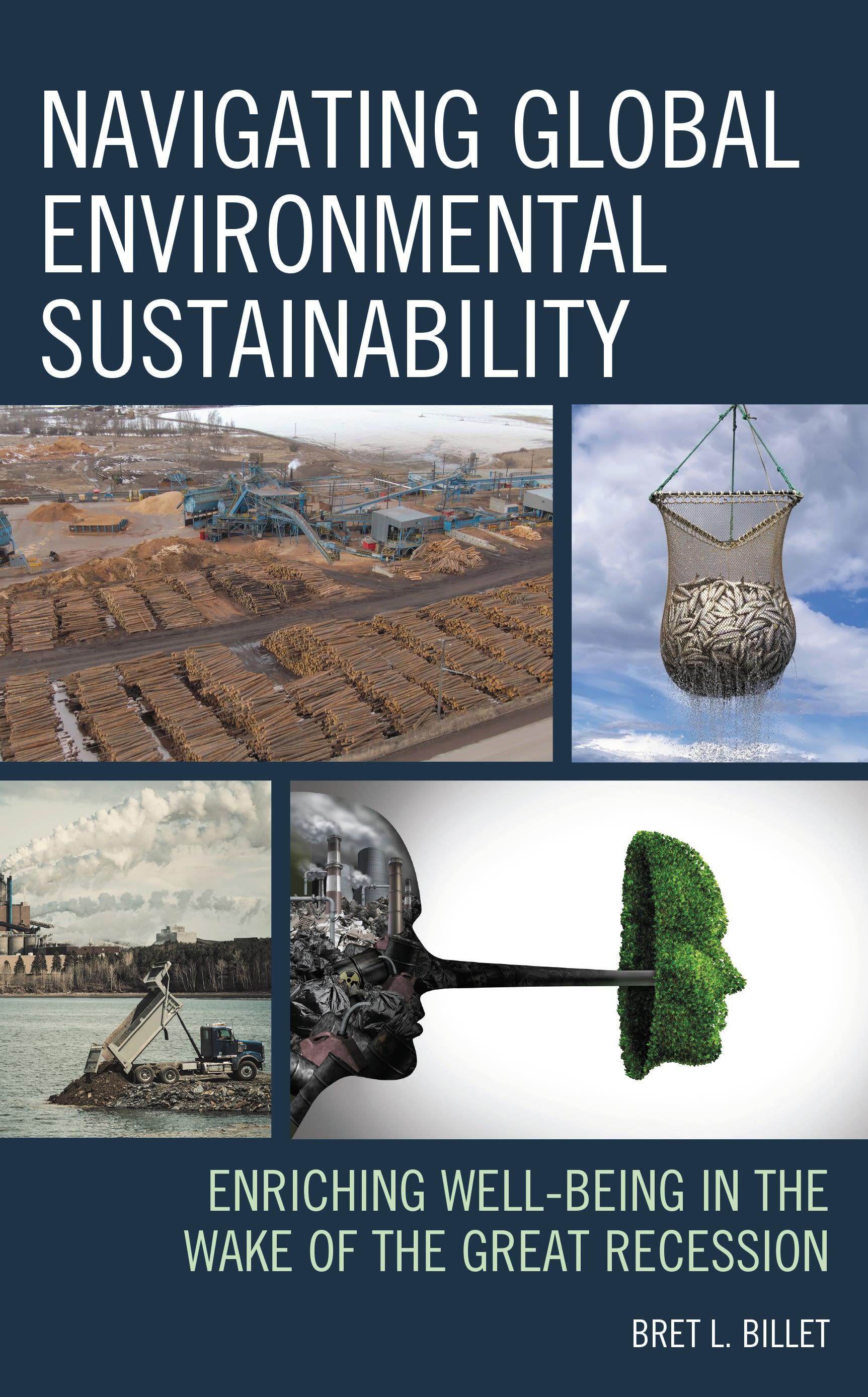
The Great Recession provided an opportunity to reconsider how to simultaneously enhance the well-being of individuals, corporations, countries, and the global environment. A half-century of vital environmental data demands examining several questions pertaining to the impact of a recession on sustainable environmental consumption. Does a recession provide an occasion for productive dialogue that might reconcile the ostensible incompatibility of economic and ecological rationales? Does it constitute an artificial “turning point” whereby appropriate incentives may induce productive change? Are post-recession environmental consumption patterns indicative of government encouragement, and corporate willingness, to pursue transformative environmental technologies? Alternatively, are the patterns illustrative of countries transferring their environmental consumption to other countries via international trade?
Bret L. Billet argues that the simultaneous investigation of both the Ecological Modernization theory and the Ecological Unequal Exchange theory strengthens the present quantitative analysis, enhancing understanding of the recession, well-being, sustainable environment nexus. Each ecological theory is rooted in the politicized evolution of traditional theories of economic development. The introduction of an Aristotelean conception of development as well-being, an exceptionally large number of cases, and the analysis of multiple country subsets, results in a more robust inquiry as to the impact of the Great Recession on the global sustainable environment.
Bret L. Billet argues that the simultaneous investigation of both the Ecological Modernization theory and the Ecological Unequal Exchange theory strengthens the present quantitative analysis, enhancing understanding of the recession, well-being, sustainable environment nexus. Each ecological theory is rooted in the politicized evolution of traditional theories of economic development. The introduction of an Aristotelean conception of development as well-being, an exceptionally large number of cases, and the analysis of multiple country subsets, results in a more robust inquiry as to the impact of the Great Recession on the global sustainable environment.
Seiten: 276
Kategorie: Miljövetenskap & Klimat
e-ISBN: 9781498579582
Versandgewicht: 1.2 kg
Versand in: 1-2 Tage
Zahle einfach mit Karte, Klarna, Apple Pay oder Google Pay. Nicht zufrieden? Du hast immer ein 14-tägiges Widerrufsrecht. Lies mehr in unseren AGB. Hast du Fragen, schreib uns eine E-Mail an hello@memmo.org.
Memmo macht das Lernen einfacher – wo auch immer du bist. Bei uns findest du deine Kursbücher und smarte Lerntools an einem Ort: Zusammenfassungen, Quizzes, Podcasts und Lernkarten. Und Ted, dein Lernbuddy, beantwortet alles, was du wissen möchtest. Über 50.000 Studierende lernen bereits hier – gemacht, damit du schneller lernst und weniger Stress hast.