
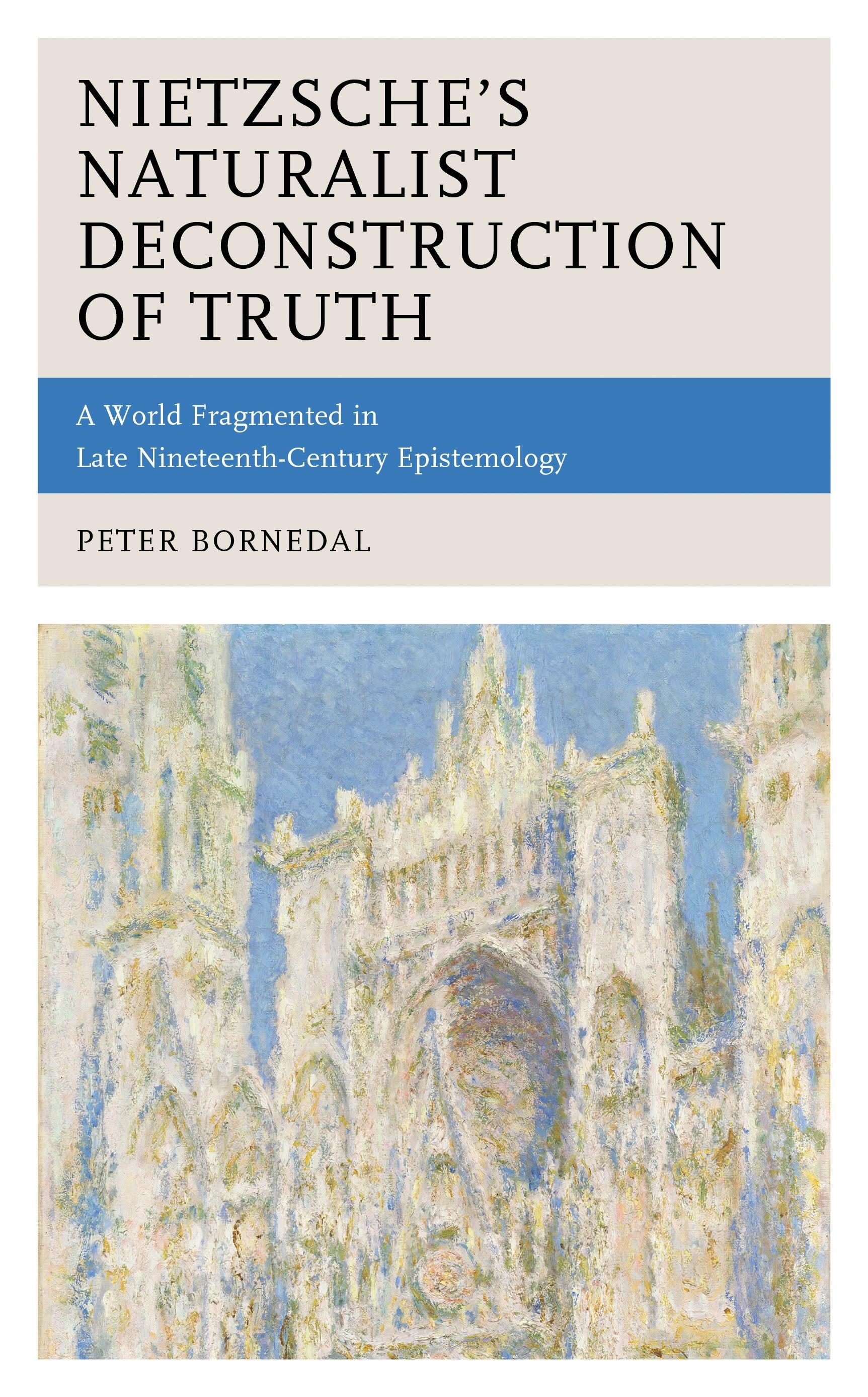
Nietzsche’s Naturalist Deconstruction of Truth: A World Fragmented in Late Nineteenth-Century Epistemology offers a new interpretation of Nietzsche’s discussions of truth and knowledge, covering the period from his early essay “On Truth and Lies in an Extra-Moral Sense” to his late notebooks. It places these discussions in the context of the neo-Kantian, Naturalist, Positivist, and Pragmatic schools influential in Nietzsche’s late nineteenth-century Europe. Peter Bornedal argues for a view of Nietzsche’s epistemological thought as an elaboration of this paradigm: proposing ideas that are anti-metaphysical and anti-theological in their polemic orientation, and in general promoting new scientific naturalist ideals in the discussions of knowledge. Bornedal suggests that the rational pursuit of these new ideals to the unencumbered mind logically leads to Nihilism in its most profound epistemological sense. Nietzsche’s “critique of metaphysics” is thus seen as having sprung from sources different from and, at times, in patent opposition to more recent postmodern and deconstructionist critiques. This book contextualizes Nietzsche in relation to a number of philosophical peers and juxtaposes him to contemporary thinkers in a way that resolves some of the difficulties that have plagued recent Nietzsche scholarship.
Zahle einfach mit Karte, Klarna, Apple Pay oder Google Pay. Nicht zufrieden? Du hast immer ein 14-tägiges Widerrufsrecht. Lies mehr in unseren AGB. Hast du Fragen, schreib uns eine E-Mail an hello@memmo.org.
Memmo macht das Lernen einfacher – wo auch immer du bist. Bei uns findest du deine Kursbücher und smarte Lerntools an einem Ort: Zusammenfassungen, Quizzes, Podcasts und Lernkarten. Und Ted, dein Lernbuddy, beantwortet alles, was du wissen möchtest. Über 50.000 Studierende lernen bereits hier – gemacht, damit du schneller lernst und weniger Stress hast.