
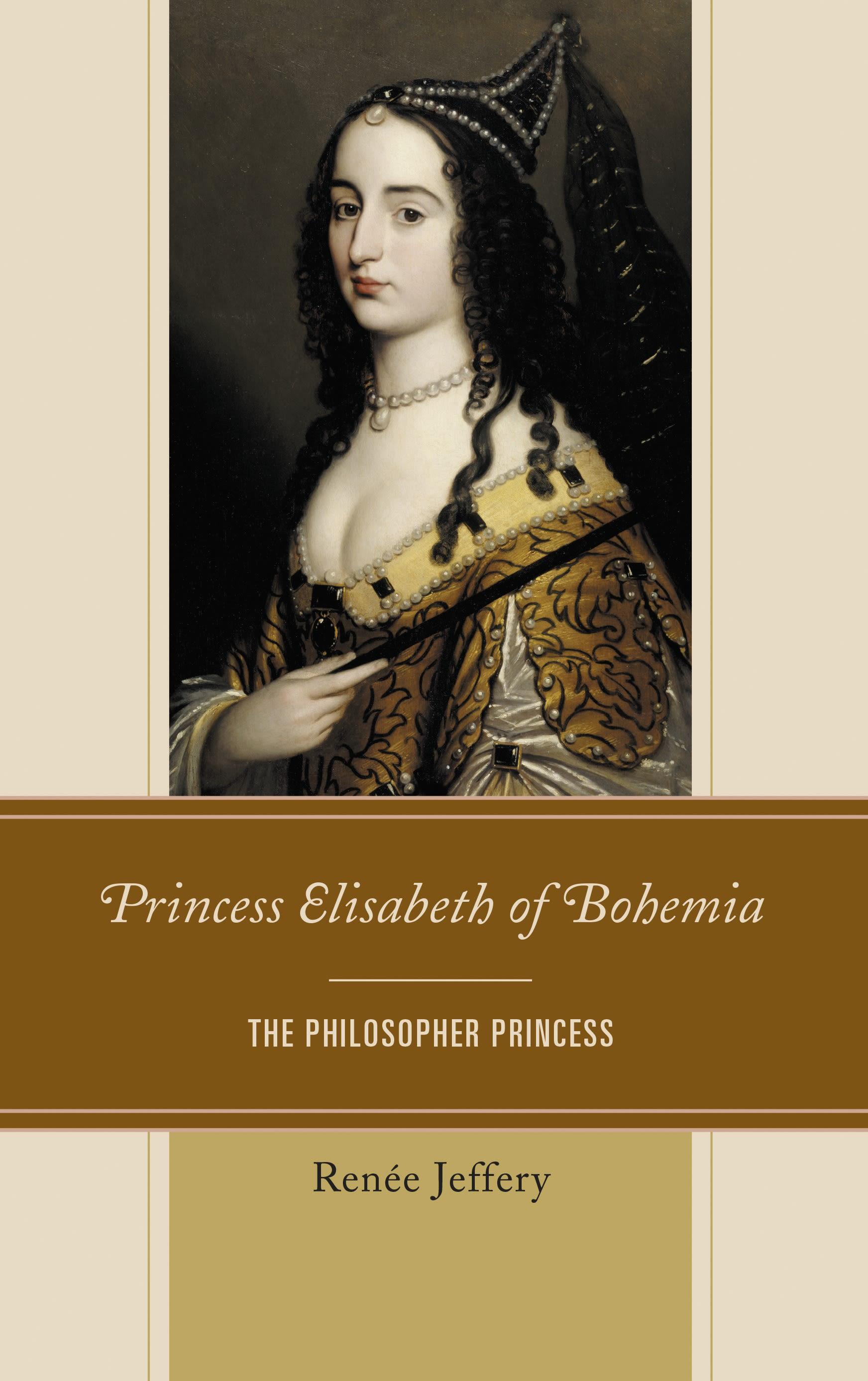
Elisabeth of Bohemia (1618–1680) was the daughter of the Elector Palatine, Frederick V, King of Bohemia, and Elizabeth Stuart, the daughter of King James VI and I of Scotland and England. A princess born into one of the most prominent Protestant dynasties of the age, Elisabeth was one of the great female intellectuals of seventeenth-century Europe. This book examines her life and thought. It is the story of an exiled princess, a grief-stricken woman whose family was beset by tragedy and whose life was marked by poverty, depression, and chronic illness. It is also the story of how that same woman’s strength of character, unswerving faith, and extraordinary mind saw her emerge as one of the most renowned scholars of the age. It is the story of how one woman navigated the tumultuous waters of seventeenth-century politics, religion, and scholarship, fought for her family’s ancestral rights, and helped established one of the first networks of female scholars in Western Europe.
Drawing on her correspondence with René Descartes, as well as the letters, diaries, and writings of her family, friends, and intellectual associates, this book contributes to the recovery of Elisabeth’s place in the history of philosophy. It demonstrates that although she is routinely marginalized in contemporary accounts of seventeenth-century thought, overshadowed by the more famous male philosophers she corresponded with, or dismissed as little more than a “learned maiden,” Elisabeth was a philosopher in her own right who made a significant contribution to modern understandings of the relationship between the body and the mind, challenged dominant accounts of the nature of the emotions, and provided insightful commentaries on subjects as varied as the nature and causes of illness to the essence of virtue and Machiavelli’s The Prince.
Drawing on her correspondence with René Descartes, as well as the letters, diaries, and writings of her family, friends, and intellectual associates, this book contributes to the recovery of Elisabeth’s place in the history of philosophy. It demonstrates that although she is routinely marginalized in contemporary accounts of seventeenth-century thought, overshadowed by the more famous male philosophers she corresponded with, or dismissed as little more than a “learned maiden,” Elisabeth was a philosopher in her own right who made a significant contribution to modern understandings of the relationship between the body and the mind, challenged dominant accounts of the nature of the emotions, and provided insightful commentaries on subjects as varied as the nature and causes of illness to the essence of virtue and Machiavelli’s The Prince.
Zahle einfach mit Karte, Klarna, Apple Pay oder Google Pay. Nicht zufrieden? Du hast immer ein 14-tägiges Widerrufsrecht. Lies mehr in unseren AGB. Hast du Fragen, schreib uns eine E-Mail an hello@memmo.org.
Memmo macht das Lernen einfacher – wo auch immer du bist. Bei uns findest du deine Kursbücher und smarte Lerntools an einem Ort: Zusammenfassungen, Quizzes, Podcasts und Lernkarten. Und Ted, dein Lernbuddy, beantwortet alles, was du wissen möchtest. Über 50.000 Studierende lernen bereits hier – gemacht, damit du schneller lernst und weniger Stress hast.