
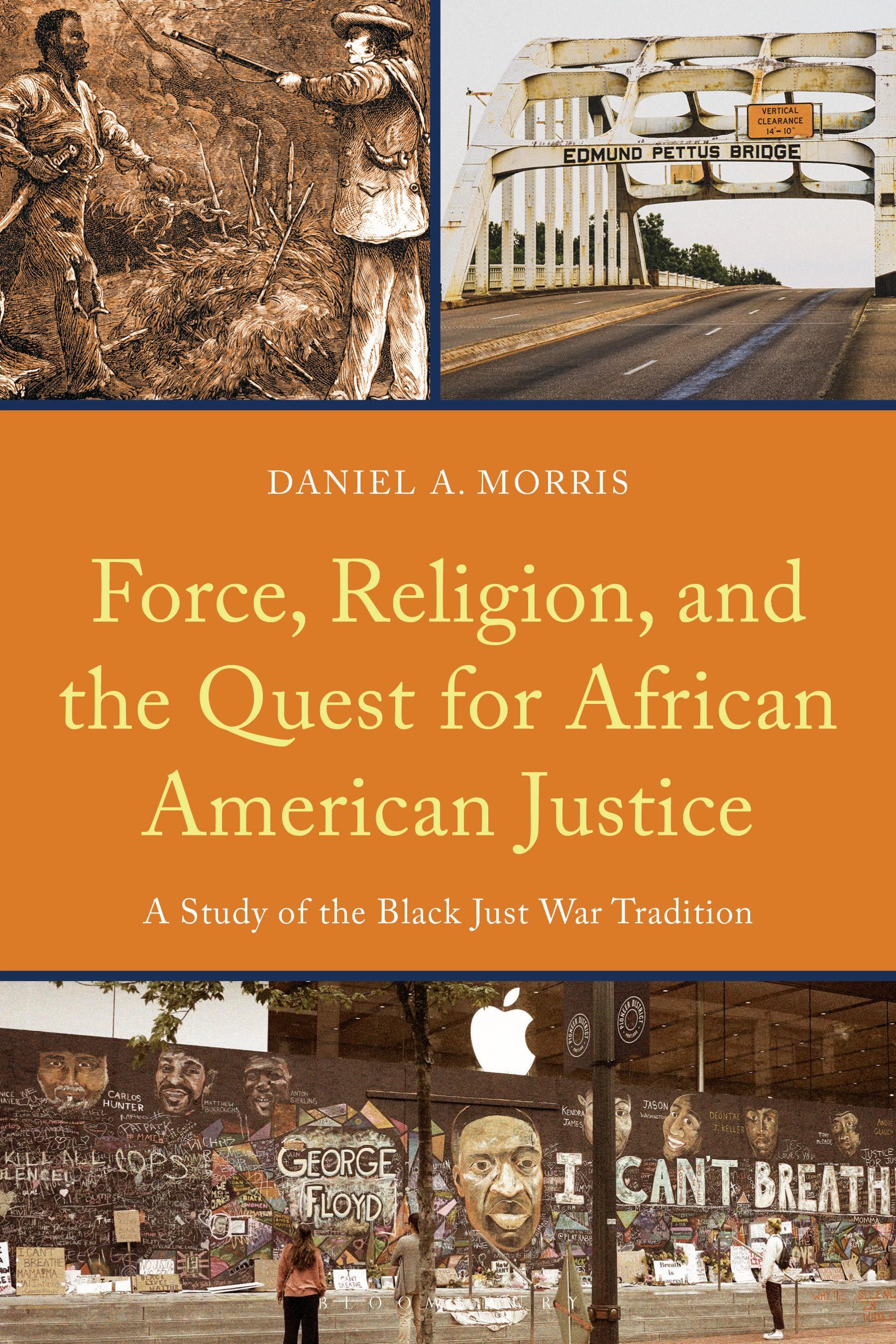
This study argues that Black calls for force in the struggle against white supremacy have echoed concepts and principles in the Western just war tradition.
After establishing that just war theory has ignored Black calls for force and that the Trans-Atlantic Slave Trade relied on just war ethics for its justification, this book turns to African American resistance rhetoric in three crucial periods of U.S. history. In the antebellum period, the Civil Rights movement, and the era of mass incarceration, African American thinkers have drawn on ideas and forms of logic that run parallel to just war ethics. This makes Black rhetoric of forceful resistance morally normal, rather than radical or extremist. Figures in the Black just war tradition such as David Walker, Henry Highland Garnet, Harriet Tubman, Huey Newton, Bree Newsome, and others should be included in the discipline of just war ethics, and white American Christians should recognize that their endorsements of force are consistent with widely accepted moral positions.
After establishing that just war theory has ignored Black calls for force and that the Trans-Atlantic Slave Trade relied on just war ethics for its justification, this book turns to African American resistance rhetoric in three crucial periods of U.S. history. In the antebellum period, the Civil Rights movement, and the era of mass incarceration, African American thinkers have drawn on ideas and forms of logic that run parallel to just war ethics. This makes Black rhetoric of forceful resistance morally normal, rather than radical or extremist. Figures in the Black just war tradition such as David Walker, Henry Highland Garnet, Harriet Tubman, Huey Newton, Bree Newsome, and others should be included in the discipline of just war ethics, and white American Christians should recognize that their endorsements of force are consistent with widely accepted moral positions.
Zahle einfach mit Karte, Klarna, Apple Pay oder Google Pay. Nicht zufrieden? Du hast immer ein 14-tägiges Widerrufsrecht. Lies mehr in unseren AGB. Hast du Fragen, schreib uns eine E-Mail an hello@memmo.org.
Memmo macht das Lernen einfacher – wo auch immer du bist. Bei uns findest du deine Kursbücher und smarte Lerntools an einem Ort: Zusammenfassungen, Quizzes, Podcasts und Lernkarten. Und Ted, dein Lernbuddy, beantwortet alles, was du wissen möchtest. Über 50.000 Studierende lernen bereits hier – gemacht, damit du schneller lernst und weniger Stress hast.