
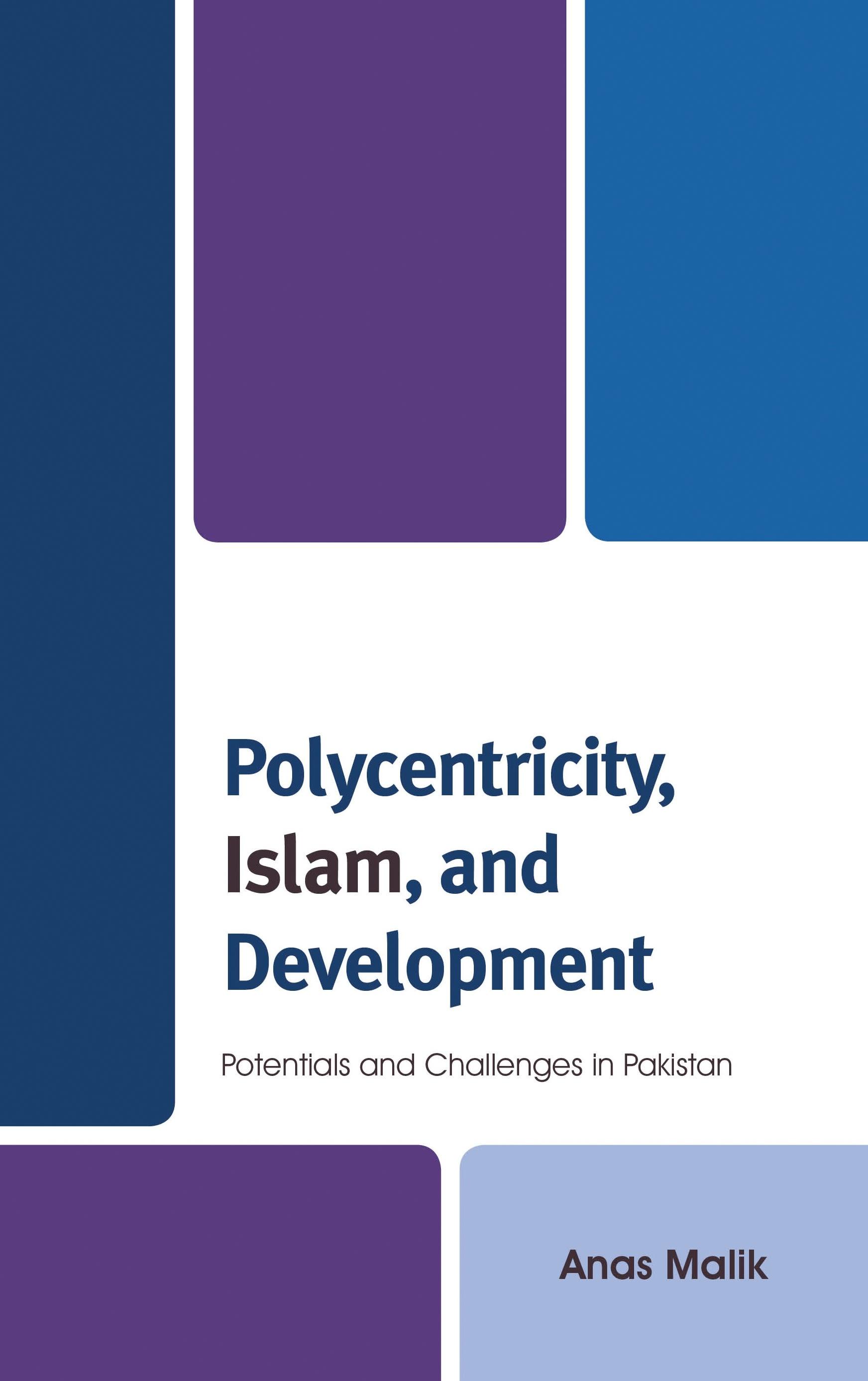
Development analysts often focus on the role of “the state” in making the right rules by which to govern society, assuming that governance is exclusively or mainly the work of the central government authority. The reality in many developing countries, particularly those with weak central government authorities, is that governance happens through diverse rules and in many centers of decision-making, in ways that are formal and informal, official and unofficial. This real-world polycentricity can be dysfunctional or productive, depending in part on shared understandings between decision-making entities about how to relate to each other. Those shared understandings come from cultural backgrounds, historical interactions, and other sources.
Political economist Anas Malik argues that well-functioning polycentricity in developing countries depends in part on the shared understandings between official government entities and unofficial units that provide collective choice in particular arenas. In Muslim-majority contexts, the Islamic tradition – contrary to the image of a top-down, single-voiced religious law- provides ample resources supporting shared understandings that accommodate diverse rules and collective choice units. Pakistan, the largest Muslim-majority country at its founding, provides an important case. After building on the development literature to suggest a typology of collective choice units in developing countries, Malik explores resources in the Islamic tradition that support polycentric governance. The book then examines major deliberations in Pakistan’s history, particularly through documented inquiries into serious political crises such as sectarian religious agitation and civil war, and through a selective survey of types of jurisdictions and collective choice units. Malik argues that there are significant polycentric understandings in Pakistan’s historical lineage, but that these are heavily contested. While there is potential for polycentric development in Pakistan, the viability of polycentric order is constrained by countering forces and contextual factors.
Political economist Anas Malik argues that well-functioning polycentricity in developing countries depends in part on the shared understandings between official government entities and unofficial units that provide collective choice in particular arenas. In Muslim-majority contexts, the Islamic tradition – contrary to the image of a top-down, single-voiced religious law- provides ample resources supporting shared understandings that accommodate diverse rules and collective choice units. Pakistan, the largest Muslim-majority country at its founding, provides an important case. After building on the development literature to suggest a typology of collective choice units in developing countries, Malik explores resources in the Islamic tradition that support polycentric governance. The book then examines major deliberations in Pakistan’s history, particularly through documented inquiries into serious political crises such as sectarian religious agitation and civil war, and through a selective survey of types of jurisdictions and collective choice units. Malik argues that there are significant polycentric understandings in Pakistan’s historical lineage, but that these are heavily contested. While there is potential for polycentric development in Pakistan, the viability of polycentric order is constrained by countering forces and contextual factors.
Seiten: 342
Kategorie: Ekonomi & Utveckling
e-ISBN: 9781498539760
Versandgewicht: 1.2 kg
Versand in: 1-2 Tage
Zahle einfach mit Karte, Klarna, Apple Pay oder Google Pay. Nicht zufrieden? Du hast immer ein 14-tägiges Widerrufsrecht. Lies mehr in unseren AGB. Hast du Fragen, schreib uns eine E-Mail an hello@memmo.org.
Memmo macht das Lernen einfacher – wo auch immer du bist. Bei uns findest du deine Kursbücher und smarte Lerntools an einem Ort: Zusammenfassungen, Quizzes, Podcasts und Lernkarten. Und Ted, dein Lernbuddy, beantwortet alles, was du wissen möchtest. Über 50.000 Studierende lernen bereits hier – gemacht, damit du schneller lernst und weniger Stress hast.