
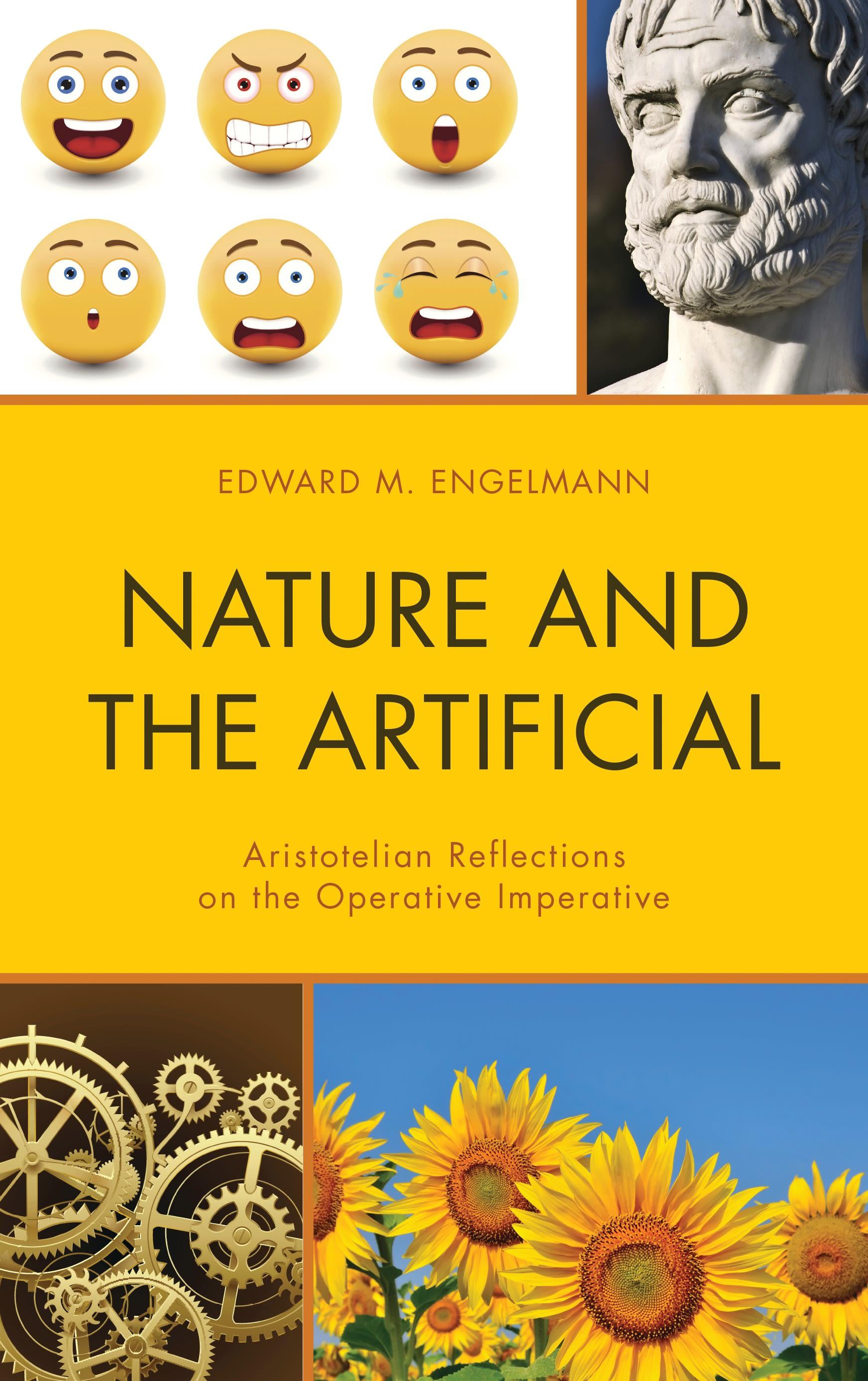
For years now much attention has been given to the phenomenon of the artificial. Speculation regarding “what is real?” abounds in the sciences, literature, as well as films and other visual arts. This work presents the first critical, sustained, philosophical study on this topic.
Nature and the Artificial: Aristotelian Reflections on the Operative Imperative reveals the inner logic of the artificial by reflecting it off the metaphysical relationship between nature and techne as conceived by Aristotle and Thomas Aquinas. During early modernity, figures such as Descartes and Bacon transformed this understanding, giving rise to the notion of the “operative imperative.” Nature and techne, for the Aristotelian tradition and for us, can only be understood in terms of their dialectical relationship to one another. Aristotle articulates this relationship with the phrase “techne imitates nature.” With the operative imperative, however, a certain reversal takes place, whereby techne becomes the paradigm for nature. As Ed Engelmann demonstrates, the operative imperative, together with the phenomenon of the artificial it implies, stands to Aristotelian metaphysics of nature as image is to original.
Anyone who believes that the rise of the artificial in our civilization needs the intensive study it deserves—as well as those who are seeking innovative insights into Aristotelian tradition—will want to read this book.
Nature and the Artificial: Aristotelian Reflections on the Operative Imperative reveals the inner logic of the artificial by reflecting it off the metaphysical relationship between nature and techne as conceived by Aristotle and Thomas Aquinas. During early modernity, figures such as Descartes and Bacon transformed this understanding, giving rise to the notion of the “operative imperative.” Nature and techne, for the Aristotelian tradition and for us, can only be understood in terms of their dialectical relationship to one another. Aristotle articulates this relationship with the phrase “techne imitates nature.” With the operative imperative, however, a certain reversal takes place, whereby techne becomes the paradigm for nature. As Ed Engelmann demonstrates, the operative imperative, together with the phenomenon of the artificial it implies, stands to Aristotelian metaphysics of nature as image is to original.
Anyone who believes that the rise of the artificial in our civilization needs the intensive study it deserves—as well as those who are seeking innovative insights into Aristotelian tradition—will want to read this book.
Zahle einfach mit Karte, Klarna, Apple Pay oder Google Pay. Nicht zufrieden? Du hast immer ein 14-tägiges Widerrufsrecht. Lies mehr in unseren AGB. Hast du Fragen, schreib uns eine E-Mail an hello@memmo.org.
Memmo macht das Lernen einfacher – wo auch immer du bist. Bei uns findest du deine Kursbücher und smarte Lerntools an einem Ort: Zusammenfassungen, Quizzes, Podcasts und Lernkarten. Und Ted, dein Lernbuddy, beantwortet alles, was du wissen möchtest. Über 50.000 Studierende lernen bereits hier – gemacht, damit du schneller lernst und weniger Stress hast.