
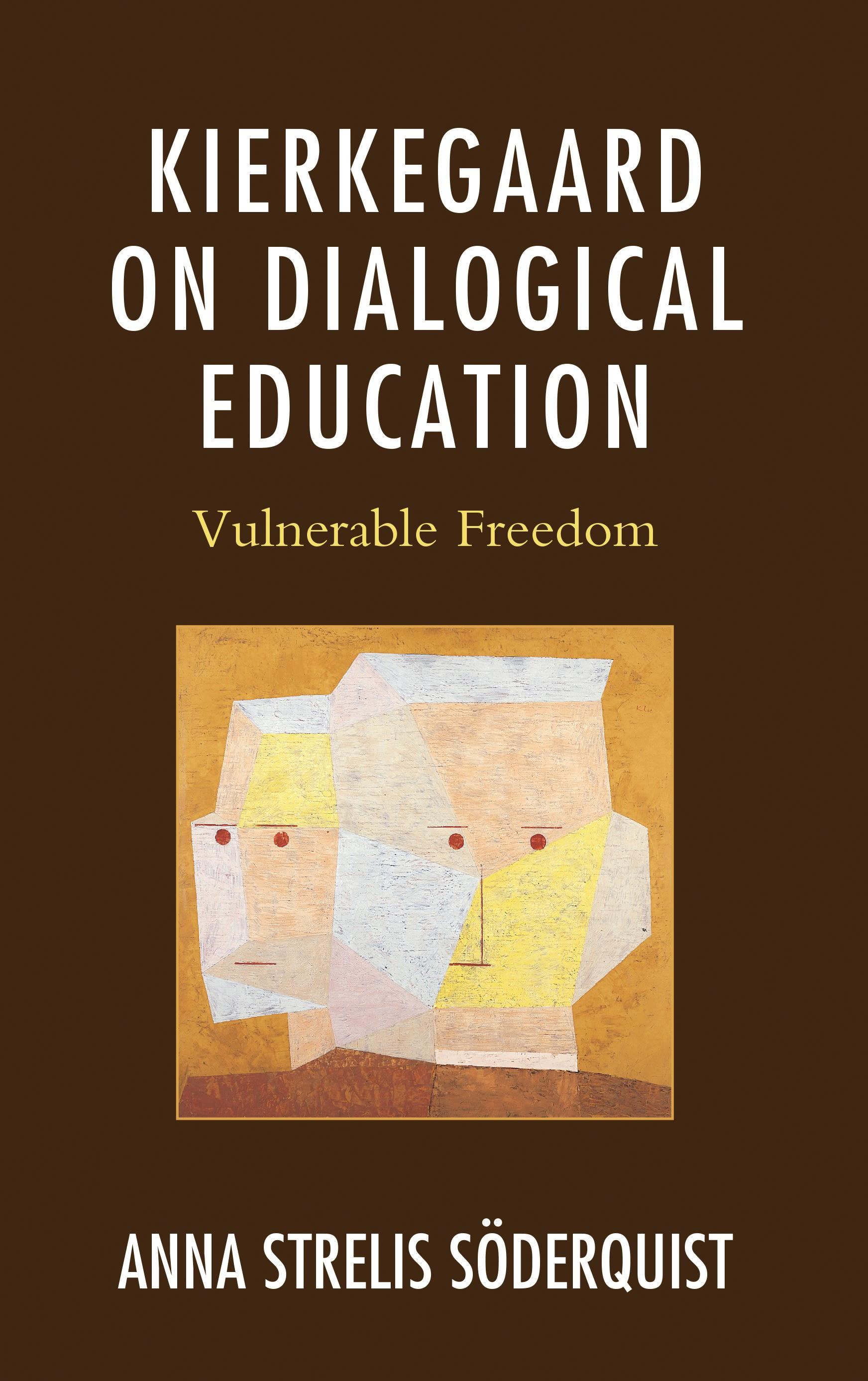
Kierkegaard on Dialogical Education: Vulnerable Freedom examines a unique conception of freedom that underscores the productive role of human vulnerability, as found in the work of Søren Kierkegaard. Anna Strelis Söderquist uncovers Kierkegaard’s method of “indirect communication” as a formative and dialogical approach to education that guides a person in becoming not only free and independent, but also receptive and empathetic. This approach bestows upon a human being the dignity that comes from being both capable and humble. It emphasizes the need for trust and courage alike in our dialogical relations, freeing us to receive and respond to the other both in our need and through our own choosing. Freedom’s secret is that it is at the same time self-empowered and vulnerable, self-giving and receptive, independent and dependent.
Kierkegaard’s method, in both form and content, hinges upon the narrativity of human experience. No human being is immune to the seductive force of stories. Kierkegaard recognizes the power of a story to captivate and to change us, to empower and to humble us, and he makes use of them as formative teachers with whom we enter into dialogue. Through its examination of indirect formation in Kierkegaard through poetry and storytelling, Kierkegaard on Dialogical Education explores the reaches and limits of narrative imagination and inquires into the dialogical and narrative struggle inherent in the formation of identity.
This book will be of interest to philosophers and educators, as well as those who meet at the crossroads of philosophy, education, and art.
Kierkegaard’s method, in both form and content, hinges upon the narrativity of human experience. No human being is immune to the seductive force of stories. Kierkegaard recognizes the power of a story to captivate and to change us, to empower and to humble us, and he makes use of them as formative teachers with whom we enter into dialogue. Through its examination of indirect formation in Kierkegaard through poetry and storytelling, Kierkegaard on Dialogical Education explores the reaches and limits of narrative imagination and inquires into the dialogical and narrative struggle inherent in the formation of identity.
This book will be of interest to philosophers and educators, as well as those who meet at the crossroads of philosophy, education, and art.
Zahle einfach mit Karte, Klarna, Apple Pay oder Google Pay. Nicht zufrieden? Du hast immer ein 14-tägiges Widerrufsrecht. Lies mehr in unseren AGB. Hast du Fragen, schreib uns eine E-Mail an hello@memmo.org.
Memmo macht das Lernen einfacher – wo auch immer du bist. Bei uns findest du deine Kursbücher und smarte Lerntools an einem Ort: Zusammenfassungen, Quizzes, Podcasts und Lernkarten. Und Ted, dein Lernbuddy, beantwortet alles, was du wissen möchtest. Über 50.000 Studierende lernen bereits hier – gemacht, damit du schneller lernst und weniger Stress hast.