
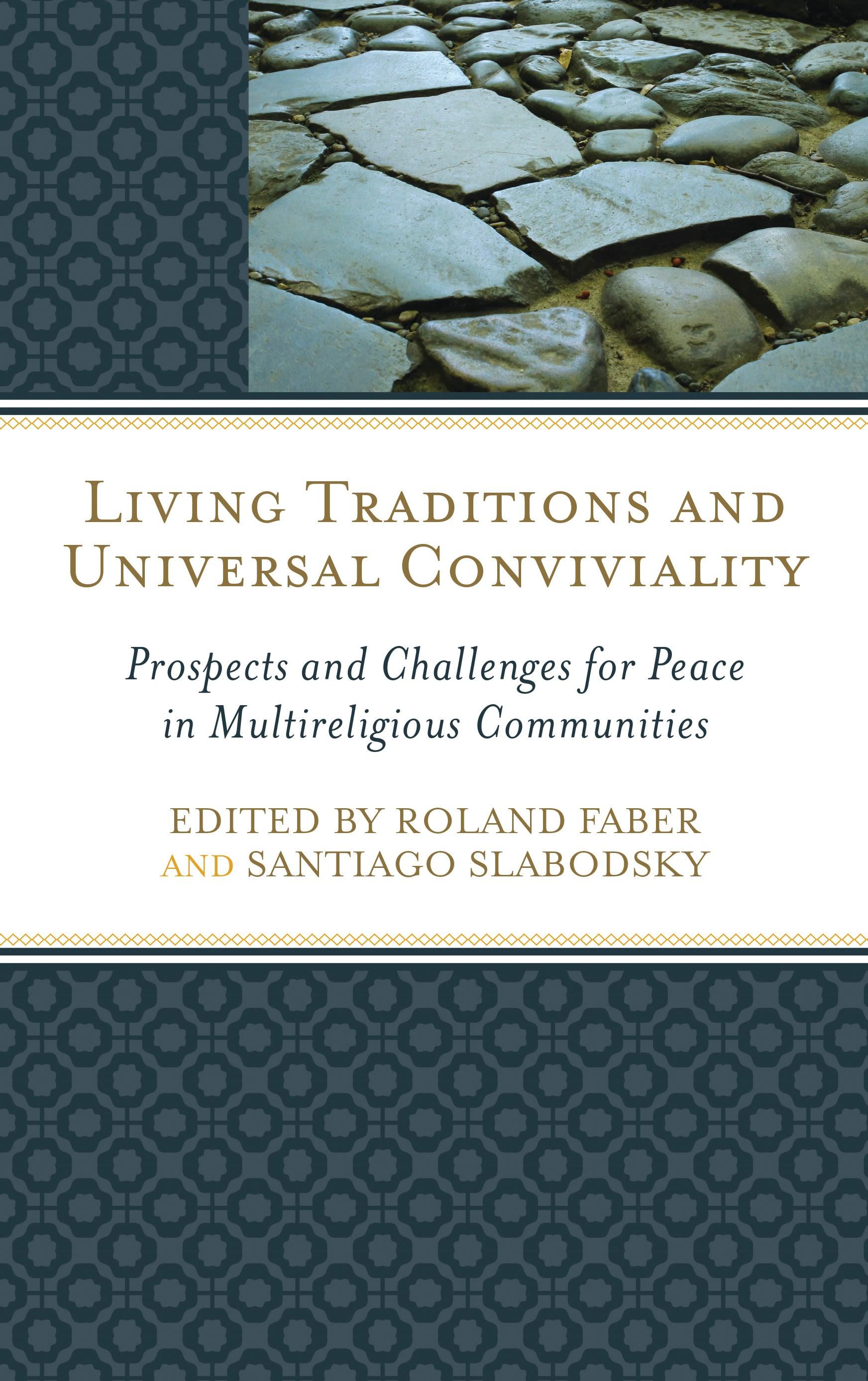
Living Traditions and Universal Conviviality
Autor: Roland Faber, Catherine Keller, Helene Slessarev-Jamir, Brianne Donaldson, Rabbi Bradley Shavit Artson, Santiago Slabodsky, Steve Odin, Dan Dombrowski, Jacob Erickson, Meijun Fan, Ian Kluge, Jay McDaniel, C. Robert Mesle, Tokiyuki Nobuhara, Constance Wise
Verlag: Bloomsbury Publishing
Ausgabe: 1
Erscheinungsdatum: 2016
ISBN: 9781498513357
The World Parliament of Religions adopted the view that there will not be peace in this world without including peace among religions. Yet, even with the unified force of the world’s religions and wisdom traditions, this cannot be accomplished without justice among people. In one way or another, “unity” among religions, as based on justice and the will to accept the other’s religions and even irreligiosity as means of justice, will not prevail without an internal and external, spiritual, theological, philosophical and practical investigation into the very reasons for religious strife and fanaticism as well as the resources that people, cultures, religions and wisdom traditions might provide to disentangle them from the injustices of their host regimes, and to seek the “balance” that leads to a measure of universal fairness among the multiplicity of religious and non-religious expressions of humanity.
“Conviviality” expresses the depth and breadth of “living together,” which itself can be understood as a translation of a central term of Whitehead's philosophy and the process tradition—“concrescence” (growing together, becoming concrete)—as it is recently and increasingly used in different discourses to name the concrete community of difference of individuals, cultures, and religions in appreciation of the mutual inclusiveness of their lives.
This book seeks to bring together experts from different religious (and non-religious) traditions and spiritual persuasions to suggest ways in which the living wisdom traditions might contribute to, and transform themselves into, a universal conviviality among the people, cultures and religions of this world for a common future. It wishes to test the resources that we can contribute to this concurrent and urgent matter, aware of Whitehead's call for a radical transformation of power and violence in thought and action as, perhaps, the ultimate theory of conflict resolution.
“Conviviality” expresses the depth and breadth of “living together,” which itself can be understood as a translation of a central term of Whitehead's philosophy and the process tradition—“concrescence” (growing together, becoming concrete)—as it is recently and increasingly used in different discourses to name the concrete community of difference of individuals, cultures, and religions in appreciation of the mutual inclusiveness of their lives.
This book seeks to bring together experts from different religious (and non-religious) traditions and spiritual persuasions to suggest ways in which the living wisdom traditions might contribute to, and transform themselves into, a universal conviviality among the people, cultures and religions of this world for a common future. It wishes to test the resources that we can contribute to this concurrent and urgent matter, aware of Whitehead's call for a radical transformation of power and violence in thought and action as, perhaps, the ultimate theory of conflict resolution.
Zahle einfach mit Karte, Klarna, Apple Pay oder Google Pay. Nicht zufrieden? Du hast immer ein 14-tägiges Widerrufsrecht. Lies mehr in unseren AGB. Hast du Fragen, schreib uns eine E-Mail an hello@memmo.org.
Memmo macht das Lernen einfacher – wo auch immer du bist. Bei uns findest du deine Kursbücher und smarte Lerntools an einem Ort: Zusammenfassungen, Quizzes, Podcasts und Lernkarten. Und Ted, dein Lernbuddy, beantwortet alles, was du wissen möchtest. Über 50.000 Studierende lernen bereits hier – gemacht, damit du schneller lernst und weniger Stress hast.